


Most of us never think about swallowing. It happens hundreds of times a day, quietly, without any effort. Then something changes. A pill seems to stick on the way down. Meals take longer than they used to.
You start coughing halfway through a glass of water, or you quietly stop ordering the foods that give you trouble. For many people, this goes on for months before anyone mentions it to a doctor.
If that sounds familiar, you’re not imagining it, and you’re not alone. Difficulty swallowing is common, it has many different causes, and a lot of them are treatable.
This guide explains what’s going on, how to tell when it’s urgent, which everyday strategies genuinely help, and when it’s time to get a proper assessment.
What Is Dysphagia? Understanding Difficulty Swallowing
Dysphagia is the medical term for difficulty swallowing. It means that food, liquid, or sometimes saliva doesn’t move from your mouth to your stomach as smoothly or as safely as it should.
For some people it’s a feeling of food catching in the throat or chest. For others it’s pain when they swallow, or coughing and choking at mealtimes.
It’s worth knowing that dysphagia is a symptom, not a disease in its own right. Something is causing it, and finding out what that something is matters more than anything else on this page.
As Mayo Clinic explains, trouble swallowing now and then, such as when you eat too fast or don’t chew well, usually isn’t a concern.
Ongoing swallowing difficulty is different. It needs attention to prevent choking, poor nutrition, and other complications.
It can happen at any age, but it’s more common in older adults. That said, it isn’t considered a normal part of getting older, so it shouldn’t simply be put down to age.
Difficulty Swallowing Red Flags: When Is It an Emergency?
Before we get to the practical tips, this section comes first on purpose. Some swallowing problems need urgent care, and no amount of dietary adjustment will substitute for it.
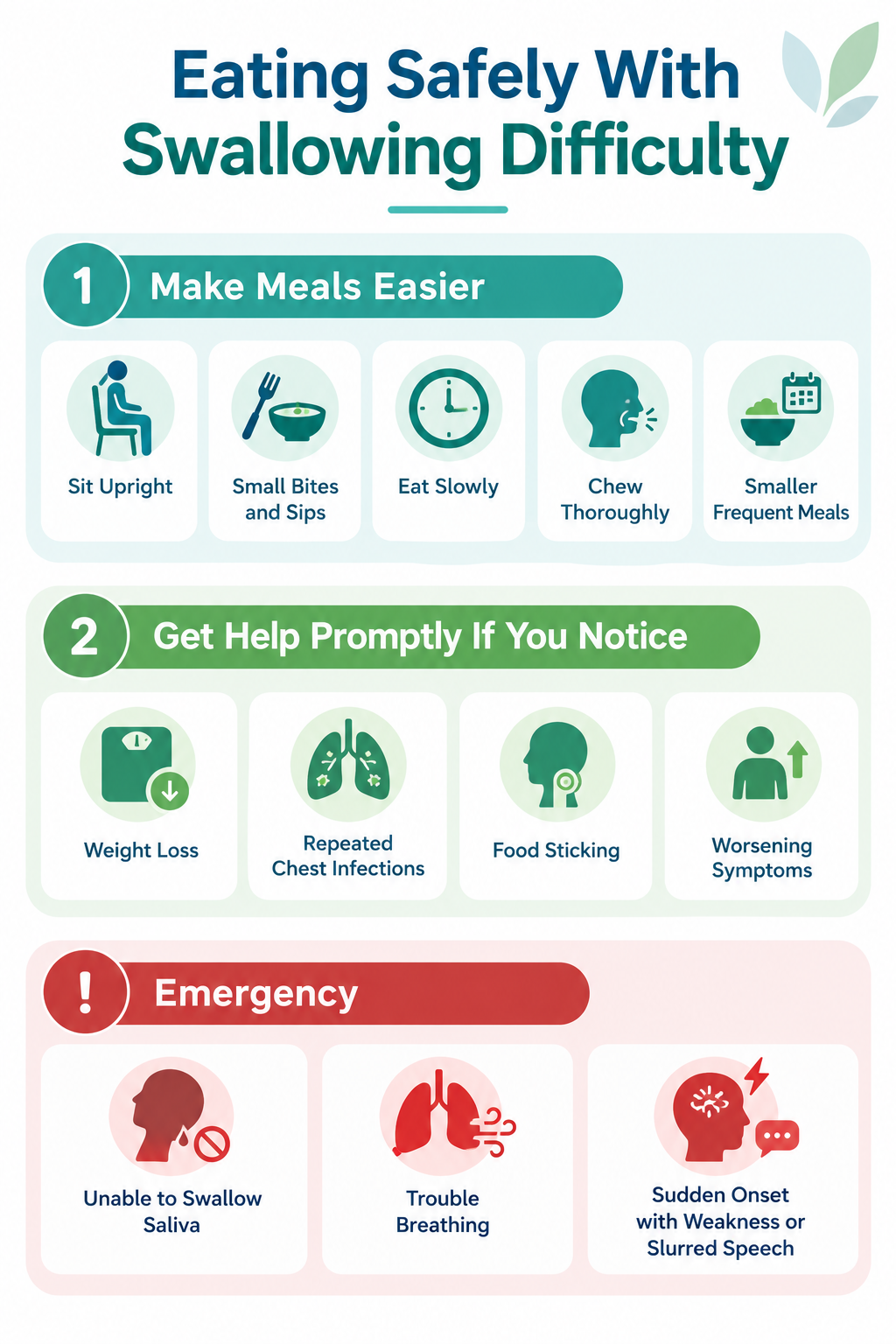
Seek emergency help straight away if:
- Food is stuck and won’t pass, and you can’t swallow your own saliva
- You’re struggling to breathe, or you’re choking and can’t clear it
- Swallowing difficulty started suddenly, especially alongside weakness in the face or arm, slurred speech, or confusion, which can be signs of a stroke
- You’re drooling because you can’t swallow
Book a prompt medical assessment, rather than waiting, if you notice:
- Blood when you cough or vomit, or black stools
- Unexplained weight loss
- Repeated chest infections or pneumonia
- Swallowing problems that keep getting worse
- Pain with swallowing that doesn’t settle
These aren’t meant to alarm you. Most swallowing difficulty has a manageable cause. But these specific signs are the ones that should never be managed at home.
Types of Dysphagia: Oropharyngeal vs. Oesophageal
Doctors divide dysphagia into two main types, and the difference is more useful than it sounds, because it points toward the likely cause and the right test.
Oropharyngeal dysphagia is trouble getting a swallow started. It involves the mouth and throat. People often describe coughing or choking as soon as they swallow, food or liquid going down the wrong way, a wet or gurgly voice after eating, or difficulty moving food to the back of the mouth.
It’s often linked to the nerves and muscles that control swallowing, which is why conditions such as stroke and Parkinson’s disease are common causes. Trouble with liquids in particular often points here.
Oesophageal dysphagia is the feeling that food is sticking or slowing down after you’ve swallowed it, somewhere in the chest or behind the breastbone. The problem lies in the oesophagus itself, the tube that carries food to the stomach.
It might be narrowing, inflammation, or a problem with how the muscle moves. Trouble with solid food in particular often points here.
Sometimes it isn’t clear-cut, and some people have a mix of both. That’s one reason a proper assessment is worth having rather than guessing.
Difficulty Swallowing Causes
There isn’t one cause. The list is long, and it ranges from very treatable problems to conditions that need long-term management.
Acid Reflux and Difficulty Swallowing
Reflux is one of the most common reasons for swallowing trouble in people who are otherwise healthy. When stomach acid washes up into the oesophagus again and again, it irritates and inflames the lining.
Over time that can lead to scarring and narrowing, known as a stricture, which makes it harder for food to pass. If you already live with heartburn, our guide on the difference between GERD and acid reflux explains when ordinary reflux becomes something that needs proper treatment.
Reflux doesn’t only show up as burning. A sour or bitter taste in the mouth, especially first thing in the morning or after meals, is a common sign that acid is travelling higher than it should, and it often appears alongside swallowing trouble.
The key point is that new difficulty swallowing in someone with long-standing reflux should always be checked. It’s one of the symptoms doctors specifically look into, rather than assuming it’s “just reflux.”
Hiatal Hernia and Swallowing Difficulty
A hiatal hernia happens when part of the stomach pushes up through the diaphragm into the chest. It can make reflux worse, and in some people it contributes to a sensation of food sticking or pressure after eating.
Many hiatal hernias cause no symptoms at all, but larger ones can. You can read more about the warning signs in our article on hiatal hernia symptoms and when to seek medical attention.
Stroke, Parkinson’s Disease, and Other Neurological Causes
Swallowing relies on precise coordination between many nerves and muscles. When the nervous system is affected, that coordination can falter.
According to the National Institute of Neurological Disorders and Stroke, stroke is the most common neurological cause of dysphagia, and others include Parkinson’s disease, multiple sclerosis, motor neurone disease (ALS), and traumatic brain injury.
In these cases, swallowing difficulty is often one of several symptoms, and management usually involves a team, including a speech-language therapist, rather than a single doctor.
Dysphagia in Older Adults
Older adults are at higher risk, partly because several of the causes above become more common with age, and partly because of changes such as weaker muscles, reduced saliva, and dental problems.
Again, though, swallowing trouble isn’t simply an expected part of ageing. When it appears, it deserves an explanation, not acceptance.
Medications and Dry Mouth
Some medicines can cause a dry mouth or irritate the oesophagus, and a dry mouth makes everything harder to swallow. Large tablets can also lodge on the way down, especially if taken with too little water or while lying down.
If you suspect a medicine is involved, don’t stop it on your own. Ask your doctor or pharmacist whether another form, such as a liquid, is available.
Signs of Difficulty Swallowing and Dysphagia Symptoms
The symptoms can be subtle at first, and many people adapt without realising they’re doing it. Common signs include:
- Food seeming to get stuck in the throat, chest, or behind the breastbone
- A feeling of a lump in the throat when swallowing
- Pain when swallowing
- Coughing or choking while eating or drinking
- Needing extra effort or several attempts to swallow
- Food or acid coming back up (regurgitation)
- A wet or hoarse voice after eating
- Frequent heartburn
- Eating more slowly, cutting food very small, or avoiding certain foods without quite knowing why
- Losing weight without trying
That last group deserves attention. Quietly avoiding bread, meat, or tablets because they “don’t go down well” is a sign your body is telling you something, even when it isn’t dramatic.
Why Swallowing Problems Can Lead to Chest Infections and Weight Loss
Two complications make dysphagia more than an inconvenience, and neither is always obvious.
The first is aspiration. When food, liquid, or saliva slips into the airway instead of the food pipe, it can end up in the lungs.
This can cause repeated chest infections or aspiration pneumonia. Many people don’t connect these two things. If you or someone you care for keeps getting chest infections, particularly alongside any coughing at meals, swallowing is worth investigating.
The second is poor nutrition and dehydration. When eating becomes tiring, uncomfortable, or frightening, people eat less, drink less, and gradually lose weight and strength. Unexplained weight loss together with swallowing difficulty should always be assessed promptly.
How Is Dysphagia Diagnosed?
A good assessment starts with a conversation. Your doctor will ask what happens when you swallow, whether liquids or solids are harder, how long it’s been going on, and what other symptoms you have. That history alone often points toward the type and likely cause.
From there, the tests depend on what the history suggests. Mayo Clinic notes that a speech-language specialist may carry out a clinical swallowing evaluation, watching you swallow different foods and liquids, and that a barium swallow can show the swallowing process on X-ray.
When the problem seems to be in the oesophagus, a gastroscopy is often the key test. A gastroenterologist passes a thin, flexible camera down through the mouth to look directly at the lining of the oesophagus and stomach.
It can reveal inflammation, narrowing, a hernia, or changes that need a biopsy, and in some cases a narrowing can be widened during the same procedure.
If the oesophagus looks normal but swallowing still isn’t working properly, the problem may lie in how the muscle moves.
That’s where oesophageal manometry and pH studies come in. A thin tube measures the pressure and coordination of the oesophageal muscle as you swallow, and can also measure how much acid is reaching the oesophagus.
None of this means something serious has been found. These tests replace guesswork with an answer, and that usually makes treatment far more effective.
How to Make Swallowing Easier: Practical Eating Tips
Once a doctor has ruled out anything urgent, and while you wait for an assessment or treatment to take effect, a few simple habits can make meals safer and more comfortable. These are general measures. They support, but don’t replace, a proper diagnosis.
- Sit upright when you eat and drink, and stay upright for a while afterwards
- Take smaller bites and sips, and put your cutlery down between mouthfuls
- Slow down. Rushed meals are harder to swallow safely
- Chew thoroughly before swallowing
- Cut down on distractions so you can concentrate on the swallow itself
- Eat smaller, more frequent meals if large ones leave you tired or uncomfortable
- Take tablets one at a time with a good drink of water, sitting upright
- Pay attention to your pattern. Note which foods or textures cause trouble, and share that with your doctor
If swallowing only goes wrong with certain foods, such as dry bread or tough meat, that detail is genuinely useful to your doctor.
Soft Foods and Texture Changes for Dysphagia
For some people, changing the texture of food makes meals safer. Softer, moister foods generally move more easily than dry, crumbly, or tough ones, and some people need foods that are minced or pureed. Liquids may need thickening for those who cough or choke on thin drinks.
This is the one area where it’s worth being careful. The right texture and thickness depend entirely on what’s causing the problem and how it affects you, and getting it wrong in either direction can be unsafe or leave you under-nourished.
A speech-language therapist or dietitian should set these levels after an assessment, rather than you guessing at them. If your doctor has suggested a modified diet, follow that plan exactly.
One practical trap is worth knowing about. Soft foods are easy to reach for in a sugary form, such as puddings, sweetened yoghurts, juices, and milkshakes, because they go down easily. Over weeks, that can crowd out more nourishing options. It’s worth asking your dietitian for soft choices that are also balanced, and keeping an eye on how much sugar is affecting your digestive health.
Staying Hydrated Safely
Dehydration makes swallowing harder, because a dry mouth and throat don’t move food well. At the same time, thin liquids can be the hardest thing to swallow safely for some people. If drinking is difficult, don’t simply drink less. Tell your doctor, who can advise on a safe way to keep your fluids up.
Swallowing Exercises and Speech Therapy for Dysphagia
Swallowing therapy is one of the most effective treatments for many people, particularly when the cause involves weakness or poor coordination.
A speech-language therapist assesses exactly which part of the swallow is struggling, and then teaches targeted exercises, positioning techniques, and strategies to make each swallow safer.
The NINDS notes that swallowing therapy with a speech-language pathologist can help, and that in some cases dysphagia can be partly or completely corrected through diet changes or non-invasive methods.
One important caution: exercises found online aren’t always safe for every cause of dysphagia. Some strategies that help one person can make things worse for another. It’s much better to learn them from a therapist who has examined how you swallow.
Dysphagia Treatment: Medication, Dilation, and Other Medical Options
Because dysphagia is a symptom, treatment depends on the cause. A few examples show how varied it can be.
- Reflux-related problems are often treated with acid-reducing medication and lifestyle changes, which can reduce inflammation and sometimes ease swallowing.
- A narrowed oesophagus can often be widened by dilation, a procedure that gently stretches the narrowed area, usually carried out during an endoscopy.
- Inflammatory conditions of the oesophagus may be treated with medication or dietary approaches, guided by the findings on biopsy.
- Muscle movement disorders, such as achalasia, have their own specific treatments, which a specialist will recommend after testing.
- Neurological causes are managed alongside the underlying condition, with therapy and, where needed, nutritional support.
- Structural problems or growths are assessed and treated according to what is found.
The aim isn’t only to make swallowing easier. It’s to treat the actual cause, protect you from choking and chest infections, and keep you properly nourished.
When to See a Doctor for Difficulty Swallowing
Don’t wait until it’s severe. It’s reasonable to book an assessment if:
- Swallowing difficulty is new, persistent, or getting worse
- It has lasted more than a couple of weeks
- You’re avoiding foods or changing how you eat because of it
- You’re losing weight without trying
- You’re getting chest infections, or coughing at most meals
- You have long-standing heartburn that now comes with trouble swallowing
- You’re simply worried
A gastroenterologist can examine the oesophagus and stomach, arrange the right tests, and work with a speech-language therapist or other specialists when needed.
If you’re looking for a gastroenterologist for swallowing problems in Pretoria, that’s exactly the kind of assessment Dr. Preetha Thomas provides.
Struggling to Swallow? Book a Consultation with Dr. Preetha Thomas.
Adapting your diet around a swallowing problem can feel like the sensible thing to do, but it rarely addresses what’s actually causing it.
Dr. Preetha Thomas, gastroenterologist in Pretoria, can assess your symptoms, arrange the right tests, and help you find a treatment plan that makes eating comfortable and safe again. Book a consultation and get the answers you’ve been putting off.
Frequently Asked Questions
What is the most common cause of difficulty swallowing?
It depends on the type and the person. Acid reflux and its complications are a very common cause of oesophageal swallowing trouble, while neurological conditions, especially stroke, are a leading cause of problems starting the swallow. A proper assessment is the only reliable way to know which applies to you.
Can acid reflux cause difficulty swallowing?
Yes. Long-term reflux can inflame the oesophagus and, over time, cause scarring and narrowing that makes swallowing harder. New swallowing difficulty in someone with ongoing heartburn should always be checked rather than put down to reflux.
Is difficulty swallowing a sign of something serious?
Sometimes, but often it isn’t. Many causes are treatable. Because a few causes are serious, ongoing or worsening swallowing difficulty, especially with weight loss, blood, or repeated chest infections, should always be assessed promptly.
Can dysphagia go away on its own?
Brief episodes, such as after a sore throat or from eating too quickly, often settle by themselves. Persistent dysphagia usually has an underlying cause that needs to be found and treated, and it’s not something to wait out indefinitely.
What kind of doctor treats swallowing problems?
It depends on the cause. A gastroenterologist looks at problems in the oesophagus and stomach, while a speech-language therapist assesses and treats the swallowing mechanism itself. Many people need both, and your doctor can coordinate the right referrals.
Disclaimer: This article is intended for general informational and educational purposes only. It does not constitute medical advice and should not be used to diagnose, treat, or manage any health condition. Sudden swallowing difficulty, choking, being unable to swallow saliva, difficulty breathing, or symptoms of a stroke need emergency medical care immediately. Please consult Dr. Preetha Thomas or another qualified healthcare professional regarding your specific symptoms, diet, and treatment.