

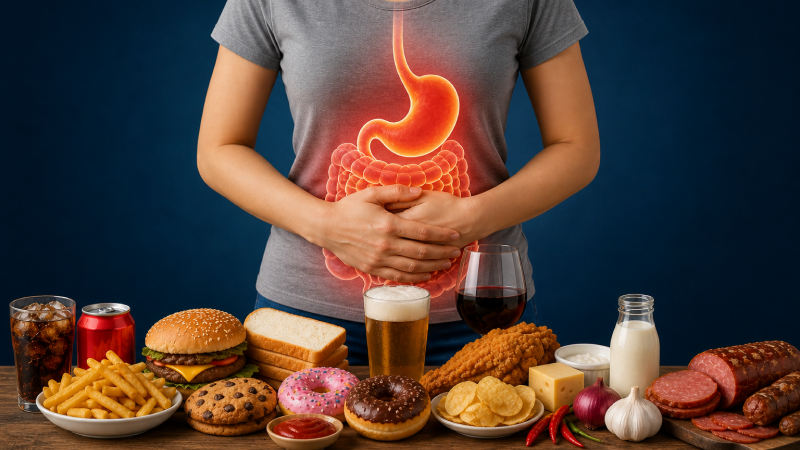
10 Foods That Are Secretly Wrecking Your Digestion
You eat what you think is a pretty normal diet. Maybe even a healthy one. But your stomach has other opinions — the bloating, the discomfort, the unpredictable trips to the bathroom. Sound familiar? You’re not imagining it.
Some of the most common foods in our daily diets are quietly working against your gut, and most people have no idea. As a gastroenterologist based in Pretoria, I see this every single week in my practice. Patients come in frustrated, convinced something is seriously wrong — and often, the first step to feeling better starts with what’s on their plate.
Let’s talk about the ten biggest culprits.
Fizzy Cold Drinks (Sodas)
South Africans love a cold Coke on a hot day — and honestly, who can blame us? But that fizzy satisfaction comes at a real cost to your gut.
Carbonated drinks introduce large volumes of gas directly into your digestive tract. This causes bloating, distension, and for many people, significant abdominal discomfort. But the real villain is the sugar — a standard 330ml can of cola contains around 9 teaspoons of sugar. That sugar feeds harmful bacteria in your gut microbiome, disrupting the balance between good and bad bacteria in ways that can lead to inflammation, irregular bowel habits, and even worsened acid reflux.
Diet sodas aren’t much better. Artificial sweeteners like aspartame and sucralose have been shown in research published in the journal Nature to alter gut microbiome composition, which may have downstream effects on metabolism and digestion.
Did You Know? A 2023 study found that consuming two or more sugary drinks per day was associated with a significantly higher risk of developing inflammatory bowel conditions compared to those who drank none.
What to drink instead: Still water with lemon or mint, rooibos tea, or diluted 100% fruit juice. Kombucha in small amounts can actually support your gut with beneficial probiotics.
Processed White Bread and Refined Carbs
White bread, white rice, instant noodles, and most store-bought pastries — these are foods that have been stripped of their fibre and most of their nutritional value during processing.
Here’s the problem: fibre is what feeds the good bacteria in your gut. Without enough of it, your microbiome suffers. Refined carbs also digest very rapidly, causing blood sugar spikes that contribute to systemic inflammation — and inflammation in the gut is linked to a host of digestive disorders including Irritable Bowel Syndrome (IBS).
Perhaps the most overlooked issue: low-fibre diets are one of the leading causes of constipation. We wrote about this in detail in our blog on why constipation is becoming more common in 2026 — and diet is right at the top of the list.
What to eat instead: Whole grain bread, brown rice, oats, or legumes. Even a small swap — like switching to whole wheat bread — meaningfully increases your daily fibre intake.
Fried and Greasy Foods
There’s a reason you feel sluggish and heavy after a plate of slap chips or deep-fried chicken. High-fat, fried foods slow down gastric emptying — meaning food sits in your stomach longer than it should. This delays digestion, causes bloating, and increases pressure on the lower oesophageal sphincter (the valve between your oesophagus and stomach).
When that valve is under pressure, it allows stomach acid to splash back up — causing the familiar burning sensation of acid reflux or GERD. If you’re regularly experiencing heartburn after meals, fried foods are often a primary trigger worth eliminating first.
The American Journal of Gastroenterology has consistently reported associations between high dietary fat intake and increased risk of both reflux and functional dyspepsia (chronic indigestion).
Key Fact: Foods with more than 20g of fat per serving can slow gastric emptying by up to 50%, meaning your gut is working overtime for hours after the meal.
What to eat instead: Grilled, baked, or steamed proteins and vegetables. If you crave crispy textures, try an air fryer — same satisfaction, far less fat.
Artificial Sweeteners
You switch to “diet” products thinking you’re doing your gut a favour. The calories are gone, the sugar is gone — what could go wrong? Quite a bit, actually.
Artificial sweeteners — particularly sorbitol, mannitol, xylitol, aspartame, and sucralose — are poorly absorbed in the small intestine. When they reach the large intestine undigested, bacteria ferment them, producing gas, bloating, and in many people, diarrhoea. This is why sugar-free gum and mints are notorious for causing digestive upset.
Beyond the immediate discomfort, a landmark study from the Weizmann Institute of Science found that saccharin and sucralose significantly disrupted the gut microbiome in human participants — even at doses within acceptable daily limits.
What to use instead: Small amounts of raw honey, pure maple syrup, or stevia (which appears to be more gut-neutral than other sweeteners). The key is moderation.
Alcohol
This one isn’t exactly a secret — but what might surprise you is just how wide-ranging alcohol’s impact on your digestive system actually is.
Alcohol directly irritates the lining of the stomach and intestines. It increases the production of stomach acid (worsening reflux), disrupts the gut microbiome, impairs the intestinal barrier (sometimes called “leaky gut”), and slows intestinal motility — which means constipation. In larger quantities, it speeds things up dramatically, leading to diarrhoea.
For the liver specifically, even moderate drinking over time can lead to fatty liver disease. We explored this in detail in our blog on why your liver gets fatty even if you don’t drink — imagine the compounded risk for those who do drink regularly.
According to the World Health Organisation, no level of alcohol consumption is entirely safe for health — and the digestive system bears a disproportionate share of the burden.
Key Fact: Alcohol is the second leading cause of liver disease worldwide, and chronic use significantly increases the risk of colorectal cancer — one of the conditions we screen for during a colonoscopy.
What to drink instead: Mocktails with fresh fruit and sparkling water, dealcoholised wines, or opting for water between alcoholic drinks at social events to reduce overall intake.
Dairy Products (For Many People)
Here’s an important qualifier: dairy is not a problem for everyone. But lactose intolerance is far more common than most people realise — globally, studies estimate that around 65–70% of adults have some degree of reduced ability to digest lactose after infancy.
Lactose is the natural sugar found in milk and dairy products. People who are lactose intolerant lack sufficient quantities of lactase — the enzyme needed to break it down. When lactose reaches the large intestine undigested, bacteria ferment it, producing gas, bloating, cramping, and diarrhoea, sometimes within 30 minutes of eating.
Many of my patients have spent years tolerating “random” digestive upset without ever connecting it to the full-cream milk in their morning coffee or the large portion of cheese on their pasta.
What to try instead: Lactose-free milk, aged hard cheeses (naturally lower in lactose), or plant-based alternatives like oat milk or almond milk. Plain yoghurt with live cultures is often tolerated better because the bacteria help pre-digest the lactose.
Spicy Foods
Spicy food lovers, bear with me — this doesn’t apply equally to everyone, but it’s worth understanding the mechanism.
The active compound in chilli peppers, capsaicin, binds to receptors in the digestive tract (called TRPV1 receptors) that are involved in pain and heat sensation. For most people in small amounts, this is fine. But in people with sensitive guts — particularly those with IBS, gastritis, or existing acid reflux — capsaicin can significantly irritate the gut lining, speed up intestinal transit, and worsen reflux symptoms.
If you consistently notice digestive discomfort after spicy meals, it’s one of the symptoms that often comes up when patients visit us with persistent bloating or abdominal discomfort.
Research Note: A review in the World Journal of Gastroenterology found that capsaicin consumption was associated with worsening functional dyspepsia symptoms in a significant proportion of sensitive individuals.
What to try instead: Flavour your food with herbs like turmeric, ginger, cumin, and coriander — many of which actually have anti-inflammatory properties that benefit the gut.
Ultra-Processed Snack Foods
Chips, biscuits, packaged cakes, instant soups, flavoured crackers — these are what nutritional scientists call “ultra-processed foods” (UPFs). They contain ingredients not typically used in home cooking: emulsifiers, stabilisers, artificial colours, flavour enhancers, and preservatives.
A major study published in The BMJ involving more than 100,000 participants found that a 10% increase in ultra-processed food consumption was associated with a higher risk of overall cancer, including colorectal cancer. Beyond cancer risk, UPFs consistently reduce microbiome diversity — and a less diverse gut microbiome is linked to virtually every major digestive condition, from IBS to inflammatory bowel disease.
The emulsifiers in processed foods are particularly concerning. Studies have shown that common emulsifiers like polysorbate 80 and carboxymethylcellulose can disrupt the mucus layer that protects your intestinal lining, increasing gut permeability.
What to snack on instead: Fresh fruit, nuts and seeds, hummus with vegetable sticks, or plain yoghurt. Whole, minimally processed foods feed your gut microbiome rather than deplete it.
Garlic and Onions (Raw or in Large Amounts)
Before you protest — garlic and onions are not bad foods. In fact, they’re rich in prebiotics and have genuine anti-inflammatory properties. But for a significant subset of people, particularly those with IBS, they are powerful triggers for digestive distress.
The culprit is FODMAPs — Fermentable Oligosaccharides, Disaccharides, Monosaccharides And Polyols. Garlic and onions are extremely high in fructans, a type of FODMAP that is rapidly fermented by gut bacteria. This fermentation produces gas, causing bloating, cramping, and altered bowel habits in sensitive individuals.
According to Monash University’s FODMAP research, about 75% of IBS patients experience significant symptom relief when they reduce high-FODMAP foods. Raw garlic and onion are consistently among the biggest offenders.
What to try instead: Garlic-infused oil (fructans don’t transfer into oil, making it gut-safe), the green tops of spring onions, or leek leaves — all give similar flavour with far less digestive fallout.
Red and Processed Meat
As South Africans, this one hits close to home. Braai culture, boerewors, biltong — red and processed meat is deeply embedded in our food identity. And I’m not here to take away your Saturday braai. But the evidence around high red meat consumption and digestive health deserves an honest conversation.
The World Health Organisation classified processed meat as a Group 1 carcinogen — meaning there is sufficient evidence it causes colorectal cancer. Red meat (unprocessed) is classified as Group 2A — probably carcinogenic. The risk increases with quantity and frequency of consumption.
Beyond cancer risk, red meat is high in saturated fat, which slows digestion and can worsen reflux and bloating. Processed meats like polony, sausages, and deli meats also contain high levels of sodium and nitrates, which promote inflammation in the gut lining over time.
This is precisely why regular colorectal cancer screening matters — a colonoscopy can detect early changes before they become serious, especially for those who regularly consume red or processed meat.
Key Fact: According to the WHO, every 50g portion of processed meat eaten daily increases the risk of colorectal cancer by about 18%. That’s roughly two rashers of bacon or one boerewors sausage.
What to eat instead: Lean poultry, fish (especially oily fish like salmon and sardines which are anti-inflammatory), legumes, or eggs. When you do eat red meat, keep portions moderate and choose minimally processed cuts over sausages and deli meats.
Quick Summary: The 10 Digestion Wreckers
- Fizzy cold drinks — excess gas, sugar disrupts gut bacteria
- White bread and refined carbs — feeds bad bacteria, causes constipation
- Fried and greasy foods — slows digestion, worsens acid reflux
- Artificial sweeteners — disrupts gut microbiome, causes bloating
- Alcohol — irritates gut lining, damages the liver, alters bowel habits
- Dairy — triggers discomfort in the majority of adults with lactose intolerance
- Spicy foods — irritates sensitive guts, worsens IBS and reflux
- Ultra-processed snack foods — destroys microbiome diversity, promotes inflammation
- Raw garlic and onions — high FODMAPs cause gas and bloating in sensitive individuals
- Red and processed meat — linked to colorectal cancer and gut inflammation
So What Now? A Word From Dr. Thomas
Reading through this list, it can feel overwhelming — especially if several of these foods are staples of your daily diet. But here’s the most important thing I want you to take away: you don’t have to be perfect, and you don’t have to overhaul everything overnight.
Start with one or two swaps. See how your gut responds. Digestion is deeply personal — what triggers severe symptoms in one person might be completely fine for another. The goal is to pay attention to your body’s signals and give your gut the respect it deserves.
That said, if you’ve been struggling with persistent digestive symptoms — ongoing bloating, reflux that won’t go away, irregular bowel habits, unexplained weight changes, or any blood in your stool — dietary changes alone may not be enough. These symptoms deserve proper medical evaluation.
At my practice in Pretoria, I use a combination of detailed history-taking and diagnostic procedures like gastroscopy and colonoscopy to get to the root of what’s going on. You don’t have to just “live with it.”
Is Your Gut Trying to Tell You Something?
If you’ve been experiencing persistent digestive symptoms — bloating, reflux, constipation, diarrhoea, or unexplained discomfort — it’s time to get answers.
Dr. Preetha Thomas is a specialist gastroenterologist at Mediclinic Kloof, Pretoria, ready to help you understand what’s really going on inside.
Book a Consultation: gastro-doc.co.za/contact
Phone: 012 367 4504/5
Location: Suite 113, Mediclinic Kloof Hospital, 511 Jochemus Street, Erasmuskloof, Pretoria
Hours: Monday–Thursday: 9am–5pm | Friday: 9am–1pm