

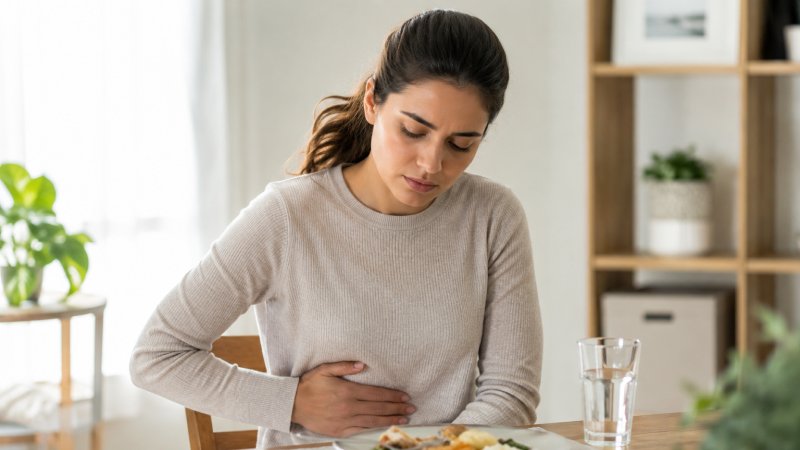
It’s usually a big meal that gives it away. A plate of something rich and fatty, and an hour or two later, a pain in the upper right side of your abdomen that’s sharp enough to stop you mid-conversation. Some people mistake it for indigestion the first time.
By the second or third episode, most people start suspecting something more specific is going on, and often, they’re right. Gallstones are one of the more common culprits behind this exact pattern, and knowing the signs, and when they cross into something that needs urgent care, makes a real difference in how this plays out for you and your recovery.
What Are Gallstones and How Do They Form?
The gallbladder is a small, pear-shaped organ tucked under the liver, and its job is to store and concentrate bile, a fluid that helps digest fat. Gallstones form when substances in bile, mainly cholesterol or bilirubin, harden into solid particles inside the gallbladder.
According to NIDDK, cholesterol stones are usually yellow-green and make up the majority of gallstones in many countries, while pigment stones are darker and made mostly of bilirubin. Stones can range from as small as a grain of sand to as large as a golf ball, and some people develop just one while others develop many at the same time.
Several factors raise the likelihood of developing gallstones: being over 40, being female, carrying excess weight, rapid weight loss, a family history of gallstones, pregnancy, and certain underlying conditions like diabetes or liver disease.
Conditions like fatty liver in particular share several of the same metabolic risk factors as gallstones, which is why the two sometimes show up in the same patients. None of these guarantee gallstones will form, but they shift the odds meaningfully.
Gallbladder Attack Symptoms and Gallstone Pain Location
The classic presentation, often called a gallbladder attack or biliary colic, happens when a stone temporarily blocks the opening to the gallbladder or a nearby duct.
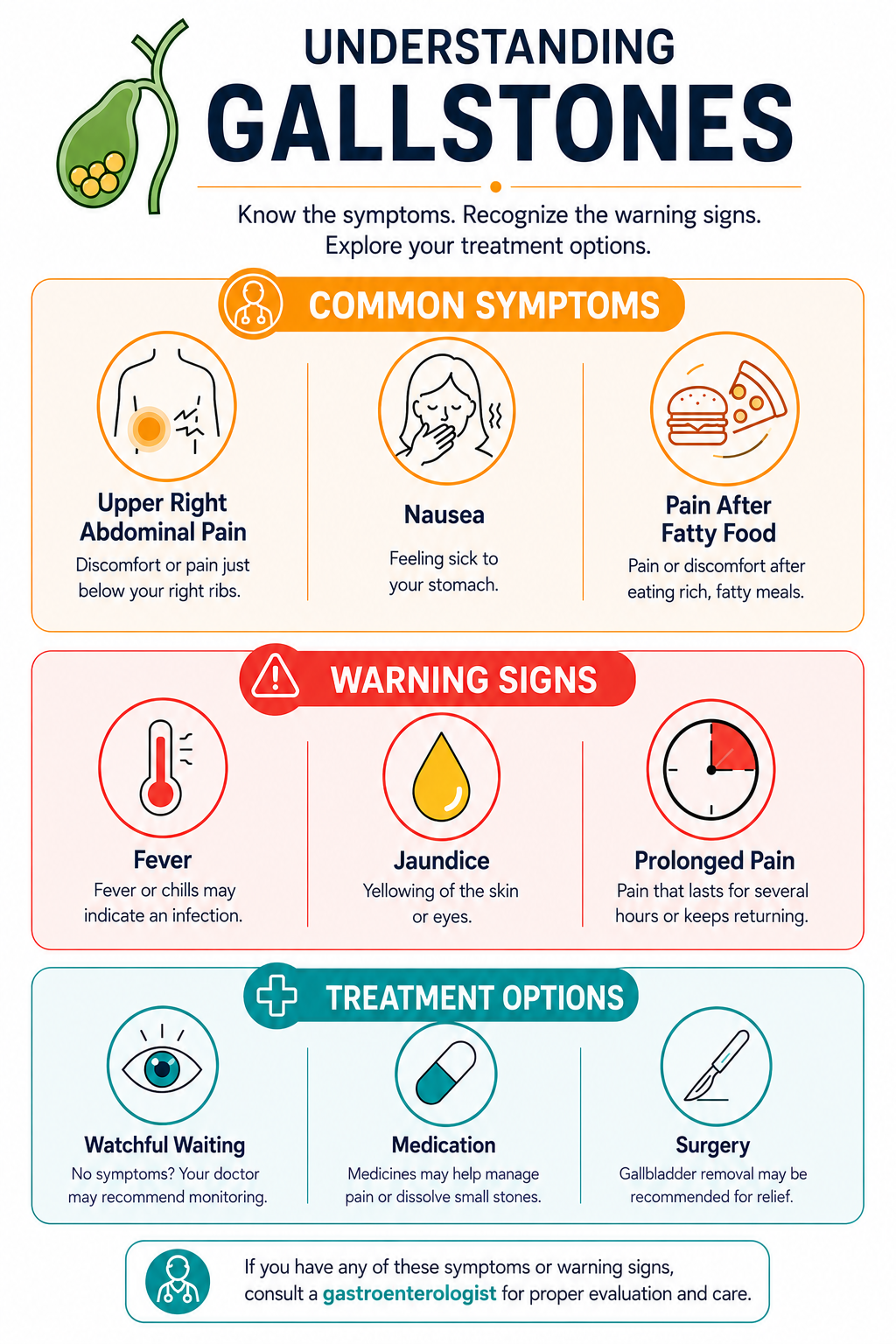
The pain typically shows up in the upper right portion of the abdomen, just under the ribs, though it can also center just below the breastbone. It often spreads, or radiates, to the back or right shoulder blade, which sometimes throws people off since the pain doesn’t stay confined to where it started.
The pain tends to come on suddenly and intensify quickly, rather than building gradually, and it’s frequently triggered by a fatty meal, though it can strike at any time, including waking someone up at night.
Alongside the pain, nausea and vomiting are common, which is part of why a gallbladder attack is sometimes mistaken for symptoms of food poisoning in the first hour or two, before the pain’s specific location and pattern make the actual cause clearer. Attacks generally last anywhere from fifteen minutes to a few hours, and once the episode passes, it can be weeks or months before another one occurs.
This on-and-off pattern is one of the more distinctive features of gallstone pain compared to other causes of stomach pain after eating, which may follow a more constant or gradually building pattern instead.
Symptoms of Gallstones in Women
Gallstones are notably more common in women than men, largely tied to hormonal factors: estrogen increases cholesterol levels in bile, and progesterone can slow gallbladder emptying, both of which raise the likelihood of stone formation.
Pregnancy, hormone replacement therapy, and birth control pills, all of which affect estrogen levels, are recognized risk factors specifically for this reason.
The symptoms themselves aren’t fundamentally different from what men experience, upper right abdominal pain, nausea, and the same gallbladder attack pattern described above, but women are statistically more likely to develop gallstones in the first place, particularly during and after pregnancy, and again around and after menopause when hormonal shifts continue.
Anyone experiencing recurring symptoms after pregnancy or during a period of hormonal change is worth paying closer attention to, since the timing itself is a recognizable pattern.
Silent Gallstones: When There Are No Symptoms at All
Here’s something that surprises a lot of people: most gallstones never cause any symptoms whatsoever. These are known as silent gallstones, and they’re often discovered incidentally, during an ultrasound or scan done for a completely unrelated reason.
Silent gallstones generally don’t require treatment. The reasoning is straightforward: if a stone isn’t blocking anything or causing pain, removing a healthy gallbladder just to eliminate a stone that isn’t bothering anyone introduces surgical risk without a clear benefit. NIDDK confirms that most gallstones don’t cause blockages and are painless, and that silent gallstones usually don’t need medical treatment.
That said, silent gallstones aren’t necessarily permanent. Some go on to cause symptoms years later, particularly if a stone shifts position or a new one forms.
This is part of why it’s worth mentioning known gallstones to a doctor even in the absence of symptoms, so there’s a baseline understanding if something changes down the line.
Warning Signs of a Gallbladder Emergency
Most gallstone episodes resolve within a few hours without lasting damage. But a smaller subset of cases escalate into something that needs prompt medical attention, and recognizing the difference matters.
Seek urgent medical care if you experience any of the following alongside abdominal pain:
- A fever, chills, or sweating alongside the pain, which can indicate cholecystitis, an infected or inflamed gallbladder
- Yellowing of the skin or eyes (jaundice), which suggests a stone may be blocking the bile duct itself
- Pain that lasts longer than five hours without easing
- Severe, unrelenting pain rather than the typical episodic pattern
- Clay-colored stools or dark urine, both signs of bile flow disruption
- Rapid heart rate or a noticeably unwell, distressed appearance alongside the pain
These signs can point toward complications like cholecystitis, a blocked bile duct, or gallstone pancreatitis, where a stone triggers inflammation of the pancreas itself.
All of these are treatable, but they need medical attention promptly rather than being managed at home the way a routine gallbladder attack sometimes is. If you’re ever unsure whether what you’re experiencing crosses that line, it’s better to get checked than to wait it out.
It’s worth noting that older adults and people with diabetes sometimes present with more subtle or atypical symptoms during a gallbladder complication, less dramatic pain, a lower-grade fever, or vague discomfort rather than the sharp attack pattern described above.
This makes complications easier to miss in these groups, which is part of why a lower threshold for seeking evaluation is generally recommended for anyone in a higher-risk category, even when symptoms seem mild.
Gallstone Diagnosis: How Doctors Confirm It
Diagnosis usually starts with a description of the symptoms and a physical exam, since the pattern of pain, especially its location and its connection to fatty meals, is often distinctive enough to raise suspicion immediately.
An abdominal ultrasound is the standard next step and the most reliable way to actually see gallstones. It’s noninvasive, doesn’t involve radiation, and can usually confirm the presence, size, and number of stones fairly clearly.
Our abdominal sonar service covers what to expect from this kind of scan in more detail, including how to prepare beforehand.
Blood tests are often run alongside imaging, checking for signs of infection, inflammation, or elevated bilirubin that would suggest a blocked bile duct. In some cases, further imaging like a CT scan or an MRCP, a specialized scan of the bile ducts, is needed if the initial ultrasound doesn’t give a full enough picture, particularly if a bile duct blockage is suspected rather than a straightforward gallbladder stone.
Gallstones Without Surgery: When Is It an Option?
Not every diagnosis of gallstones leads straight to the operating room. For silent, asymptomatic stones, watchful waiting is the standard approach, essentially monitoring rather than treating, since the stones aren’t causing a problem to begin with.
For symptomatic cholesterol stones specifically, medications like ursodeoxycholic acid can sometimes dissolve stones over months to years, though this approach works only for certain stone types, tends to be slow, and carries a real chance that stones will reform once treatment stops.
It’s generally reserved for people who aren’t good surgical candidates or who specifically want to avoid surgery for other reasons.
Pigment stones, by contrast, don’t respond to dissolution medication and essentially require surgical management once they’re causing symptoms.
NIDDK notes that nonsurgical treatments are rarely used for symptomatic gallstones, and that the usual and most effective treatment remains surgical removal of the gallbladder. Non-surgical management is worth discussing with a doctor, but it’s the exception rather than the default path once symptoms are present.
When Surgery Is Needed: Gallbladder Removal Explained
For anyone having recurring gallbladder attacks or complications, surgery is generally the recommended path, and for good reason: it addresses the problem at its source rather than managing symptoms indefinitely.
Cholecystectomy, the surgical removal of the gallbladder, is one of the most commonly performed operations, typically done laparoscopically through a few small incisions rather than one large open incision.
Laparoscopic surgery generally means a shorter hospital stay, less pain afterward, and a quicker return to normal activity compared to open surgery, which is now mostly reserved for more complicated cases.
The gallbladder isn’t an essential organ. Once it’s removed, bile flows directly from the liver into the small intestine instead of being stored and concentrated first, and most people adjust to this without major lasting issues.
Recovery from laparoscopic surgery is usually measured in days to a couple of weeks before returning to normal activity, though some people notice mild digestive changes, particularly with very fatty meals, in the weeks immediately following surgery as the body adjusts to bile flowing continuously rather than in the concentrated bursts the gallbladder used to provide.
Gallstone Diet: Eating to Manage Symptoms
Diet doesn’t dissolve existing gallstones, but it plays a real role in managing symptoms and reducing the frequency of attacks while waiting for treatment, or supporting recovery after surgery.
High-fat and fried foods are the most consistent trigger for gallbladder attacks, since fat is what prompts the gallbladder to contract and release bile, which is exactly the mechanism that causes pain when a stone is in the way. Reducing fried food, fatty cuts of meat, full-fat dairy, and heavy sauces tends to reduce how often symptoms flare.
Smaller, more frequent meals put less demand on the gallbladder at any single point than a few large meals would. Fiber-rich foods, vegetables, whole grains, and legumes, are generally well tolerated and may help manage overall bile composition over time.
After gallbladder removal surgery, most people can return to a fairly normal diet within a few weeks, though easing back into fattier foods gradually, rather than all at once, tends to be more comfortable while the digestive system adjusts to functioning without the gallbladder’s storage role.
Gallstone Risk Factors and Prevention
While some risk factors, age, sex, and family history, aren’t within anyone’s control, a few genuinely reduce the odds of developing gallstones in the first place.
Maintaining a healthy weight matters, but the way weight is lost matters just as much as the weight itself. Rapid weight loss, whether from a very low-calorie diet or weight-loss surgery, is a recognized risk factor for gallstones, somewhat counterintuitively, since fast fat breakdown increases cholesterol concentration in bile faster than the gallbladder can adjust.
NIDDK notes that diets or surgeries causing fast weight loss carry a higher gallstone risk than approaches leading to slower, steadier weight loss, and recommends discussing any very low-calorie diet or weight-loss surgery with a doctor beforehand specifically because of this risk.
A diet higher in fiber and lower in refined carbohydrates and added sugar is generally associated with a lower gallstone risk over time.
Staying physically active and avoiding prolonged fasting or extreme calorie restriction also appear to help, likely because both extremes, overeating and undereating, disrupt the normal rhythm of gallbladder emptying that helps prevent bile from sitting concentrated for too long.
None of this guarantees gallstones won’t form, since genetics and hormonal factors play a real role too, but for people actively trying to lose weight or already managing other risk factors, these adjustments meaningfully shift the odds.
What Happens If Gallstones Are Left Untreated?
For silent gallstones, leaving them alone is usually the right call, so this question mostly applies to stones that are already causing symptoms.
Repeated gallbladder attacks tend to follow an unpredictable pattern: some people go months between episodes, while others find attacks becoming more frequent or severe over time as stones shift position or increase in number.
The more significant concern is complications. A stone that moves into and blocks the bile duct can cause jaundice and, if left untreated, a serious bile duct infection called cholangitis.
Cholecystitis, inflammation of the gallbladder itself, can develop if a stone blocks the cystic duct persistently, and left untreated, the gallbladder can become infected or, in rare cases, rupture.
Gallstone pancreatitis, where a stone blocks the pancreatic duct on its way out, causes inflammation of the pancreas and can range from moderate to severe.
None of this means every case of symptomatic gallstones is heading toward an emergency. Plenty of people manage recurring mild attacks with dietary adjustments for a period of time before eventually opting for surgery.
But once symptoms are present, the general trajectory tends toward needing intervention eventually rather than the problem resolving on its own, which is why getting a proper evaluation sooner rather than later tends to lead to a more straightforward outcome.
Frequently Asked Questions
A few quick answers to the questions that come up most often once gallstones enter the conversation.
What does a gallstone attack feel like?
A sudden, sharp or cramping pain in the upper right abdomen, sometimes spreading to the back or right shoulder blade. It often follows a fatty meal and can come with nausea or vomiting.
How long does a gallstone attack last?
Typically anywhere from fifteen minutes to a few hours. If pain persists beyond five hours or is accompanied by fever or jaundice, that’s a sign to seek urgent care rather than wait it out.
Can gallstones go away on their own?
Small stones occasionally pass without intervention, but most gallstones don’t resolve on their own. Silent, symptom-free stones often don’t need treatment at all, while symptomatic ones typically require ongoing management or surgery.
Can you live without a gallbladder?
Yes. The gallbladder isn’t essential for digestion. After removal, bile flows directly from the liver to the small intestine, and most people live entirely normally afterward, sometimes with minor dietary adjustments in the weeks following surgery.
Book a Consultation with Dr Preetha Thomas
If you’ve been experiencing recurring pain after meals, or you’ve had one attack and are wondering whether it will happen again, it’s worth getting a proper evaluation rather than waiting for the next episode to decide what to do. Dr Preetha Thomas, a gastroenterologist in Pretoria, can help confirm whether gallstones are behind your symptoms and guide you through the right next steps, whether that’s monitoring, diet changes, or referral for surgery.
Get in touch to book a consultation, and get a clear picture of what’s actually happening and the treatment path that fits your situation best.