


If you’ve ever planned your day around the nearest bathroom, skipped a meal out because you weren’t sure how your stomach would react, or spent an afternoon doubled over with cramps that nobody could explain, you already know how disruptive irritable bowel syndrome can be.
It’s one of the most common digestive conditions in the world, and yet it’s also one of the most misunderstood. Many people wait years before they get a name for what’s happening to them.
This guide explains what IBS actually is, what’s thought to cause it, how to recognise the symptoms, and which treatments genuinely help. It also covers the warning signs that point to something other than IBS, because knowing the difference matters.
What Is Irritable Bowel Syndrome (IBS)?
Irritable bowel syndrome is a long-term condition that affects how the large intestine works. According to the National Institute of Diabetes and Digestive and Kidney Diseases, IBS is a group of symptoms that occur together, mainly repeated abdominal pain and changes in bowel movements, without any visible sign of damage or disease in the digestive tract.
That last part is important. If you’ve had a scope or a scan and been told everything looks normal, it doesn’t mean your symptoms aren’t real.
IBS is what doctors call a functional disorder, and it’s now more accurately described as a disorder of gut-brain interaction. The gut looks healthy, but it isn’t behaving the way it should, and the communication between the gut and the brain is a big part of why.
It’s also common. Estimates suggest that roughly one in ten people worldwide live with IBS, and it affects women about twice as often as men.
It’s chronic, meaning it tends to last for years, but symptoms usually come and go rather than staying constant. IBS is uncomfortable and sometimes exhausting, but it doesn’t damage the digestive tract or lead to serious diseases such as bowel cancer.
Types of IBS: IBS-C, IBS-D, and IBS-M
Not everyone with IBS has the same pattern, and working out which type you have shapes how it’s treated.
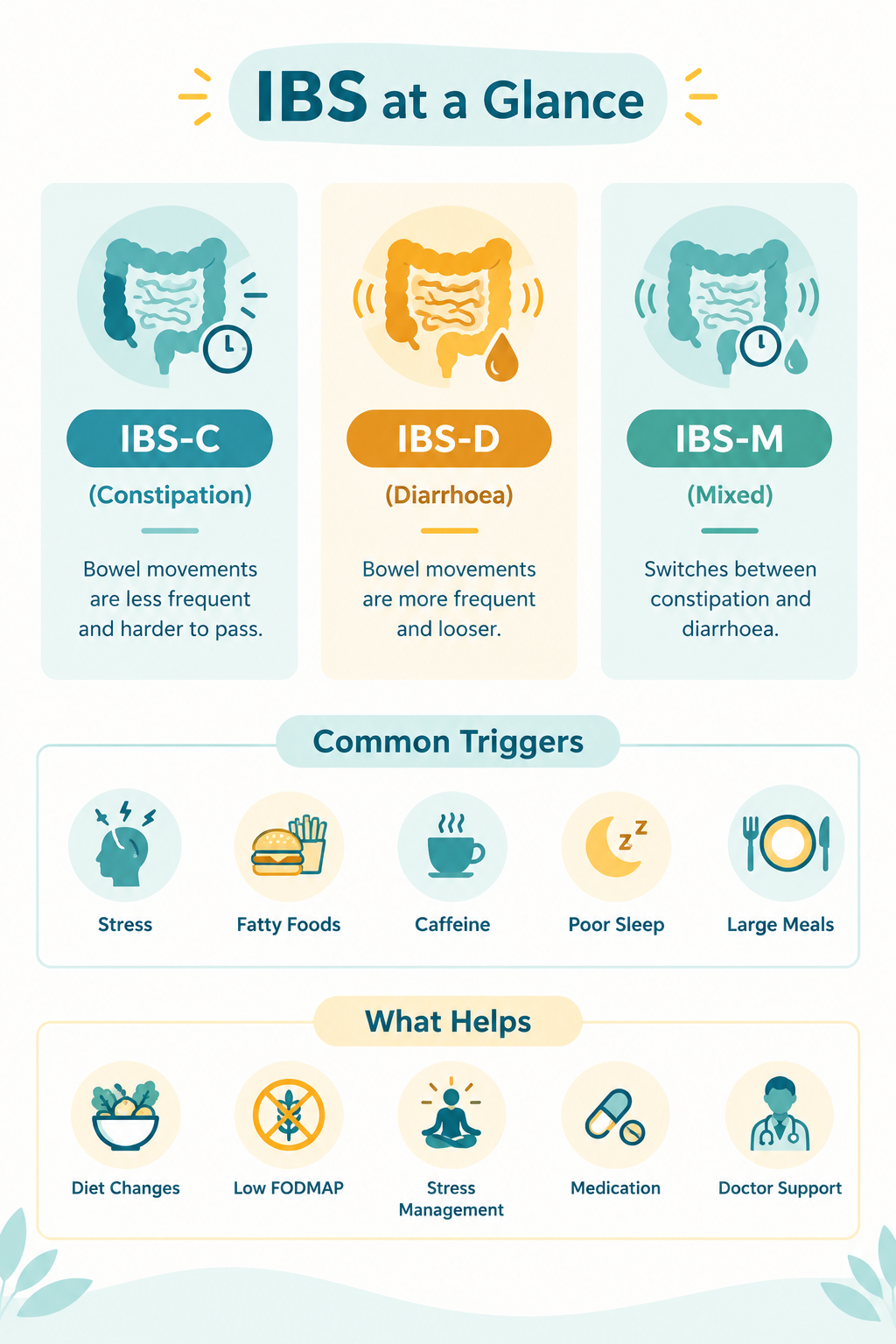
IBS-C (constipation-predominant) means hard, lumpy stools and infrequent bowel movements, often with straining and a feeling of not having fully emptied.
IBS-D (diarrhoea-predominant) means loose or watery stools, frequent trips to the toilet, and a sense of urgency that can make leaving the house stressful.
IBS-M (mixed) means swinging between the two, sometimes within the same week or even the same day.
Some people fit none of these neatly, and the pattern can shift over time. Someone who has had constipation for years may find diarrhoea taking over after an infection or a stressful period.
That’s normal for IBS and worth mentioning to your doctor rather than assuming something new is going wrong.
What Causes IBS?
Here’s the honest answer: doctors don’t know for certain. There’s no single cause, and different factors seem to matter in different people. What researchers do agree on is that several things tend to overlap.
Abnormal Gut Motility
The muscles of your intestines contract in waves to push food along. In IBS, that rhythm can go wrong. If food moves too quickly, you get diarrhoea and urgency. If it moves too slowly, you get constipation, hard stools, and bloating. Some people with IBS swing between both patterns.
Visceral Hypersensitivity
People with IBS often have a gut that’s more sensitive than average. A normal amount of gas or stool moving through the intestine, which most people wouldn’t notice, can feel painful or crampy.
The gut isn’t necessarily doing anything unusual. The nerves are simply turned up too high.
Gut-Brain Axis and IBS
This is the heart of the modern understanding of IBS. Your gut and brain talk to each other constantly through nerves, hormones, and immune signals.
When that conversation goes awry, the result can be exaggerated pain signals, disrupted movement in the bowel, and symptoms that flare with emotional strain.
If you’d like to understand this two-way relationship in more depth, our article on how gut health and mental health are connected walks through it in plain language.
Gut Microbiome and Post-Infectious IBS
Your intestines are home to trillions of bacteria, and an imbalance in those communities has been linked to IBS symptoms, particularly bloating and gas. In some people, IBS begins after a bout of gastroenteritis or food poisoning that never quite settles.
This is known as post-infectious IBS, and it’s one reason a stomach bug can leave lasting effects long after the infection itself has cleared. Small intestinal bacterial overgrowth, where too many bacteria colonise the small bowel, is also more common in people with IBS.
Can Stress Cause IBS?
Stress doesn’t cause IBS on its own, but it’s one of the most reliable triggers for flare-ups, and difficult experiences in early life or ongoing anxiety and depression are more common in people with the condition.
Stress hormones change how quickly the gut moves and how sensitive it feels, which is why symptoms so often worsen before exams, during work pressure, or through a difficult season of life. We explore this in more detail in our guide to how stress affects your digestion.
Other factors that may play a part include food intolerances or sensitivities, genetics (IBS does seem to run in some families), and hormonal changes, which is one reason many women notice worse symptoms around their periods.
Common IBS Symptoms
Symptoms vary from person to person, but the core pattern is recurring abdominal pain linked to bowel movements, along with a change in how often you go or what your stools look like.
Doctors often use a standard set of criteria for diagnosis: abdominal pain at least once a week over the past three months, connected to two or more of the following. The pain relates to passing a stool, it comes with a change in how often you go, or it comes with a change in stool appearance.
Beyond that core pattern, people commonly report:
- Cramping that eases after a bowel movement
- Diarrhoea, constipation, or alternating between the two
- A feeling of incomplete emptying after going to the toilet
- Urgency that comes on suddenly
- Gas and a swollen, tight abdomen
These are the symptoms that most often lead someone to search “early signs of IBS,” and it’s worth knowing that they can look very different from one person to the next. Our older guide on IBS symptoms and when to see a gastroenterologist covers this in more detail.
IBS Bloating and Gas
Bloating is one of the most frequent complaints, and one of the most frustrating. It can build through the day so that you feel fine in the morning and visibly distended by evening.
Part of this is extra gas, but part of it is that the gut is more aware of normal amounts of gas than it should be. Foods high in fermentable carbohydrates tend to make it worse, which is why diet changes can help so much.
Mucus in Stool and IBS
Small amounts of clear or whitish mucus in the stool are fairly common in IBS. The intestines make mucus naturally to lubricate and protect themselves, and some people with IBS notice more of it.
That said, mucus alongside blood, or in large amounts, needs to be checked rather than assumed to be IBS.
IBS Fatigue and Sleep Problems
The link between IBS and tiredness surprises many people. Pain, night-time discomfort, and the mental load of managing an unpredictable gut can all disrupt sleep.
Anxiety and low mood, which are more common in people with IBS, add to it. If you’re exhausted and your gut is a mess, the two are very likely connected.
IBS vs. IBD: What’s the Difference?
These two get confused constantly because the names and some symptoms overlap, but they’re very different conditions.
IBS is a functional disorder. The bowel looks normal on investigation, and it doesn’t cause damage to the intestine. Inflammatory bowel disease (IBD), which includes Crohn’s disease and ulcerative colitis, involves genuine inflammation and physical damage to the digestive tract.
IBD can cause complications and sometimes needs stronger medication or surgery. Symptoms that lean towards IBD include blood in the stool, ongoing fever, unexplained weight loss, and diarrhoea that wakes you at night.
Coeliac disease is another look-alike. It’s an immune reaction to gluten that can cause bloating, diarrhoea, and fatigue in ways that mimic IBS.
That’s one reason a proper work-up includes checking for coeliac disease before settling on an IBS diagnosis, rather than assuming it.
IBS Symptoms That Need Urgent Attention
This section matters more than any other. IBS is common, and it’s easy to blame every digestive problem on it. But certain symptoms are not typical of IBS and should always be assessed by a doctor promptly:
- Blood in your stool, or black, tarry stools
- Unexplained weight loss
- Symptoms that wake you at night
- Persistent vomiting
- Difficulty swallowing
- Anaemia or unexplained iron deficiency
- A fever alongside bowel symptoms
- Symptoms that begin for the first time after the age of 50
- A family history of bowel cancer, inflammatory bowel disease, or coeliac disease
Having one of these doesn’t mean something serious is definitely wrong. It does mean that calling it IBS and moving on isn’t safe. If any of them apply to you, book an assessment rather than waiting for the next flare to settle.
How Is IBS Diagnosed?
There’s no single test that confirms IBS. Diagnosis is based on the pattern of your symptoms over time, your medical and family history, a physical examination, and ruling out other conditions that could explain what you’re feeling.
Depending on your symptoms and age, your doctor may suggest blood tests to check for anaemia, inflammation, or coeliac disease, and stool tests to look for infection or markers of bowel inflammation. If there are red flag symptoms, or you’re in an age group where screening is appropriate, a colonoscopy allows a specialist to look directly at the lining of the bowel and confirm that it’s healthy.
A normal result isn’t a disappointment. It’s exactly what supports an IBS diagnosis, and it gives you a firm footing for treatment.
IBS Treatment Options
There’s no cure for IBS, but that doesn’t mean you’re stuck with symptoms. Most people can achieve good control with a combination of approaches, tailored to their subtype and their triggers. The Cleveland Clinic also emphasises that treatment usually works best when it targets both the gut and the way the gut and brain communicate.
IBS Diet: Foods That Trigger IBS and Foods That Help
Food is the first place most people look, and for good reason. Common triggers include high-fat and fried foods, spicy meals, caffeine, alcohol, artificial sweeteners, and large meals eaten quickly.
But triggers differ from person to person, so what upsets one person may be perfectly fine for another.
A food and symptom diary kept for two to three weeks is one of the most useful tools you can use. Patterns often emerge that you’d never spot from memory.
For constipation, gradually increasing soluble fibre (such as oats or psyllium) can help, while insoluble fibre such as wheat bran sometimes makes bloating worse. Eating regular meals, chewing well, and not skipping meals also help the gut settle into a rhythm.
Low FODMAP Diet for IBS
FODMAPs are fermentable carbohydrates found in foods such as onions, garlic, wheat, certain fruits, and dairy. In people with IBS, they draw water into the bowel and ferment, producing gas, bloating, and changes in bowel habits.
A low FODMAP diet removes these foods for a short period and then reintroduces them one at a time to find which ones you actually react to.
It’s effective for many people, but it’s not meant to be a permanent restriction, and doing it without guidance can leave you eating an unnecessarily narrow diet. If you want to try it, our guide on how to follow a low FODMAP diet for IBS relief explains the stages step by step, and working with a doctor or dietitian is worthwhile.
IBS Medication: Antispasmodics, Laxatives, and Antidiarrhoeals
Medication is usually matched to your dominant symptom. Antispasmodics can ease cramping and pain. Laxatives, including fibre supplements and osmotic laxatives, help with constipation.
Antidiarrhoeal medicines can reduce urgency and frequency in IBS-D. For more persistent pain, low doses of certain antidepressants are sometimes used, not because the pain is imagined, but because these medicines act on the nerve signalling between the gut and brain.
Over-the-counter options are fine for occasional use, but if you find yourself relying on them daily, or nothing seems to be working, that’s a signal to see a specialist rather than keep adjusting on your own.
Newer prescription treatments exist for both IBS-C and IBS-D, and a gastroenterologist can advise which is appropriate for you.
Probiotics for IBS
Because gut bacteria seem to play a role in IBS, probiotics have attracted a lot of interest. Some strains have shown benefit for bloating and overall symptoms in studies, but results are inconsistent, and not every product on the shelf has been tested for IBS. If you want to try one, give it four to six weeks and stop if there’s no benefit. Our guide to probiotics, prebiotics, and gut health explains how to choose sensibly.
IBS Stress Management, CBT, and Gut-Directed Hypnotherapy
Because the gut-brain axis is central to IBS, treating the stress side of the equation isn’t optional extra. It’s part of the treatment. Regular exercise, good sleep, breathing techniques, and relaxation practices all help.
For people who need more, cognitive behavioural therapy adapted for IBS and gut-directed hypnotherapy have both shown genuine benefit in clinical research, sometimes as much as dietary changes.
Some people also try acupuncture or herbal remedies. The evidence for these is limited, so if you’d like to explore them, do it alongside your medical care rather than instead of it, and tell your doctor what you’re taking.
Is There a Cure for IBS?
No, not at present. But that’s a very different thing from saying nothing can be done. IBS is a condition that’s managed rather than cured, much like many other long-term conditions.
With the right combination of diet, stress management, and medication, most people get their symptoms down to a level that no longer runs their life.
Flare-ups will probably still happen. Stressful weeks, changes in routine, illness, and hormonal shifts can all bring symptoms back.
The aim isn’t to never have a bad day. It’s to have fewer of them, recover faster when you do, and feel confident that you understand what’s going on.
When to See a Gastroenterologist for IBS
It’s reasonable to see a doctor whenever bowel symptoms are affecting your quality of life, but some situations make it more pressing. Consider booking an appointment if:
- Your symptoms have lasted more than a few weeks
- Self-management and over-the-counter treatment aren’t helping
- Symptoms are disrupting work, sleep, or social life
- You have any of the warning signs listed earlier
- You’ve never had a proper diagnosis and have been guessing
A specialist can confirm the diagnosis, rule out other conditions, and build a plan matched to your subtype and triggers. If you’re looking for an IBS specialist in Pretoria, that’s exactly the kind of assessment Dr. Preetha Thomas provides.
Ready to Book Your IBS Consultation with Dr. Preetha Thomas?
Living with unpredictable digestive symptoms is tiring, and guessing your way through diet changes and medications rarely gets you far.
Dr. Preetha Thomas, gastroenterologist in Pretoria, can evaluate your symptoms, rule out other causes, and put together a plan that fits your life. Book a schedule today and take the first step towards clear answers and lasting relief.
Frequently Asked Questions
Can IBS go away on its own?
IBS is a long-term condition, so it doesn’t usually disappear entirely. Symptoms often come and go, and some people have long quiet spells, especially when triggers are identified and managed. For most people, the realistic goal is good control rather than a permanent cure.
Is IBS a serious condition?
IBS can be painful and disruptive, but it doesn’t damage the digestive tract or lead to serious diseases such as bowel cancer. It’s the impact on daily life that makes it worth treating properly. What is serious is assuming that new or unusual symptoms are IBS without having them checked.
Can IBS cause weight loss?
Not typically. Unexplained weight loss is not a feature of IBS and is considered a warning sign that should always be investigated. If you’re losing weight without trying, see a doctor rather than putting it down to your IBS.
What is the best diet for IBS?
There’s no single best diet, because triggers differ between people. A food diary, regular meals, and a structured approach such as the low FODMAP diet, ideally with professional guidance, are the most reliable ways to find what works for you.
Can stress make IBS worse?
Yes. Stress doesn’t cause IBS on its own, but it’s one of the most common triggers for flare-ups. Managing stress through exercise, sleep, relaxation techniques, or therapy is a genuine part of IBS treatment, not a soft add-on.
Disclaimer: This article is intended for general informational and educational purposes only. It does not constitute medical advice and should not be used to diagnose, treat, or manage any health condition. Symptoms such as blood in the stool, unexplained weight loss, or persistent vomiting need prompt medical assessment. Please consult Dr. Preetha Thomas or another qualified gastroenterologist regarding your specific symptoms and treatment options.