


Your digestive system works quietly in the background, which is exactly why problems with it so often go unnoticed, or get put up with, for far too long. A bit of bloating here, some heartburn there, a stomach that never quite settles.
It’s easy to adapt and carry on. But persistent digestive complaints are worth understanding, and that’s where the benefits of regular gastroenterologist visits come in.
This isn’t a case for rushing off to a specialist every few months. Most people don’t need routine visits. What it is, though, is a look at what a gastroenterologist actually does, when seeing one makes a real difference, and how the right assessment at the right time can bring clear answers, early detection, and a plan that works.
Why Is Digestive Health Important for Overall Well-Being?
Your digestive system does far more than process lunch. It breaks down food and absorbs the nutrients your body needs to run, from energy and protein to vitamins and minerals.
It removes waste. Its lining forms a barrier that helps keep harmful substances out of your bloodstream, and a large part of your immune system lives in the gut wall.
Add in the liver, gallbladder, and pancreas, which handle metabolism, bile, and digestive enzymes, and you have a network that touches almost every aspect of your health.
The gut is also in constant conversation with your brain. That’s why stress can upset your stomach, and why long-standing digestive trouble can drag down your mood, sleep, and energy. When digestion is working well, you often don’t notice.
When it isn’t, the effects can spill into everything else: poor nutrition, tiredness, weight changes, and a lower quality of life.
Maintaining good digestive health matters for exactly that reason. It’s not only about avoiding discomfort. It’s about supporting how well the rest of your body functions.
The Benefits of Seeing a Gastroenterologist for Better Gut Health
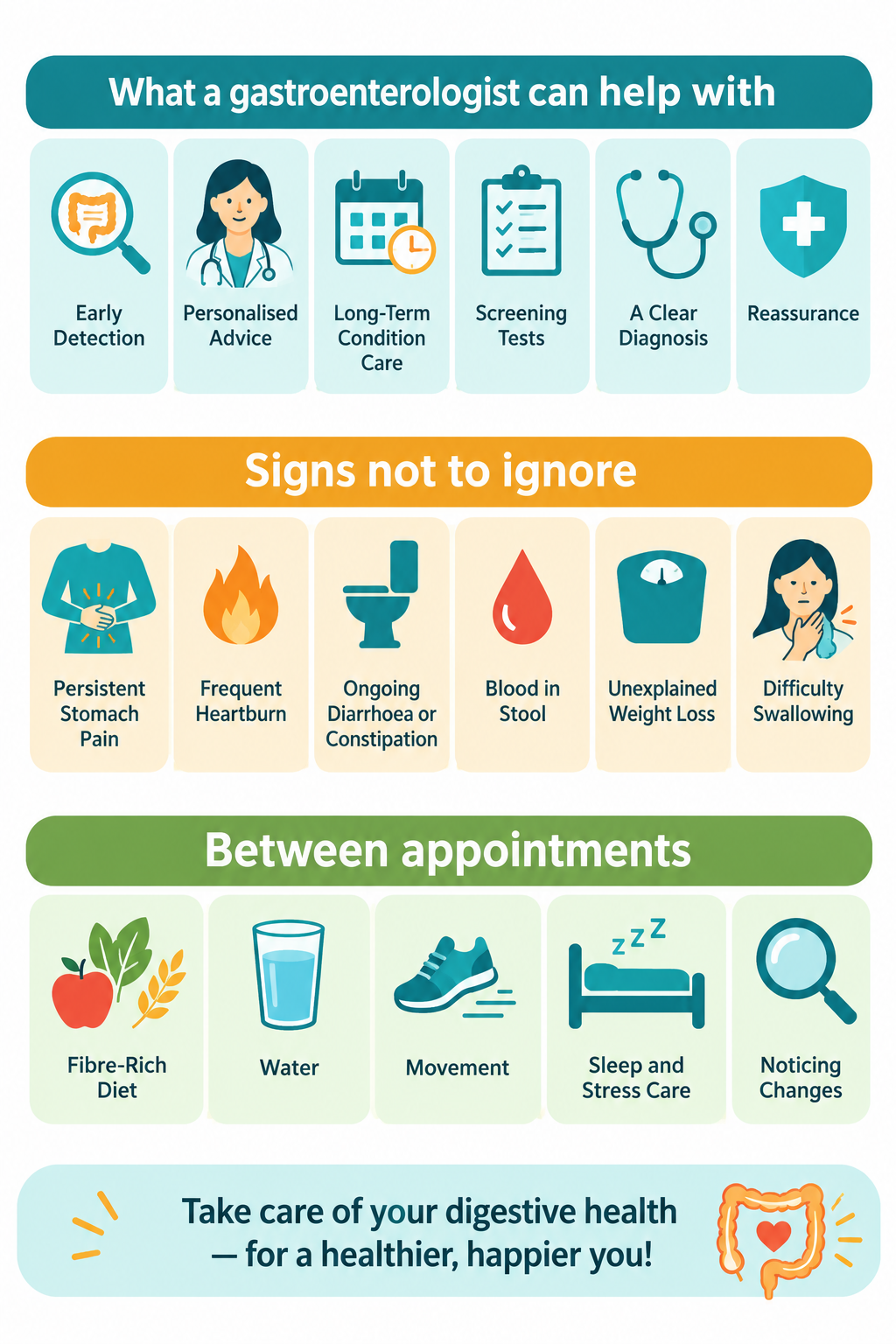
A gastroenterologist is a doctor with specialist training in the digestive system, including the oesophagus, stomach, intestines, liver, gallbladder, and pancreas. Here’s what that expertise can offer.
Identifying Digestive Problems Early
Many digestive conditions start quietly. Early inflammatory bowel disease, coeliac disease, ulcers, and bowel polyps can all cause vague or mild symptoms at first, or none at all.
A gastroenterologist knows which patterns deserve a closer look and which tests will answer the question, so a problem can be found while it’s still small and often easier to treat.
Early detection isn’t guaranteed to change every outcome, but it gives you the best chance of simpler treatment.
Receiving Personalised Digestive Health Advice
General advice about “eating more fibre” or “cutting out trigger foods” only goes so far. A specialist considers your symptoms, history, medication, family background, and test results, and tailors guidance to you.
That might mean a specific dietary approach, a particular medicine, or reassurance that nothing serious is going on and a plan to manage what is.
Managing Long-Term Gastrointestinal Conditions
Conditions such as irritable bowel syndrome, reflux disease, and inflammatory bowel disease are often long-term. Seeing a gastroenterologist means having someone who monitors your condition over time, adjusts treatment when your symptoms change, and watches for complications.
Improving Your Overall Digestive Health
Beyond treating disease, a good consultation helps you understand your own gut. You learn what your symptoms mean, what to watch for, and what you can do day to day. For many people, that clarity alone reduces anxiety and improves how they cope.
Common Digestive Disorders That Require Specialist Attention
Some conditions are common enough that you may already know someone living with them. They’re also the ones where specialist input tends to help the most.
Gastroesophageal Reflux Disease (GERD) and Persistent Acid Reflux
Occasional heartburn is normal. Persistent acid reflux that keeps returning, or that doesn’t respond to over-the-counter treatment, may be GERD, and it can lead to complications if left unmanaged. If you’re unsure where the line is, our guide on the difference between GERD and ordinary acid reflux explains it.
Irritable Bowel Syndrome (IBS)
IBS causes recurring abdominal pain with changes in bowel habits, without visible damage to the gut. It’s very common, and it’s a good example of a condition where specialist input matters, both to rule out other causes and to build a management plan around diet, stress, and symptoms.
Inflammatory Bowel Disease (IBD)
Crohn’s disease and ulcerative colitis involve genuine inflammation of the digestive tract. They can cause persistent diarrhoea, abdominal pain, weight loss, and blood in the stool, and they need proper diagnosis and long-term care.
Peptic Ulcers and Stomach Problems
Ulcers, gastritis, and infections such as Helicobacter pylori can cause burning upper abdominal pain, nausea, and indigestion. They’re usually very treatable once identified.
Liver, Gallbladder and Pancreatic Conditions
Gallstones, fatty liver disease, hepatitis, and pancreatic problems can also show up as digestive symptoms, such as upper abdominal pain, nausea, or changes in stool. A gastroenterologist can investigate them, or coordinate with other specialists where needed.
Signs of Digestive Problems You Should Not Ignore
Most digestive symptoms are harmless and short-lived. These ones deserve attention when they persist or are accompanied by other changes.
Frequent Bloating and Abdominal Discomfort
Occasional bloating after a big meal is normal. Bloating that’s frequent, painful, or accompanied by other symptoms is worth looking into.
Persistent Stomach Pain
Chronic stomach pain, meaning pain that keeps returning or doesn’t settle over weeks, shouldn’t be dismissed. It can have many causes, from IBS to ulcers to gallbladder problems.
Ongoing Constipation or Diarrhoea
Either one, when it lasts more than a few weeks or represents a change from your normal, deserves assessment, particularly if it affects your daily life.
Changes in Bowel Habits
A persistent change in how often you go, or in the appearance of your stool, is one of the symptoms doctors take most seriously, especially in people over 45 to 50.
Difficulty Swallowing or Persistent Heartburn
Food that sticks, pain when swallowing, or heartburn that won’t settle should be evaluated rather than managed indefinitely with antacids.
Unexplained Weight Loss or Blood in Stool
These two are warning signs. Losing weight without trying, and any blood in the stool or black, tarry stools, need prompt medical assessment. They aren’t always serious, but they should never be assumed to be harmless.
How Regular Digestive Health Checkups Support Preventive Care
Preventive digestive care is about catching problems before they cause trouble, and about knowing your own risk. A checkup doesn’t mean a procedure. Often, it’s a conversation and an examination.
Monitoring Your Digestive Health
If you have a long-term condition, regular follow-up lets your doctor track how you’re doing, adjust treatment, and spot changes early.
Understanding Your Risk of Digestive Disorders
Your age, family history, lifestyle, and existing conditions all influence your risk. A gastroenterologist can help you understand where you sit. For example, a close relative with bowel cancer, inflammatory bowel disease, or coeliac disease can change when screening should start.
Supporting Early Detection of Digestive Conditions
Certain conditions, such as polyps in the bowel, can be found and treated before they cause symptoms. That’s the idea behind screening, and it’s one of the clearest benefits of seeing a specialist at the right time.
Knowing When Screening Tests May Be Necessary
Screening is for people without symptoms, and it follows guidelines based on age and risk. Symptoms, on the other hand, call for diagnostic testing regardless of age. A gastroenterologist can tell you which category you’re in.
Digestive Health Screening: Tests a Gastroenterologist May Recommend
Not everyone needs every test. These are the ones most commonly used, and your doctor will recommend only what your situation calls for.
Gastroscopy for Examining the Upper Digestive Tract
A gastroscopy uses a thin, flexible camera to examine the oesophagus, stomach, and the start of the small intestine. It’s used to investigate heartburn, swallowing problems, upper abdominal pain, and anaemia, and to check for ulcers, inflammation, and coeliac disease.
Colonoscopy Screening for Bowel Health
A colonoscopy examines the whole large bowel. It’s both a screening and a diagnostic test, since polyps can be removed during the procedure. The American Cancer Society recommends that people at average risk start regular colorectal cancer screening at 45, with colonoscopy among the recommended options.
Abdominal Ultrasound for Digestive Organ Assessment
An abdominal ultrasound is a quick, painless scan that looks at the liver, gallbladder, pancreas, and other organs. It’s often used to investigate upper abdominal pain or abnormal liver tests.
Blood and Stool Tests for Digestive Health
Simple tests can check for anaemia, inflammation, infection, coeliac disease, H. pylori, and hidden blood, and they’re often the first step in finding the cause of symptoms.
Endoscopic Ultrasound for Detailed Examination
Endoscopic ultrasound combines endoscopy with ultrasound to look closely at the digestive tract wall and nearby organs, such as the pancreas and bile ducts. It’s used for specific questions that other tests haven’t answered.
How a Gastroenterologist Helps Manage Chronic Digestive Conditions
For people living with long-term conditions, the relationship with a gastroenterologist is ongoing. Typically, it includes:
- Diagnosis and treatment planning, based on your symptoms, test results, and history
- Monitoring ongoing symptoms, so changes are noticed and treatment is adjusted
- Medication and lifestyle guidance, including which medicines to use, how long to use them, and what to avoid
- Dietary recommendations, sometimes with referral to a dietitian
- Follow-up appointments and long-term care, with the right frequency for your condition
According to Houston Methodist, a first appointment typically includes questions about your symptoms and medical history, recommendations for lifestyle changes or medication, and discussion of any tests or procedures that may be needed.
Seeing a gastroenterologist doesn’t automatically mean you’ll need a procedure. Many people are managed with a conversation, simple tests, and a good plan.
How Often Should You See a Gastroenterologist?
There’s no single answer, and it’s worth being clear about this. How often you need to be seen depends on your symptoms, medical history, risk factors, and screening guidelines. Many people with no digestive symptoms and no particular risk factors don’t need routine specialist visits at all.
When You Have Persistent Digestive Symptoms
If symptoms last more than a few weeks, keep returning, or don’t respond to simple measures, it’s reasonable to be assessed, without waiting for a set interval.
If You Have a Family History of Digestive Conditions
A family history of bowel cancer, inflammatory bowel disease, coeliac disease, or other conditions may justify an earlier or more frequent review, even without symptoms.
When You Need Follow-Up Care for a Chronic Condition
If you have IBD, GERD, a history of polyps, or another ongoing condition, your doctor will set a follow-up schedule that suits it.
Understanding Age-Appropriate Digestive Health Screening
Age matters, particularly for bowel cancer screening, and digestion changes as we get older. Our article on digestive health after 50 explains what to expect and why screening becomes more important.
Simple Ways to Maintain Good Digestive Health Between Appointments
What you do day to day matters as much as what happens in the consulting room.
Follow a Balanced, Fibre-Rich Diet
Vegetables, fruit, whole grains, and legumes support regular bowel habits and feed beneficial gut bacteria. Increase fibre gradually and drink enough fluid with it.
Drink Enough Water
Water helps keep stool soft and supports digestion. Sip steadily through the day.
Stay Physically Active
Regular movement stimulates the gut and helps with constipation, bloating, and stress. A daily walk counts.
Maintain Healthy Eating Habits
Eat at fairly regular times, take your time over meals, and avoid very large, late-night meals, which can aggravate reflux.
Manage Stress and Get Enough Sleep
Stress and poor sleep can worsen many digestive symptoms. Relaxation, exercise, and a consistent sleep routine all help.
Pay Attention to Changes in Your Digestion
Perhaps the most useful habit is simply noticing. A change in bowel habits, new pain, blood, or weight loss that you can’t explain is worth reporting early.
When Should You Book an Appointment With a Gastroenterologist in Pretoria?
Consider booking an assessment if you have:
- Persistent or recurring abdominal pain
- Frequent acid reflux or heartburn
- Ongoing diarrhoea or constipation
- Blood in your stool
- Unexplained weight loss
- Difficulty swallowing
- Persistent digestive symptoms affecting daily life
Seek urgent medical care for sudden severe abdominal pain, vomiting blood, black stools with dizziness or fainting, or a swollen, tender abdomen with fever.
Dr. Preetha Thomas is a specialist physician and medical gastroenterologist in Pretoria who assesses and treats digestive symptoms and conditions. If something about your digestion has been bothering you for a while, a proper assessment is often the quickest route to clear answers.
Frequently Asked Questions About Regular Gastroenterologist Visits
1. What Are the Benefits of Seeing a Gastroenterologist?
A gastroenterologist can identify digestive problems early, give personalised advice, manage long-term conditions, arrange screening and diagnostic tests, and help you understand your symptoms. Many people also find that a clear diagnosis, or reassurance that nothing serious is wrong, makes a significant difference.
2. How Often Should You Visit a Gastroenterologist?
It depends on your symptoms, history, and risk factors. People with persistent symptoms, a chronic condition, or a higher risk may need regular visits. Many people without symptoms or risk factors don’t need routine specialist appointments, apart from screening at the recommended age.
3. Can Regular Gastroenterologist Visits Help Detect Digestive Disorders Early?
They can help, particularly through appropriate screening and by investigating symptoms promptly. Colonoscopy screening, for example, can find and remove polyps before they become cancer. Early detection isn’t guaranteed in every case, but it improves your chances of simpler treatment.
4. What Symptoms Should Prompt a Visit to a Gastroenterologist?
Persistent abdominal pain, frequent heartburn, ongoing diarrhoea or constipation, blood in the stool, unexplained weight loss, difficulty swallowing, and any lasting change in bowel habits. Severe or sudden symptoms need urgent care.
5. Do You Need a Gastroenterologist Even If You Have No Digestive Symptoms?
Not necessarily. If you have no symptoms and no particular risk factors, you may not need to see one routinely. You should, however, follow recommended screening, such as colorectal cancer screening at the right age, and speak to a doctor if you have a family history of digestive conditions.
Take a Proactive Approach to Your Digestive Health
Digestive symptoms are common, and most are harmless. But persistent ones, and the warning signs, deserve a proper look. Seeing a gastroenterologist at the right time can lead to earlier detection, a clear diagnosis, personalised advice, and a plan for managing long-term conditions. Just as important, it can offer reassurance when nothing serious is found.
Don’t ignore digestive problems that keep coming back, and don’t feel you have to work them out alone. If you’re in Pretoria and want a clear answer, book a consultation with Dr. Preetha Thomas and take the first step towards a healthier gut.
Disclaimer: This article is intended for general informational and educational purposes only. It does not constitute medical advice and should not be used to diagnose, treat, or manage any health condition. How often you should see a gastroenterologist depends on your individual symptoms, history, and risk factors, and not everyone needs routine specialist visits. Sudden severe abdominal pain, vomiting blood, black or bloody stools, fainting, or a swollen and tender abdomen with fever need urgent medical care. Please consult Dr. Preetha Thomas or another qualified healthcare professional regarding your specific situation.