
You’ve done the hard part. The bowel prep is behind you, the procedure is over, and now you’re hungry, probably very hungry, and wondering what is actually safe to eat.
Choosing the best food after colonoscopy isn’t complicated, but it does help to know what’s gentle on your gut right now and why.
During a colonoscopy, a doctor passes a thin, flexible camera through the whole large bowel, using air or carbon dioxide to gently inflate it so the lining can be seen clearly. Some of that gas lingers afterwards, and your bowel has just been emptied and handled, so temporary bloating, wind, and mild cramping are common.
Gentle, easy-to-digest foods help you recover comfortably. One note before we start: advice varies depending on the procedure and whether polyps were removed, so your own discharge instructions always come first.
Why Is Your Diet Important After a Colonoscopy?
Understanding Your Digestive System After the Procedure
Your colon has been through quite a lot in the last couple of days. The bowel prep cleared it out, you may have eaten very little, and then the examination itself stretched and inflated it. It’s not injured, but it’s a little sensitive, and it will take a short while to settle back into its normal rhythm.
Why Easy-to-Digest Foods May Help With Recovery
Soft, low-fat, easy-to-digest foods put less demand on a gut that’s still settling. They tend to produce less gas, and they’re less likely to trigger cramping or an urgent dash to the bathroom. That’s why most doctors suggest starting with something light rather than a large, heavy meal.
How Food Choices Can Affect Bloating and Abdominal Discomfort
Much of the bloating you feel afterwards comes from the gas used during the procedure, not from food. But food can make it better or worse. Fatty meals digest slowly, gas-forming foods and fizzy drinks add more air, and very large portions can stretch an already-full gut. Smaller, simpler meals give you the best chance of feeling comfortable.
What Are the Best Foods to Eat After a Colonoscopy?
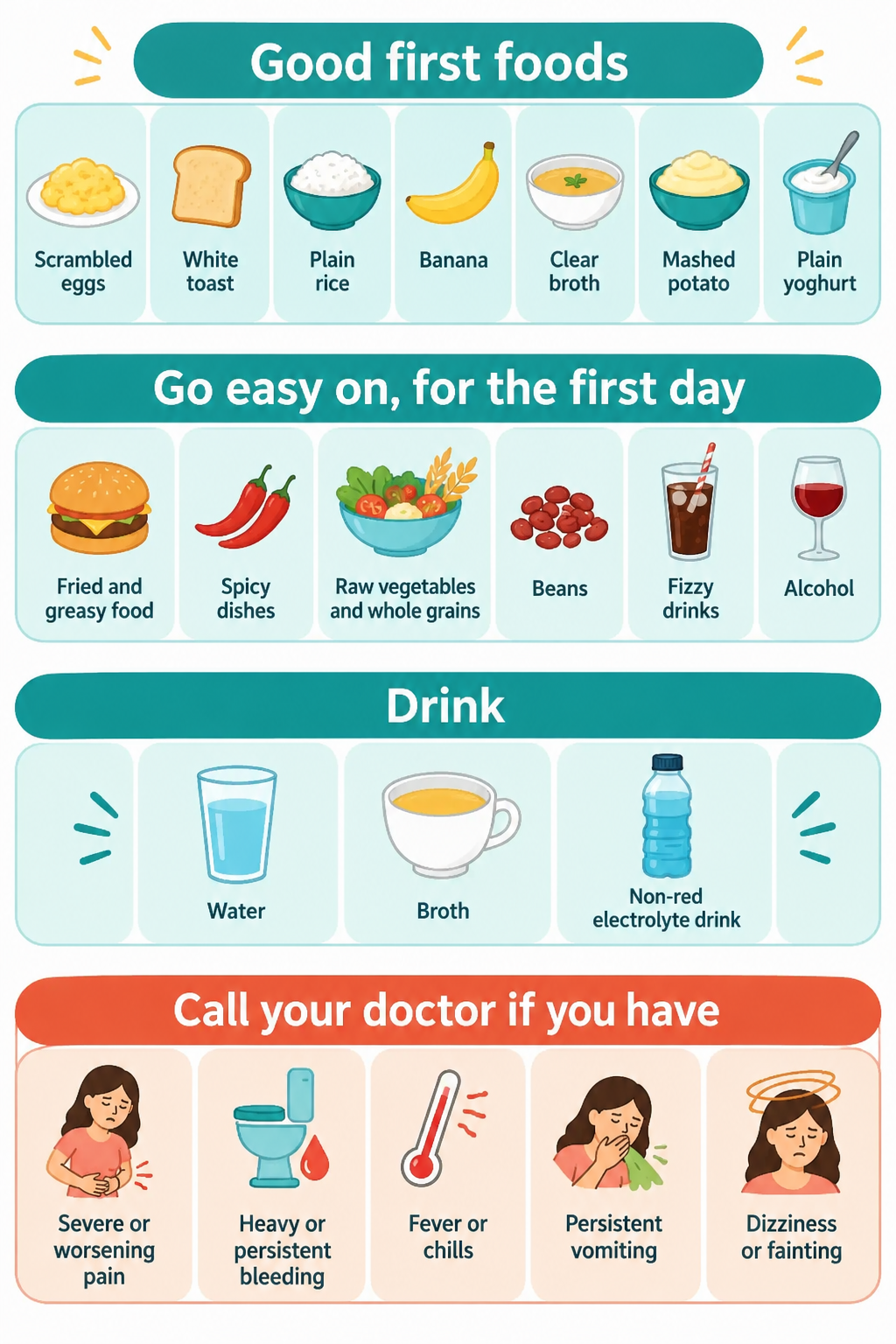
The best foods to eat after a colonoscopy are the ones that are soft, bland, and easy to digest. Cleveland Clinic advises eating bland, soft foods while increasing your fluid intake straight after the procedure, noting that most people can return to their normal diet within 24 hours. Here are the foods most commonly suggested. Remember that tolerance varies, so these are good places to start, not rules.
Bananas: A Gentle Fruit for Your Digestive System
Bananas are soft, easy to digest, and a good source of potassium, which can be useful if the bowel prep left you a little depleted. They make an easy snack when your appetite is small.
White Rice: A Simple and Easy-to-Digest Meal
Plain rice is low in fibre and gentle on the gut, which is why it’s a classic recovery food. Eat it plain at first, or with a little cooked chicken or egg.
Scrambled Eggs: A Source of Easily Digestible Protein
Soft scrambled or poached eggs provide protein without being heavy. Cook them gently with minimal butter or oil, since a lot of fat can slow digestion.
Toast and White Bread: Light Food Options
Plain toast or white bread is a simple, familiar carbohydrate that most people tolerate well. Keep toppings light, and skip anything very spicy or greasy for now.
Clear Soups and Broths: Gentle Meal Choices
Warm broth and simple, clear soups provide fluid, salt, and comfort in one go. They’re particularly good as a first meal if you feel a little queasy.
Mashed Potatoes: A Soft and Filling Option
Mashed potato is soft, filling, and easy on the stomach. Make it with a little milk or a lactose-free alternative rather than lots of butter or cream.
Cooked Vegetables: When to Reintroduce Them
Soft, well-cooked vegetables such as carrots, courgette, or peeled potato are usually fine once you’re eating comfortably. Raw vegetables and salads can wait until the next day, or until your gut feels settled.
Yoghurt: A Dairy Option Some People Tolerate Well
Plain yoghurt is soft and can be a comfortable choice for people who tolerate dairy. If dairy tends to bloat you, a lactose-free version is worth trying. If you’re interested in fermented foods more generally, our guide to the best fermented foods for gut health explains how they fit into everyday eating.
What Should You Eat for Your First Meal After a Colonoscopy?
Start With Small and Light Portions
After fasting and prepping, it’s tempting to eat everything in sight. Resist it. A small first meal lets you see how your gut responds, and you can always eat more an hour or two later.
Choose Soft Foods That Are Gentle on Your Stomach
Eggs and toast, soup with a little rice, or a banana with plain yoghurt are all good first-meal choices. Wait until you’re fully awake from sedation, and until any throat or stomach queasiness has passed, before you eat.
Avoid Heavy or Greasy Meals Initially
A large burger and chips is probably the worst possible first meal. Fat digests slowly, your gut is still recovering, and the result is often bloating and cramping. Save the treats for tomorrow.
Listen to Your Body When Returning to Normal Eating
If you feel bloated or crampy, slow down and stick with lighter food a little longer. If you feel fine, you can add more as the day goes on. There’s no prize for rushing, and your body will tell you what it can manage.
Foods to Avoid After a Colonoscopy
A short list of foods are worth avoiding for the first day or so. It’s important to say that these don’t need to be avoided by everyone. The right restrictions depend on your own tolerance and on your gastroenterologist’s instructions. This is the post-colonoscopy diet in its simplest form.
High-Fibre Foods Such as Raw Vegetables and Whole Grains
Raw vegetables, whole grains, nuts, seeds, and popcorn are harder to digest, and can add gas and cramping while your bowel is sensitive. Some teams advise a low-fibre diet for the first day or so, particularly after polyp removal, while others say normal eating can resume quickly. Follow what you were told, and reintroduce fibre gradually.
Spicy Foods That May Cause Discomfort
Chilli and heavily spiced dishes can irritate a sensitive gut. If you’re prone to reflux, our GERD diet plan offers gentler eating ideas that also work well during recovery.
Fried and Greasy Foods
Fried food is high in fat, slow to digest, and a common cause of post-procedure cramping and loose stools.
Beans and Certain Gas-Producing Foods
Beans, lentils, cabbage, broccoli, and onions are great for you in general, but they produce gas as they’re digested, and you probably have enough already.
Alcohol and Excessive Caffeine
Skip alcohol for at least 24 hours after sedation. Johns Hopkins Medicine notes that you shouldn’t drink alcohol for at least 24 hours, and Cleveland Clinic adds that alcohol thins the blood and can increase the risk of bleeding if polyps were removed. Large amounts of caffeine can also be dehydrating.
Foods That You Personally Find Difficult to Digest
If you already know certain foods bother your gut, such as dairy, rich sauces, or particular fruits, now is not the day to test them. This is also true if you live with a condition such as IBS, where a recently emptied and handled bowel can make your usual triggers feel stronger.
What Should You Drink After a Colonoscopy?
Knowing what to drink after a colonoscopy matters just as much as what you eat, because the bowel prep leaves many people mildly dehydrated.
Water to Support Hydration
Water is your best friend. Sip regularly through the day, and drink a little more than usual for the first 24 hours.
Clear Broth for Fluids and Comfort
Broth provides fluid, salt, and a bit of nourishment, which helps if your appetite hasn’t returned.
Electrolyte Drinks When Appropriate
Electrolyte or sports drinks can help replace what the prep flushed out, particularly if you felt washed out or dizzy. Choose colours other than red or purple, which can be mistaken for blood in the stool, and ask your doctor if you have diabetes or kidney problems.
Drinks to Limit During Recovery
Limit alcohol, fizzy drinks, which add gas, and large amounts of caffeine. Herbal tea, diluted juice, and warm drinks are gentle alternatives, and warm drinks can help move gas along.
How Long Should You Follow a Post-Colonoscopy Diet?
There’s no universal timeline, and for most people the answer is short.
Eating on the Day of Your Colonoscopy
Once you’re awake and alert, start with fluids and small, light meals. Johns Hopkins notes that you can usually eat whatever you can tolerate after the procedure, and that some people start with small, bland meals.
What to Eat the Following Day
By the next day, many people can eat normally. If you still feel bloated or haven’t passed much wind, keep to lighter meals a little longer.
Gradually Returning to Your Usual Diet
Return to your normal diet in stages. Add fibre, raw vegetables, and heavier meals back one step at a time, and pay attention to how you feel. Returning to a normal diet after a colonoscopy is usually quick, and there’s no need to stay on bland food for days if you feel well.
When Your Doctor May Recommend Dietary Restrictions
If polyps were removed, if a larger area was treated, or if you have a higher risk of bleeding, your doctor may recommend a softer diet and avoiding alcohol and certain medicines for longer. Always follow your own instructions.
What Foods Can You Eat After a Colonoscopy With Polyp Removal?
This section matters, because dietary advice can differ depending on the size and number of polyps removed and the technique used.
Does Polyp Removal Affect Your Diet?
Often it does, slightly. After a small polyp is removed, many people can return to a light diet quickly. After larger or multiple polyps, or when the doctor has treated a bleeding area, you may be asked to stay on soft, low-fibre foods for longer, avoid alcohol for several days, and take care with certain medicines.
Why Your Gastroenterologist’s Instructions Matter
Your doctor knows exactly what was done. The same food that’s perfectly fine after a routine examination may not be the best choice after a larger removal, and your discharge sheet reflects that. If you’re unsure about something, ask the rooms that performed your procedure. If you’d like to understand why this test matters in the first place, our article on the importance of regular colonoscopies explains what it can find and prevent.
When to Resume Your Normal Eating Habits
Many people can return to their usual diet within a day or two, but this depends on your individual procedure. Your doctor will tell you when it’s safe to go back to everything you normally eat.
Common Digestive Symptoms After a Colonoscopy and How to Manage Them
Bloating and Gas
This is the most common effect, and it’s caused by the air or carbon dioxide used during the procedure. Passing wind is a good thing, so don’t hold it in. Walking, warm drinks, and small meals help, and the discomfort usually settles within a few hours.
Mild Abdominal Discomfort
Mild cramping or a feeling of fullness is normal for a few hours. It should ease as the gas passes, and it shouldn’t be getting worse.
Temporary Changes in Bowel Movements
Because your bowel was emptied by the prep, you may not have a bowel movement for a day or so. Some people have loose stools for a short time. Both are usually temporary.
When Digestive Symptoms Need Medical Attention
Contact your healthcare provider promptly if you have severe or worsening abdominal pain, a fever, heavy or persistent rectal bleeding, or dizziness or fainting. These aren’t normal recovery symptoms.
A Simple One-Day Meal Plan After a Colonoscopy
This is an illustrative colonoscopy recovery diet, not a universal post-procedure diet. Use it for ideas, adapt it to your own tolerance, and follow your discharge instructions, especially after polyp removal or other interventions. These light meals after a colonoscopy give you a sense of what soft foods after a colonoscopy might look like in practice.
Breakfast
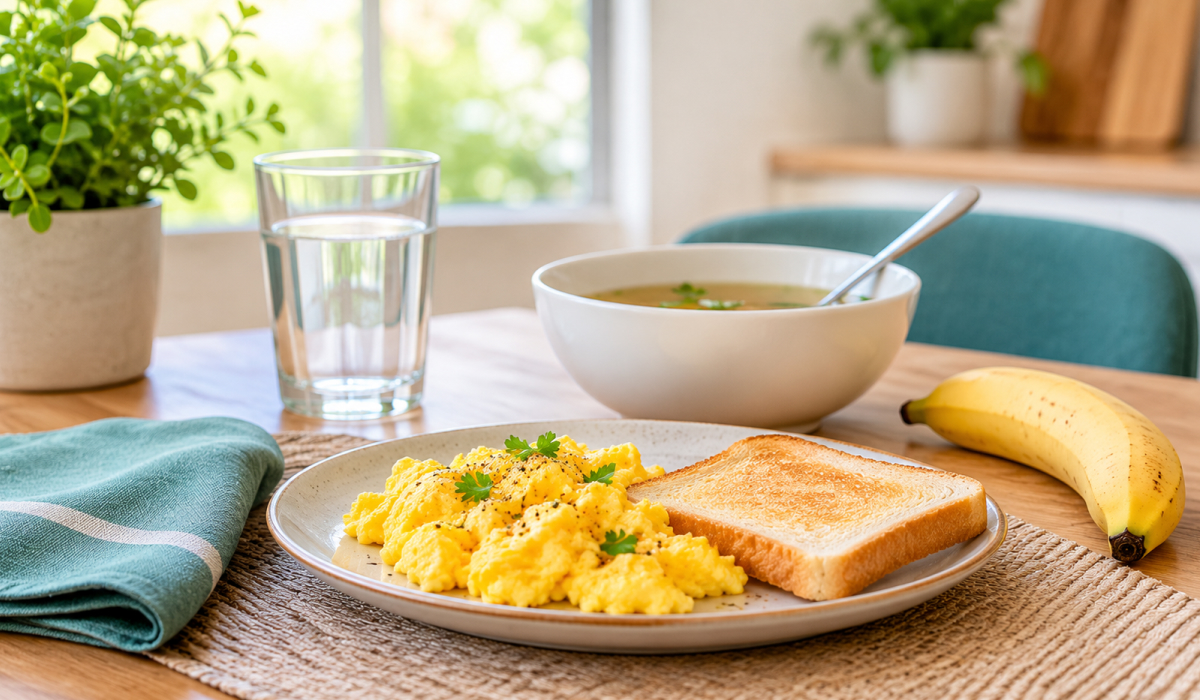
- Scrambled eggs
- White toast
- Water
Mid-Morning Snack
- Banana
- Water
Lunch
- Plain rice
- Soft-cooked chicken
- Clear broth
Afternoon Snack
- Plain yoghurt, if tolerated
Dinner
- Mashed potatoes
- Soft-cooked vegetables, if permitted
- Water
Practical Colonoscopy Recovery Tips for Better Digestive Health
Drink Enough Fluids
Keep sipping throughout the day. Good hydration helps your bowel recover and reduces dizziness and tiredness.
Eat Slowly and Choose Smaller Meals
Slow eating means you swallow less air, which helps with bloating. Several small meals are usually more comfortable than one large one.
Avoid Strenuous Activities Until You Have Recovered
Rest for the remainder of the day, particularly after sedation. Don’t drive, sign important documents, or make big decisions for 24 hours. Your doctor will tell you when it’s fine to resume exercise, especially after polyp removal.
Follow Your Colonoscopy Aftercare Instructions
Your written instructions are tailored to your procedure. Read them, keep them handy, and follow them. If something is unclear, call and ask.
If you’d like reassurance about the safety precautions around the procedure, our article on what makes a colonoscopy safe for everyone explains them.
Give Your Digestive System Time to Return to Normal
Be patient. Your bowel will usually settle within a day or two, and your appetite and routine will follow.
When Should You Contact Your Gastroenterologist?
Mild gas and bloating can occur after the procedure, but the following need prompt medical assessment:
- Severe or worsening abdominal pain
- Heavy or persistent rectal bleeding
- Fever or chills
- Persistent vomiting
- Severe bloating or a swollen, hard abdomen, or being unable to pass wind
- Dizziness, fainting, or signs of dehydration
Johns Hopkins lists fever or chills, frequent bloody stools, belly pain or swelling, a hardened belly, and the inability to pass gas among the signs that need attention. If any of these happen, contact the practice that performed your procedure straight away, and go to an emergency department if you can’t reach them or feel seriously unwell.
Frequently Asked Questions About the Best Food After Colonoscopy
What Are the Best Foods to Eat After a Colonoscopy?
Soft, bland, easy-to-digest foods are best at first: scrambled eggs, toast, plain rice, bananas, clear soup or broth, mashed potatoes, soft-cooked vegetables, and plain yoghurt if you tolerate it. Start small, drink plenty of fluids, and return to your usual diet as you feel comfortable.
Can I Eat Bananas After a Colonoscopy?
Yes. Bananas are soft, gentle, and easy to digest, and they’re a popular first snack. If you’re sensitive to them, try a smaller amount.
Can I Eat Eggs After a Colonoscopy?
Yes. Scrambled or poached eggs are an easily digestible source of protein. Cook them gently without much fat.
How Soon Can I Eat After a Colonoscopy?
Usually as soon as you’re awake and alert and feel ready. Start with fluids and small, light portions, and follow any instructions you were given.
Can I Eat Normally the Day After a Colonoscopy?
Many people can. If you feel well and weren’t given special instructions, you can usually return to your normal diet the next day, adding heavier or higher-fibre foods gradually. If you still feel bloated, keep to lighter meals a little longer.
What Foods Should I Avoid After a Colonoscopy?
For the first day or so, avoid alcohol, fizzy drinks, greasy or fried food, very spicy dishes, and gas-forming or high-fibre foods such as beans, raw vegetables, nuts, and seeds. These don’t need to be avoided by everyone, so follow your doctor’s instructions and your own tolerance.
Can I Eat Normally After Polyp Removal?
Not always straight away. After a small polyp, many people can return to a light diet quickly, but after larger polyps or other treatment, your doctor may recommend soft foods and avoiding alcohol for several days. Follow your discharge instructions.
Choose the Right Foods for a Comfortable Colonoscopy Recovery
The best food after colonoscopy is simple: soft, bland, easy to digest, and eaten in small portions, with plenty of fluids alongside. Most people feel well enough to return to their normal diet within a day, adding fibre and heavier meals back gradually.
Remember that recovery and dietary advice vary, and that your own instructions, especially after polyp removal, come first.
If you have questions about your recovery, are due for a colonoscopy, or want personalised digestive health advice, Dr. Preetha Thomas, a specialist physician and medical gastroenterologist in Pretoria, is happy to help. Book a consultation with Dr. Preetha Thomas to talk through your digestive health and the right next steps.