

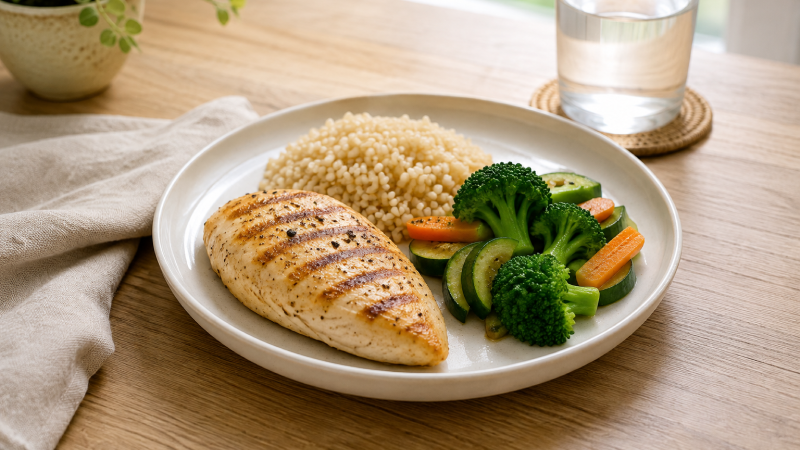
There’s a particular kind of exhaustion that comes with GERD. You’ve cut the coffee, skipped the wine at dinner, and you’re still waking up with that burn in your throat. Most people who’ve lived with GERD for a while know the basic “avoid this, avoid that” list by heart. What’s harder to find is an actual plan, something that tells you what a full day of eating looks like once the obvious triggers are off the table.
That’s really what a GERD diet plan is for. It’s not a punishment list. It’s a pattern of eating that gives your esophagus less to fight against, so medication and lifestyle changes actually have room to work.
How Diet Affects Acid Reflux and GERD Symptoms
Reflux happens when the lower esophageal sphincter, the ring of muscle that’s supposed to keep stomach contents where they belong, relaxes at the wrong time or doesn’t close fully. Certain foods make that muscle more likely to relax.
Others increase the volume or acidity of what’s in your stomach in the first place, so even a small amount of backflow causes more irritation.
Fat is one of the clearest examples. High-fat meals slow down stomach emptying, which means food sits there longer, under pressure, with more opportunity to reflux upward. Caffeine and alcohol both relax the sphincter directly.
Acidic foods don’t cause reflux on their own, but if reflux is already happening, they make what comes back up more painful.
Diet won’t replace medication for everyone, and it isn’t meant to. But for a condition that’s triggered and worsened by what and how you eat, food is one of the few levers a patient can actually pull every single day.
Foods to Avoid with GERD
The difference between occasional acid reflux and diagnosed GERD matters here too, since someone with mild, infrequent reflux may tolerate foods that someone with GERD genuinely can’t. Still, a few categories show up on almost every trigger list, and they’re worth knowing even if your own tolerance varies.
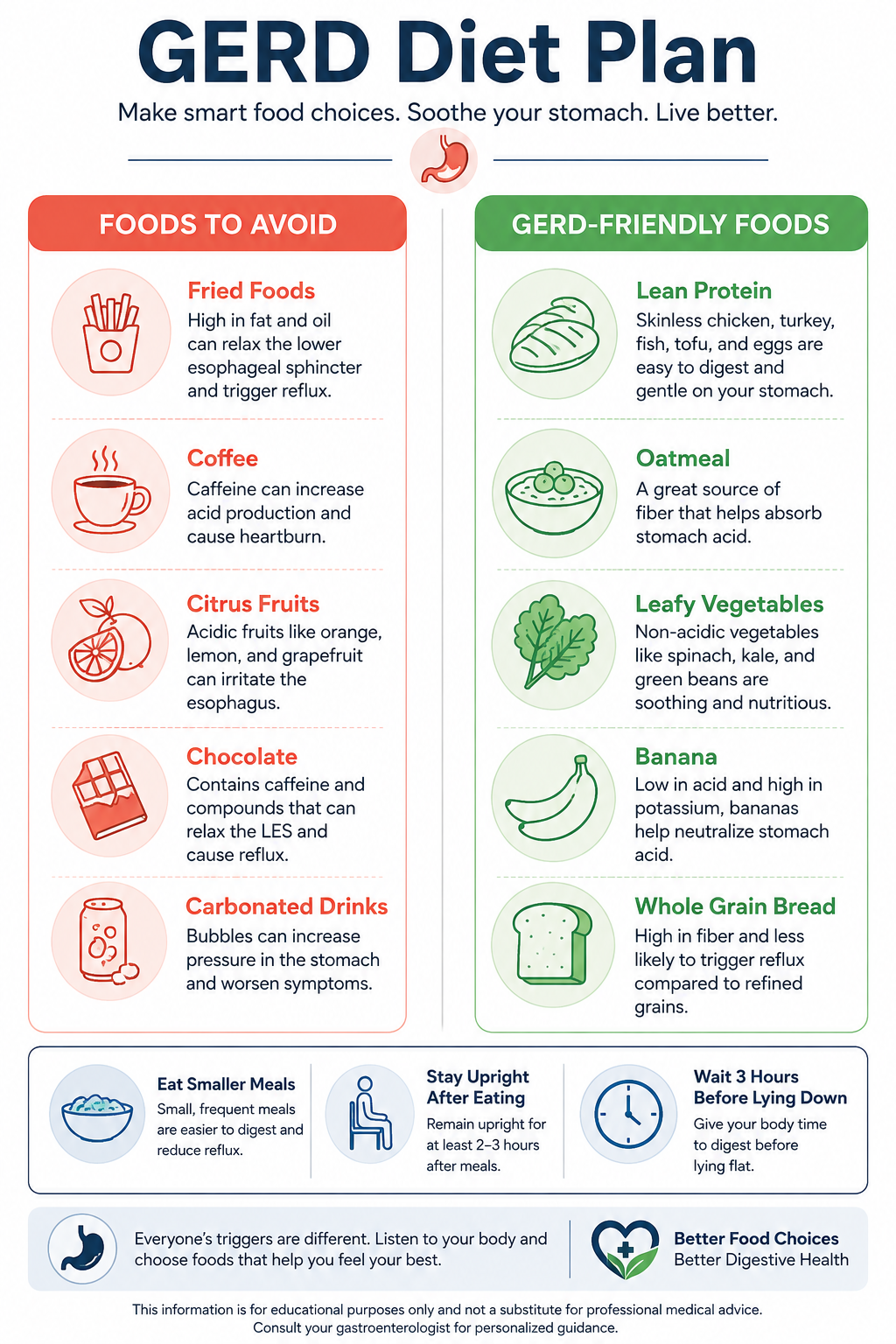
High-fat foods. Fried food, fatty cuts of meat, full-fat dairy, and heavy sauces slow digestion and relax the sphincter. This is usually the single biggest lever people can pull.
Acidic foods. Citrus fruits, tomatoes and tomato-based sauces, and vinegar-heavy dressings are common irritants once reflux is already happening.
Caffeine and alcohol. Coffee, tea, energy drinks, and alcohol all relax the lower esophageal sphincter. Reducing rather than eliminating these is often enough for milder symptoms.
Chocolate and mint. Both are frequently reported triggers, and both work the same way as caffeine, by relaxing the sphincter muscle.
Carbonated drinks. The bubbles expand the stomach and increase pressure against the sphincter.
Spicy foods. Not a trigger for everyone, but common enough that it’s worth testing on an individual basis rather than assuming.
One caveat worth repeating: trigger foods are individual. According to the National Institute of Diabetes and Digestive and Kidney Diseases (NIDDK), the foods most commonly linked to GERD symptoms include acidic foods, alcohol, chocolate, caffeine, high-fat foods, mint, and spicy foods, but the agency also notes that patients should track their own symptoms and talk to a doctor about which specific foods or drinks seem to make things worse for them personally. A list is a starting point, not a diagnosis.
GERD-Friendly Foods That Help Acid Reflux
The flip side of avoidance is what to actually build meals around. This is the part most GERD diet advice skips past too quickly.
Lean proteins. Chicken, turkey, fish, tofu, and egg whites digest more easily than fattier cuts of meat and don’t sit in the stomach as long.
Non-citrus fruits. Bananas, melon, apples, and pears are generally well tolerated and give you the fiber and nutrients citrus fruits would otherwise provide.
Vegetables. Most non-fried vegetables are low in fat and low in acid, which makes them a safe base for most meals. Leafy greens, root vegetables, and squash are common go-tos.
Whole grains. Oatmeal, brown rice, and whole-grain bread add fiber, which can help reduce overall reflux frequency and support healthy digestion generally.
Healthy fats, in moderation. Avocado, olive oil, and nuts are fine in reasonable portions. It’s the quantity and type of fat, not fat itself, that tends to cause problems.
A 2024 study on plant-based and animal-based food patterns and GERD risk found that diets built around vegetables, fruits, legumes, seeds, and nuts were associated with lower GERD likelihood, while diets heavier in fried and animal-based foods correlated with higher symptom risk. It’s not proof that plants alone fix reflux, but it does support what most gastroenterologists already recommend as a general pattern.
Sample 7-Day GERD Diet Plan
A useful GERD diet plan is less about specific recipes and more about a repeatable shape to your day. Here’s a general framework you can adapt to your own tastes and any personal triggers you’ve already identified.
Breakfast: Oatmeal with banana slices, or scrambled egg whites with whole-grain toast. Skip the orange juice and citrus-based smoothies.
Lunch: Grilled chicken or fish with steamed vegetables and brown rice. A simple green salad with olive oil dressing works well too, as long as it’s light on vinegar.
Dinner: Baked or grilled lean protein with roasted non-acidic vegetables. Keep portions moderate and finish eating at least three hours before lying down.
Snacks: Melon, apple slices, plain rice cakes, or a small handful of almonds between meals rather than large snack portions.
Two patterns matter more than any specific dish: eating smaller, more frequent meals instead of large ones, and giving yourself real time between your last meal and lying down. Both reduce the pressure and opportunity for reflux, regardless of exactly what’s on the plate.
Low-Acid Diet Tips for Heartburn Relief
Beyond the food list itself, a handful of practical habits make a real difference to how much relief a low-acid diet actually delivers.
Eat slower. Wolfing down a meal means swallowing more air and giving your stomach less time to process food properly before the next bite arrives.
Stay upright after eating. Gravity is doing real work here. Lying down right after a meal makes reflux more likely almost mechanically.
Watch portion size, not just food type. A large portion of a “safe” food can still trigger symptoms simply because of the volume and pressure involved. Our practical heartburn relief tips cover a few more of these day-to-day adjustments in more detail.
Lifestyle Changes for GERD Beyond Diet
Diet does a lot of the heavy lifting, but it isn’t the whole picture. Weight management matters independently of what you eat, since excess abdominal weight puts direct pressure on the stomach and sphincter.
Elevating the head of your bed by six to eight inches, rather than just stacking pillows, helps keep stomach contents down through the night using actual gravity rather than a soft incline that flattens out as you sleep.
Smoking relaxes the lower esophageal sphincter the same way caffeine does, so quitting helps on this front specifically, separate from its other health benefits. And loose-fitting clothing around the waist, especially after meals, avoids adding pressure that tight waistbands can create.
Common Myths About Trigger Foods for Heartburn
Not everything on the standard “avoid” list applies to everyone, and a few widely repeated claims deserve more nuance than they usually get.
“All acidic foods are bad.” Not universally true. Some people with GERD tolerate small amounts of citrus or tomato just fine, especially when eaten with other food rather than alone.
“Dairy is always a trigger.” Full-fat dairy can be a problem because of its fat content, but low-fat or fat-free dairy is often fine and, for some people, even soothing.
“Spicy food always causes reflux.” Spice itself doesn’t relax the sphincter the way fat or caffeine does. Some people react to spicy food, many don’t.
“An alkaline diet cures GERD.” Alkaline eating patterns tend to overlap heavily with generally reflux-friendly eating, more vegetables, less fried food, but there’s no strong evidence that pH-balancing food choices “neutralize” reflux beyond what a standard low-fat, low-trigger diet already does.
This is exactly why symptom tracking matters more than blanket rules. What triggers one person’s GERD symptoms might not touch someone else at all.
Staying Consistent: Meal Prep Tips for a GERD Diet Plan
Knowing what to eat is one thing. Actually sticking to it on a busy weeknight is another. A few practical habits make a GERD diet plan realistic to maintain rather than something that falls apart the first time life gets hectic.
Batch-cook proteins on a quiet day. Grilled chicken, baked fish, or roasted turkey keep well in the fridge for several days and mean dinner doesn’t default to whatever’s fastest, which is often the fried or heavily sauced option that triggers symptoms.
Keep safe snacks visible and accessible. If sliced melon or rice cakes are sitting in the fridge at eye level, they win out over reaching for something acidic or fried when hunger hits between meals.
Read labels for hidden fat and acid. Pre-made sauces, salad dressings, and packaged snacks often carry more fat, citric acid, or vinegar than people expect. A quick label check avoids reintroducing triggers you thought you’d already cut.
Plan your last meal around your bedtime, not the other way round. If dinner keeps drifting later because of work or family schedules, that three-hour buffer before lying down quietly disappears, and symptoms tend to creep back even when the food itself was fine.
None of this needs to be rigid. The goal is a pattern you can actually repeat most days, not a perfect diet you follow for a week and then abandon.
When to See a Gastroenterologist for GERD Symptoms
Diet and lifestyle changes help most people, but they’re not a substitute for medical care when symptoms persist. If heartburn is happening more than twice a week despite consistent changes to your eating habits, or if you’re experiencing difficulty swallowing, unexplained weight loss, or chest pain, those are signs worth a proper evaluation rather than another round of dietary tweaks.
Left unmanaged, chronic GERD can lead to complications over time, which is part of why it’s worth taking acid reflux seriously rather than treating it as a minor inconvenience to work around indefinitely.
Regular gastroenterologist visits also help catch the cases where diet isn’t the whole story, where an underlying condition needs its own diagnosis and treatment plan rather than another list of foods to avoid.
Book a Consultation with Dr Preetha Thomas
Diet changes can go a long way, but they work best when they are tailored to your individual triggers rather than based on a generic list. Dr. Preetha Thomas, one of the best gastroenterologists in Pretoria, helps patients manage GERD through personalised diet advice, lifestyle changes, and appropriate treatment.
Get in touch to book a consultation and build a diet and treatment approach suited to your specific case.
Frequently Asked Questions
What can I eat with GERD?
Lean proteins, non-citrus fruits, most vegetables, whole grains, and healthy fats in moderate amounts. The goal is lower fat, lower acid, and smaller portions rather than eliminating entire food groups.
Is coffee bad for GERD?
Coffee relaxes the lower esophageal sphincter and is a common trigger, but not everyone reacts to it the same way. Reducing intake, especially on an empty stomach, often helps more than cutting it out entirely.
Can diet alone cure GERD?
Diet can significantly reduce symptoms and, for some people, may be enough on its own. For others, especially with more severe or long-standing GERD, diet works best alongside medication and other lifestyle changes rather than as a replacement for them.
Is dairy bad for acid reflux?
Full-fat dairy can trigger symptoms because of its fat content. Low-fat or fat-free dairy is generally better tolerated and isn’t automatically off-limits. The NIDDK’s guidance on GERD nutrition echoes this, singling out fat content rather than dairy itself as the relevant factor. If you’re still unsure which dairy products work for you, our guide to foods that heal versus foods that harm breaks this down in more detail.