
Ask anyone who has had a colonoscopy what they remember most, and the answer is rarely the procedure itself. It’s the preparation. The restricted diet, the cleansing drink, the evening spent within a few steps of the bathroom. It has a reputation, and it isn’t entirely undeserved.
But here’s the thing most people only learn afterwards: the prep is the part you control, and it’s also the part that decides how useful the test will be. A well-prepared bowel lets your doctor see clearly.
A poorly prepared one can hide small polyps, and it may mean doing the whole thing again. This guide walks you through colonoscopy preparation step by step, in plain language, so you know what to expect and can get it right the first time.
What Is Colonoscopy Preparation and Why Is It Important?
A colonoscopy is a bowel examination in which a gastroenterologist uses a thin, flexible tube with a camera to look at the lining of your entire large intestine.
For that to work, the colon has to be empty and clean. Any leftover stool can coat the bowel wall, much like mud on a window, and make it difficult or impossible to see what’s underneath.
Colonoscopy preparation is simply the process of emptying your bowel beforehand. It usually involves a change in what you eat for a day or more, followed by a bowel-cleansing solution that makes you pass loose, watery stool until the colon is clear.
This matters because colonoscopy is one of the most effective tools we have for finding and removing polyps before they can become cancer.
If you’d like to understand why the test is worth the effort, our article on the importance of regular colonoscopies explains what it can detect and prevent. In short, following your preparation instructions closely is what makes the test reliable, and it’s the best way to avoid having to repeat it.
How to Prepare for a Colonoscopy: A Step-by-Step Guide
The details vary between doctors and between prep products, so your own written instructions always come first. What follows is the general picture, so nothing in those instructions comes as a surprise.
Start Preparing Several Days Before Your Colonoscopy
The most useful thing you can do is read your instructions as soon as you receive them, not the night before. Reading them several days ahead gives you time to buy what you need, rearrange your schedule, and ask questions.
A simple timeline looks like this:
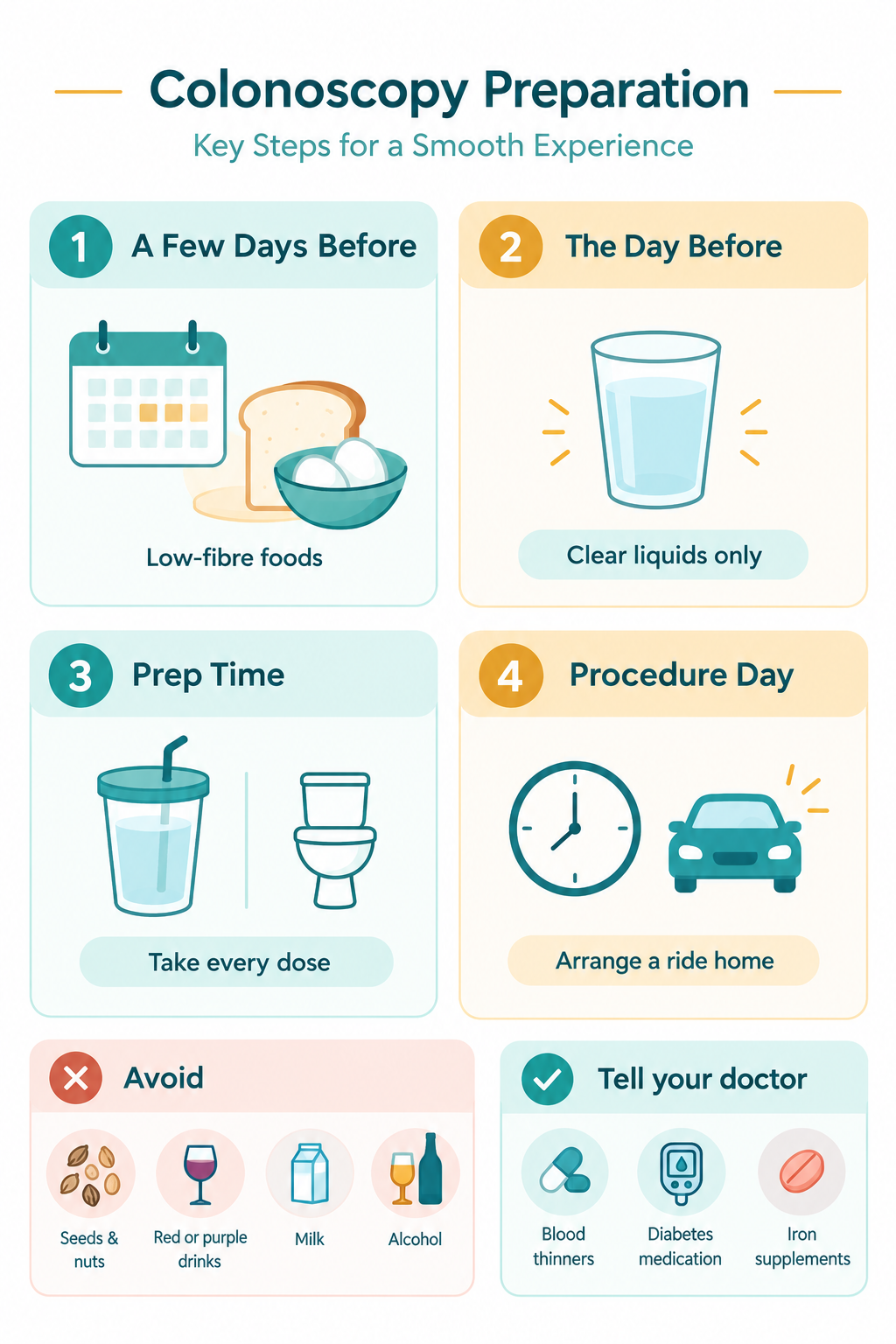
- A week or more before: Read your instructions, check your medication list with your doctor, and arrange someone to take you home afterwards.
- A few days before: Buy your prep kit if you haven’t received it, and stock up on the clear liquids and low-fibre foods you’re allowed. Start the low-fibre diet if your instructions say so.
- The day before: Follow the clear liquid diet and begin your bowel preparation exactly as directed.
- The day of the procedure: Take the second dose of prep if you’ve been told to, stop drinking at the time given, and head to your appointment.
Planning ahead also helps with the practical side. Clear your day before and the morning of the procedure as much as you can, because you’ll want to be close to a bathroom.
Follow Your Doctor’s Instructions Carefully
It’s tempting to skim, or to rely on what a friend did, but different preparations work differently. Some kits are taken in two doses, one the evening before and one on the morning of the procedure. Others use a different schedule.
The timing of when to stop eating, when to start the prep, and when to stop drinking all depend on when your procedure is booked.
If anything in your instructions is unclear, call the rooms and ask. A five-minute phone call is far easier than a cancelled appointment.
Colonoscopy Preparation Diet: What Can You Eat?
Diet is the first stage of preparation, and it comes in two parts: a few days of low-fibre eating, followed by a day of clear liquids. The goal is to leave as little undigested material as possible in your bowel.
Low-Fibre Foods to Eat Before a Colonoscopy
Fibre is healthy, but it’s harder for the body to break down, so it leaves more residue in the colon. For a day or two before the clear liquid stage, you’ll usually be asked to switch to low-fibre foods. Typical choices include:
- White bread, white rice, and plain pasta
- Eggs
- Chicken, turkey, and fish, cooked simply
- Smooth peanut butter (not crunchy)
- Plain yoghurt without fruit pieces
- Peeled, well-cooked vegetables such as potato without skin
- Clear soups and broths
Your exact timeline may differ. Some instructions ask for a low-fibre diet for one to three days, and some doctors recommend a lighter breakfast on the day before the clear liquid diet begins. Follow whichever version you’ve been given.
Clear Liquid Diet Before a Colonoscopy
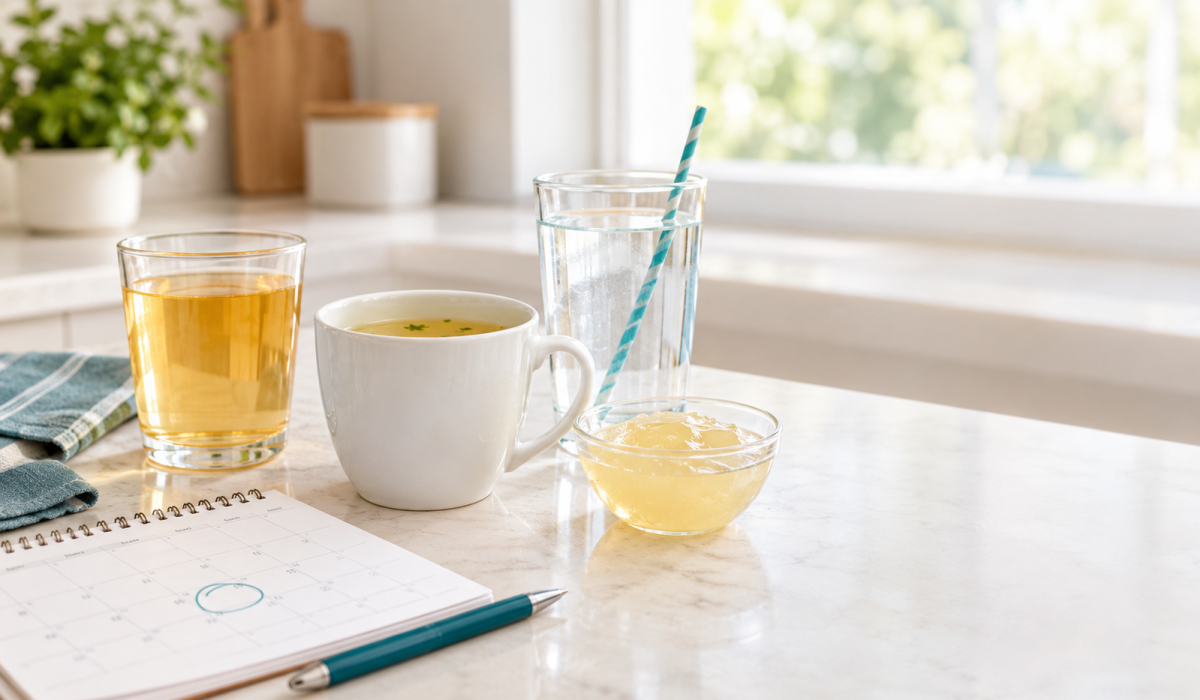
The day before your colonoscopy, you’ll usually switch to clear liquids only, with no solid food. The rule of thumb is that if you can see through it, it’s probably allowed. According to Cleveland Clinic, suitable clear liquids include water, tea or black coffee without milk or cream, clear broth, pulp-free fruit juices such as apple or white grape, clear sodas, and sports drinks and gelatin in colours other than red, purple, or orange.
A few practical tips:
- Aim for variety. Plain water gets tiring, and a mix of broth, juice, and gelatin keeps you feeling less hungry.
- Warm broth is surprisingly satisfying when you’re craving something savoury.
- Drink plenty, because prep can cause dehydration if you don’t keep your fluids up.
Foods and Drinks to Avoid Before a Colonoscopy
Knowing what to avoid is just as important as knowing what’s allowed, and a single mistake can be enough to make the preparation less effective.
High-Fibre Foods, Seeds, and Whole Grains
In the days before your procedure, steer clear of foods that leave residue or have small pieces that can stick to the bowel wall. These usually include:
- Whole grains, brown rice, and wholegrain bread
- Nuts and seeds, including seeds in fruit such as strawberries or tomatoes
- Raw vegetables and salads
- Fruit with skin or pips
- Corn and popcorn
- Beans, lentils, and other legumes
These foods are normally excellent for gut health, which is why this restriction feels counterintuitive. It’s only temporary, and it makes a real difference to how clearly your doctor can see.
Drinks and Foods Not Allowed During Bowel Preparation
Once the clear liquid stage begins, the restrictions tighten. Avoid:
- Anything red or purple (and sometimes blue or orange, depending on your instructions). The dye can stain the bowel lining and look like blood during the test
- Milk and dairy products, and non-dairy creamers, which aren’t clear
- Alcohol, which dehydrates you and isn’t allowed during prep
- Juices with pulp, and soups with solid pieces
- Any solid food, including chewing gum or sweets if your instructions say not to have them
If you’re unsure about a particular item, don’t guess. Check with your doctor’s rooms.
Bowel Preparation for Colonoscopy: What to Expect
This is the part most people dread, so it’s worth knowing exactly what’s coming.
How to Take Your Prescribed Colonoscopy Prep Solution
Your doctor will prescribe or recommend a bowel-cleansing solution, usually a powder mixed with water or a ready-made liquid. Most kits use what’s called split dosing, where you take one dose the evening before and a second dose several hours before the procedure. As Johns Hopkins Medicine notes, getting the preparation right is essential for a thorough examination.
Some practical tips make this far easier:
- Chill the solution, because it usually tastes better cold
- Drink it through a straw, placed toward the back of your mouth
- Sip steadily rather than gulping, and take short breaks if you feel nauseous
- Follow it with a sip of clear juice or suck on a hard sweet (not red or purple) to take away the aftertaste
- Finish the full amount, including the second dose, even if your stools already look clear
Finishing the second dose matters. The last stretch is often what clears the final residue from the bowel.
What to Expect During Bowel Cleansing
Within an hour or two of the first dose, you’ll start to pass loose, watery stool, and this will continue for several hours. It can feel urgent and frequent, which is why staying near a bathroom matters. Common side effects include:
- Bloating and abdominal cramping
- Nausea, and sometimes vomiting
- A sore or irritated bottom from frequent wiping
- Feeling cold or tired
- A bitter taste in the mouth, either from the solution itself or from nausea
The taste usually fades once the prep is over. If a bitter taste hangs around for days afterwards, or comes with reflux or ongoing nausea, mention it to your doctor, because digestive causes are common.
A little barrier cream or petroleum jelly, and soft, unscented wipes instead of regular toilet paper, can make a big difference to comfort. If you vomit repeatedly and can’t keep the solution down, or you feel dizzy, faint, or very unwell, call your doctor rather than pushing on.
By the end, your stool should be a clear or pale yellow liquid, with no solid pieces. That’s the sign the colon is ready.
Medications and Medical Conditions to Discuss Before a Colonoscopy
Your preparation isn’t only about food. Some medicines and health conditions affect how the procedure and the prep should be handled, so this conversation needs to happen well before the day.
Blood Thinners, Diabetes Medication, and Iron Supplements
A few categories deserve a specific mention:
- Blood thinners, such as warfarin or newer anticoagulants, may need to be paused or adjusted, especially if a polyp might be removed. Don’t stop them on your own, because stopping can carry its own risks.
- Diabetes medication and insulin often need to be adjusted, because you’ll be eating and drinking differently for a day or more. Your doctor will tell you what to do.
- Iron supplements are commonly stopped several days beforehand, because iron can darken stool and make it harder to clear.
- Other medicines, including some blood pressure tablets, anti-inflammatories, and weight-loss injections, may also need advice.
The rule is simple: never stop or change a medicine without medical advice, and bring a full, written list of everything you take, including over-the-counter products and supplements.
Inform Your Doctor About Existing Health Conditions
Tell your doctor about any heart, lung, or kidney conditions, a history of bowel obstruction or severe constipation, allergies, previous reactions to sedation, and whether you might be pregnant.
These details help your doctor choose the right prep, the right sedation, and the right precautions. If you’d like to read more about how the procedure is kept safe for different patients, our article on what makes a colonoscopy safe for everyone explains the safeguards.
What to Do the Day Before Your Colonoscopy
The day before is when everything comes together, so a little planning goes a long way. Here’s a simple colonoscopy preparation checklist:
- Clear your schedule as much as you can
- Have your clear liquids ready and chilled
- Set reminders for each stage of the prep, especially the second dose
- Charge your phone and have something to read or watch nearby
- Confirm your transport for the next day
- Pack a small bag for your appointment
Follow Your Prescribed Diet and Drinking Instructions
Start the clear liquid diet when your instructions say to, and keep going until the time you’ve been told to stop. Drink steadily through the day. Skipping fluids is one of the main reasons people feel dizzy or unwell during prep. Take your prep dose or doses exactly on schedule, even if it means setting an alarm for the early hours of the morning.
Stay Near a Bathroom and Keep Yourself Comfortable
Once the solution starts working, you won’t want to be far from a toilet. Work from home if you can, wear loose, comfortable clothing, and keep the bathroom stocked with soft wipes and barrier cream. Some people sit on a cushion, play music, or take their phone in with them. It’s not glamorous, but it’s temporary, and most people say it’s over sooner than they expected.
What to Expect on the Day of Your Colonoscopy
By the morning of the procedure, the hard part is behind you. Take any medicines you’ve been told to take, with a small sip of water, finish your second prep dose if you have one, and stop drinking at the time you’ve been given.
That cut-off usually falls a few hours before the appointment. Going without breakfast for a procedure is a one-off and perfectly safe. It’s the habit of regularly skipping breakfast that’s worth rethinking once this is all behind you, because it can affect your digestion over time.
What to Bring to Your Appointment
- Your ID, medical aid card, and any referral forms
- Your list of medications
- A list of questions you’d like to ask
- Comfortable clothing that’s easy to change in and out of
- Your companion, or their contact details if they’re collecting you later
Sedation, Transportation, and Aftercare Arrangements
Most colonoscopies are done under sedation, so you’ll be relaxed and drowsy and may remember very little. Because sedation affects your judgement and coordination, you shouldn’t drive yourself home, and it’s best to have someone with you who can listen to the doctor’s feedback, since you might be groggy.
Plan to rest for the remainder of the day. Mild bloating and gas are common afterwards, and you can usually return to normal eating gradually. If you’re approaching screening age, our guide to digestive health after 50 explains what changes with age and why routine screening matters more.
Common Colonoscopy Preparation Mistakes to Avoid
Most failed or incomplete preparations come down to a handful of avoidable mistakes:
- Eating restricted foods. Even a small amount of seeds, nuts, or high-fibre food in the days before can leave residue.
- Missing a prep dose. Skipping or only half-finishing the solution is the most common reason for a poor result.
- Breaking the liquid rules. Drinking milk, red or purple drinks, or alcohol, or continuing to drink after the cut-off time, can compromise the test or even require rescheduling.
- Changing medication without advice. Stopping or adjusting blood thinners, insulin, or other tablets on your own can be unsafe.
- Leaving it to the last minute. Reading instructions the night before leaves no time to fix a problem.
- Not drinking enough. Dehydration makes prep much harder to tolerate.
If you realise you’ve made a mistake, don’t hide it. Let the rooms know. They’d far rather adjust the plan than proceed with a poorly prepared bowel.
Frequently Asked Questions About Colonoscopy Preparation
How many days before a colonoscopy should I prepare?
Start reading your instructions as soon as you receive them, ideally a week ahead. The low-fibre diet usually begins one to three days before the procedure, depending on your doctor’s instructions, with the clear liquid diet and bowel prep on the day before.
What can I eat the day before a colonoscopy?
Usually only clear liquids, such as water, clear broth, pulp-free juice, clear sodas, tea or black coffee, and gelatin or ice pops that aren’t red, purple, or orange. Some doctors allow a light breakfast first, so follow the exact instructions you’ve been given.
How long does bowel preparation take to work?
Most people begin passing loose stool within one to two hours of the first dose, and it continues for several hours. Each dose has its own timing, so don’t leave the house or settle into long journeys while the prep is working.
What if my bowel movements are not clear?
The goal is clear or pale yellow liquid with no solid pieces. If your stool is still brown, cloudy, or contains solid matter after you’ve finished the prep, call your doctor’s rooms. They may suggest extra steps or reschedule so the examination isn’t compromised.
Can I drink water before a colonoscopy?
Yes, clear fluids including water are usually encouraged throughout the prep to prevent dehydration. You’ll be told when to stop, usually a few hours before the procedure, and it’s important to follow that cut-off exactly.
What happens if I cannot finish my colonoscopy prep?
Don’t ignore it. If you feel too nauseous to finish, or you’re vomiting the solution, call your doctor’s rooms. They may suggest slowing down, taking breaks, using an anti-nausea medicine, or switching to a different preparation, and they can tell you whether it’s safe to proceed.
Prepare for Your Colonoscopy With Guidance From Dr. Preetha Thomas
Colonoscopy preparation isn’t pleasant, but it’s short, it’s manageable, and it’s what makes the test worth doing. Start early, follow your instructions closely, keep your fluids up, and tell your doctor about your medications and health conditions. Do that, and the hardest part of the process will be behind you well before the procedure begins.
You don’t have to work it out alone. If you’d like personalised advice on colonoscopy preparation, whether you’re due for screening or have been referred because of symptoms, Dr. Preetha Thomas, gastroenterologist in Pretoria, can talk you through what to expect and tailor the plan to your health and medication.
Book a consultation with Dr. Preetha Thomas today and go into your colonoscopy confident and well prepared.
Disclaimer: This article is intended for general informational and educational purposes only. It does not constitute medical advice and should not be used to diagnose, treat, or manage any health condition. Colonoscopy preparation instructions vary between doctors and products, so always follow the written instructions you are given, and never stop or change a medicine without medical advice. If you experience severe abdominal pain, repeated vomiting, dizziness or fainting, or are unable to complete your preparation, contact your doctor promptly. Please consult Dr. Preetha Thomas or another qualified healthcare professional regarding your specific situation.