

It usually starts a few hours after a meal you didn’t think twice about. A wave of nausea, then cramping, then you’re not sure if you should blame the takeout or something else entirely. Food poisoning has a way of announcing itself suddenly, and once it does, most people just want two things: to know what’s actually happening, and to know what to do about it.
The good news is that most cases of food poisoning, however miserable, resolve on their own within a few days with the right home care. The less good news is that a smaller number of cases need real medical attention, and knowing the difference matters. This guide covers both.
Recognizing the First Signs of Food Poisoning
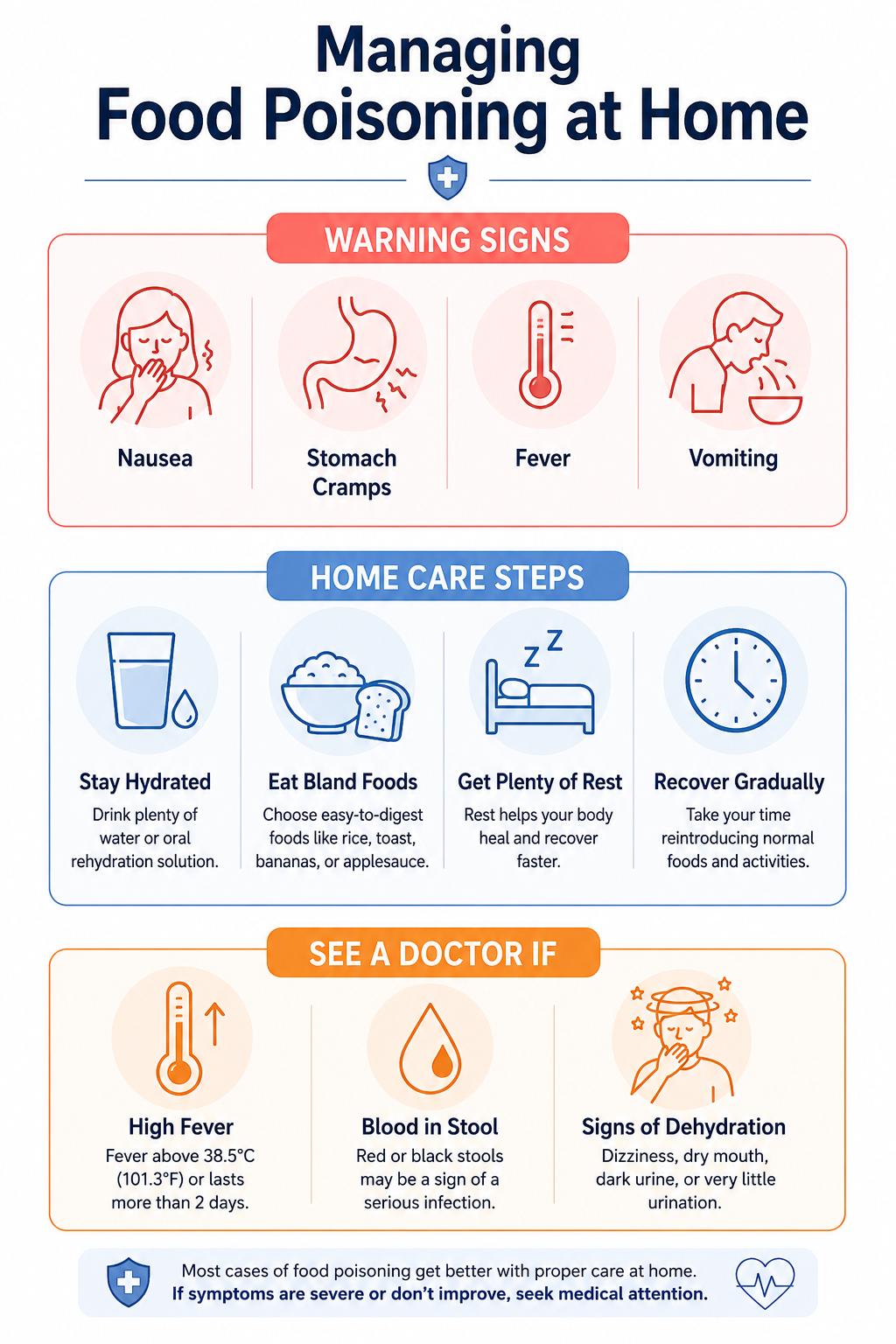
Food poisoning symptoms tend to follow a familiar pattern, even though the exact timing and severity depend heavily on what caused it. The most common signs include nausea, vomiting, watery or occasionally bloody diarrhea, stomach cramps, and a mild to moderate fever.
According to the CDC, the most common food poisoning symptoms are diarrhea, stomach pain or cramps, nausea, vomiting, and fever, and how severe they get depends largely on which germ caused the illness in the first place.
Onset timing varies more than people expect. Some bacteria, like Staphylococcus aureus, can cause symptoms within thirty minutes to a few hours. Others, like Salmonella or Listeria, may take a day or two, occasionally longer, before anything shows up. That gap between eating and getting sick is part of why so many people struggle to pinpoint exactly what made them ill.
Food Poisoning vs. Stomach Flu: How to Tell the Difference
This is one of the most common points of confusion, and it matters because the two conditions, while similar in symptoms, come from different causes.
Food poisoning results directly from eating contaminated food, meaning bacteria, viruses, parasites, or toxins that were already in what you ate. Stomach flu, or viral gastroenteritis, spreads person to person through a virus like norovirus and isn’t necessarily tied to a specific meal.
A few practical clues help distinguish them. Food poisoning symptoms often hit faster, sometimes within hours of eating, and tend to be more concentrated around vomiting and cramping early on. Stomach flu usually comes with more noticeable body aches, headache, and a longer overall illness, and it often spreads through a household or workplace as one person after another gets sick, since it’s contagious in a way that most food poisoning isn’t.
If everyone who ate the same meal is sick and nobody else around you is, that points more toward food poisoning. If it seems to be moving through your family or office one person at a time, viral gastroenteritis is more likely.
Food Poisoning Treatment at Home
For most otherwise healthy adults, food poisoning is manageable without a hospital visit. The goal at home is straightforward: support your body while it clears the infection, and avoid making symptoms worse in the meantime.
Stay hydrated.
This is the single most important thing you can do. Vomiting and diarrhea drain fluids and electrolytes fast, and dehydration is what turns a miserable few days into a genuinely dangerous situation. Small, frequent sips of water work better than large gulps, which can trigger more vomiting.
Oral rehydration solutions, the kind with a balance of glucose and electrolytes, are more effective than water alone if diarrhea is significant, since they replace what your body is actually losing rather than just diluting it further.
Rest, and let your stomach settle before eating.
If you’re actively vomiting, pushing food doesn’t help. Give your stomach a break and focus on fluids first. Once vomiting has eased, you can start reintroducing food gradually.
Reintroduce bland foods slowly.
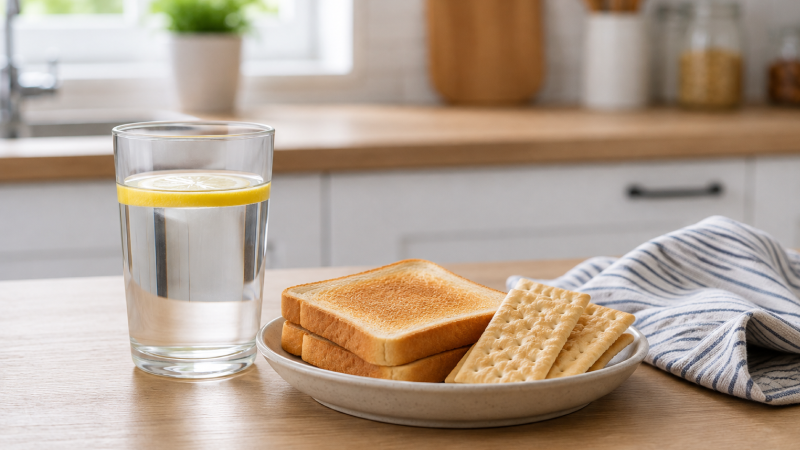
Toast, plain rice, bananas, and crackers are easy on an irritated digestive system and unlikely to trigger more symptoms. Move back toward your normal diet gradually rather than jumping straight to a full meal.
Avoid what will aggravate symptoms further.
Dairy, caffeine, alcohol, and fatty or spicy foods are all worth skipping until you’re clearly on the mend, since they can prolong irritation or trigger another round of nausea.
Be cautious with anti-diarrheal medication.
Over-the-counter options like loperamide can help in some cases, but they’re not always the right call, particularly if there’s blood in the stool or a high fever, since slowing down diarrhea in those situations can sometimes make things worse rather than better. When in doubt, check with a pharmacist or doctor before using them.
What to Eat (and Avoid) During Recovery
Once symptoms start easing, what you eat over the following day or two makes a real difference to how quickly you bounce back.
Lean toward simple, low-fat, low-fiber foods initially: plain rice, toast, bananas, applesauce, boiled potatoes, and clear broths. These are gentle on a digestive system that’s still recovering and less likely to trigger another wave of nausea or cramping.
Hold off on dairy for a few days even after you’re feeling better, since a temporary dip in lactose tolerance is common after a gastrointestinal illness. Fatty, fried, or heavily spiced food is worth delaying too, along with caffeine and alcohol, both of which can irritate a stomach that hasn’t fully settled.
As your appetite returns and symptoms stay away, gradually work back toward your normal diet rather than jumping straight back in. Most people are eating normally again within a few days, though appetite can take a little longer to fully return to normal.
How Long Food Poisoning Symptoms Usually Last
Recovery time depends heavily on the specific cause, but there are some general patterns worth knowing.
Staph-related food poisoning tends to be short and sharp, often resolving within 24 hours. Bacterial causes like Salmonella or Campylobacter more commonly last several days, typically somewhere between three and seven.
Norovirus, despite being viral rather than a true food poisoning cause in the strictest sense, usually clears within one to three days but can spread through a household during that window.
Most healthy adults recover fully without lasting effects. If symptoms are dragging on well beyond a week, or if you notice them getting worse rather than better after the first couple of days, that’s a signal to stop waiting it out and get checked.
When to See a Doctor or Go to the Hospital
This is the part that matters most for anyone currently unwell and trying to decide what to do next. Most food poisoning resolves at home, but certain symptoms mean it’s time to seek medical care rather than wait it out.
Seek medical attention if you notice any of the following:
- A fever above 39°C (102°F)
- Blood in your vomit or stool
- Diarrhea that lasts more than three days
- Signs of dehydration: little to no urination, a dry mouth and throat, dizziness when standing, or dark yellow urine
- Frequent vomiting that makes it impossible to keep fluids down
- Neurological symptoms like blurred vision, muscle weakness, or tingling, which can indicate certain rarer but more serious types of food poisoning
Certain groups face higher risk from food poisoning and should have a lower threshold for seeking care: infants and young children, adults over 65, pregnant women, and anyone with a weakened immune system or an underlying condition like inflammatory bowel disease, diabetes, or kidney disease.
The NIDDK notes that replacing lost fluids and electrolytes is the most important part of treating food poisoning at home, and that older adults, people with weakened immune systems, and anyone with severe diarrhea should use oral rehydration solutions rather than relying on water alone.
If you’re ever genuinely unsure whether your symptoms warrant urgent care, it’s better to get checked than to guess wrong. Severe dehydration in particular can escalate quickly, especially in children and older adults.
Common Causes of Food Poisoning
Understanding what typically causes food poisoning helps make sense of both the symptoms and the timeline.
Salmonella is one of the most common culprits, usually linked to undercooked poultry, eggs, and unpasteurized dairy. Symptoms typically start within six hours to six days of exposure.
E. coli often comes from undercooked ground beef, unwashed produce, or unpasteurized milk and juice. Certain strains can cause more severe illness, including bloody diarrhea.
Norovirus spreads easily through contaminated food, water, or contact with an infected person, and is a common cause of outbreaks in places like restaurants, cruise ships, and care facilities.
Campylobacter is frequently tied to undercooked poultry and unpasteurized milk, and is one of the more common bacterial causes of food poisoning worldwide.
Listeria is less common but more concerning, particularly for pregnant women, since it can cause serious complications. It’s often linked to deli meats, soft cheeses, and unpasteurized dairy.
Beyond specific pathogens, the general pattern worth knowing is this: undercooked meat, unwashed produce, unpasteurized dairy, and food left at unsafe temperatures for too long are behind the vast majority of cases.
If you’ve noticed a pattern of digestive discomfort even outside acute food poisoning episodes, it’s also worth reading through foods that quietly harm your digestion, since ongoing dietary habits and one-off contamination events aren’t the same problem, but they can compound each other.
Food Poisoning in Children: What to Watch For
Kids dehydrate faster than adults, which makes food poisoning a bit more urgent to monitor closely when it happens to them.
A child who’s had several episodes of vomiting or diarrhea in a short window can become dehydrated within hours rather than days, so it’s worth checking in more frequently than you might for yourself.
Watch for fewer wet diapers or reduced urination, a dry mouth, no tears when crying, unusual drowsiness or irritability, and a sunken appearance to the eyes or soft spot on an infant’s head.
Any of these warrant a call to a doctor rather than waiting to see if things improve on their own.
For hydration, oral rehydration solutions designed for children are generally more effective than water, juice, or sports drinks, since juice and sports drinks often contain too much sugar and not enough of the right electrolyte balance.
Breastfed infants should continue breastfeeding through the illness, and formula-fed babies can generally continue their usual formula unless a doctor advises otherwise. If a child refuses fluids entirely, is unusually lethargic, or shows any of the dehydration signs above, that’s a reason to seek care promptly rather than waiting it out at home the way an adult might.
Why Some Cases Take Longer Than Others
Not every case of food poisoning follows the same timeline, and understanding why can ease some of the anxiety that comes with a slower-than-expected recovery.
The specific organism involved matters most. Viral causes like norovirus tend to be shorter but highly contagious, while certain bacterial infections, particularly those needing antibiotic treatment, can drag on longer if untreated.
Underlying health also plays a role. Someone with a chronic digestive condition, a weakened immune system, or a history of gut issues may take longer to fully recover, even from a relatively mild case.
And in some situations, what looks like lingering food poisoning is actually something else entirely, a secondary infection, an unrelated flare of an existing digestive condition, or a different illness that simply started around the same time.
This is part of why symptoms that don’t follow the expected pattern, or that stretch well past a week, deserve a proper look rather than continued at-home management.
Preventing Food Poisoning Going Forward
While this guide focuses on managing symptoms once they’ve started, a few habits go a long way in reducing how often you deal with this in the first place. Wash hands thoroughly before handling food.
Cook meat, poultry, and eggs to safe internal temperatures. Keep raw and cooked foods separate to avoid cross-contamination. Refrigerate leftovers promptly rather than leaving them at room temperature for extended periods. None of this eliminates risk entirely, but it meaningfully reduces it.
Hydration Options Compared
Not all fluids are equally useful during food poisoning, and it’s worth knowing the difference before you reach for whatever’s closest.
Water is fine for mild cases and always a reasonable baseline, but on its own it doesn’t replace the electrolytes lost through vomiting and diarrhea, particularly sodium and potassium.
Oral rehydration solutions, the kind formulated with a specific balance of glucose and electrolytes, are the most effective option once fluid loss becomes significant. They’re absorbed efficiently even when the digestive system is irritated, which is exactly why they’re recommended for anyone with more than mild symptoms.
Sports drinks are better than plain water but not a true substitute for oral rehydration solutions, since they’re generally formulated for athletic performance rather than illness recovery and often carry more sugar than is ideal when your gut is already unsettled.
Broths and soups offer both fluid and some sodium, and tend to be well tolerated once vomiting has eased, making them a reasonable bridge between purely liquid intake and solid food.
Caffeinated drinks and alcohol should be avoided entirely during recovery. Both can worsen dehydration and irritate a digestive system that’s already under strain.
Book a Consultation with Dr Preetha Thomas
If food poisoning symptoms are dragging on longer than expected, keep coming back, or you’re simply not sure whether what you’re dealing with is food poisoning at all, it’s worth getting a proper evaluation with Dr Preetha Thomas, a gastroenterologist in Pretoria, rather than continuing to guess.
Get in touch to book a consultation and get clarity on what’s actually going on and the right next steps for your recovery.
Frequently Asked Questions
What are the first signs of food poisoning?
Nausea, stomach cramps, vomiting, and diarrhea are usually the earliest signs, sometimes along with a mild fever. Timing varies depending on the cause, from as little as thirty minutes to a couple of days after eating.
How long after eating do symptoms start?
It depends on the germ involved. Some bacterial toxins act within a few hours, while others, including certain bacteria and viruses, can take one to several days to cause symptoms.
Can food poisoning cause a fever?
Yes. A mild to moderate fever is common with food poisoning. A fever above 39°C (102°F) is a sign to seek medical care rather than continue managing symptoms at home.
Should I go to the hospital for food poisoning?
Most cases don’t require hospital care. Go if you notice blood in vomit or stool, signs of severe dehydration, a high fever, diarrhea lasting more than three days, or if you’re in a higher-risk group such as pregnant, elderly, very young, or immunocompromised.
What should I eat after food poisoning?
Start with bland, low-fat foods like toast, rice, bananas, and broth, and gradually reintroduce your normal diet as symptoms ease. Avoid dairy, caffeine, alcohol, and fatty or spicy food until you’re clearly recovering.