


Ever notice how nerves before a big presentation show up as a knot in your stomach, or how a stressful week somehow always comes with bloating, cramping, or a stomach that just won’t settle?
That’s not a coincidence, and it’s not just a figure of speech. Your gut and your brain are in constant, two-way communication, and the evidence for it has moved well beyond folk wisdom into serious clinical research.
This isn’t a niche idea anymore. Understanding how your digestive health actually shapes your mood, and how your mental state shapes your digestion right back, is genuinely useful information, whether you’re dealing with unexplained anxiety, a stubborn digestive condition, or both at once.
It shows up in surprisingly specific ways too, stress-related acid reflux is a well-documented example of exactly this mechanism playing out in daily life.
What Is the Gut-Brain Axis?
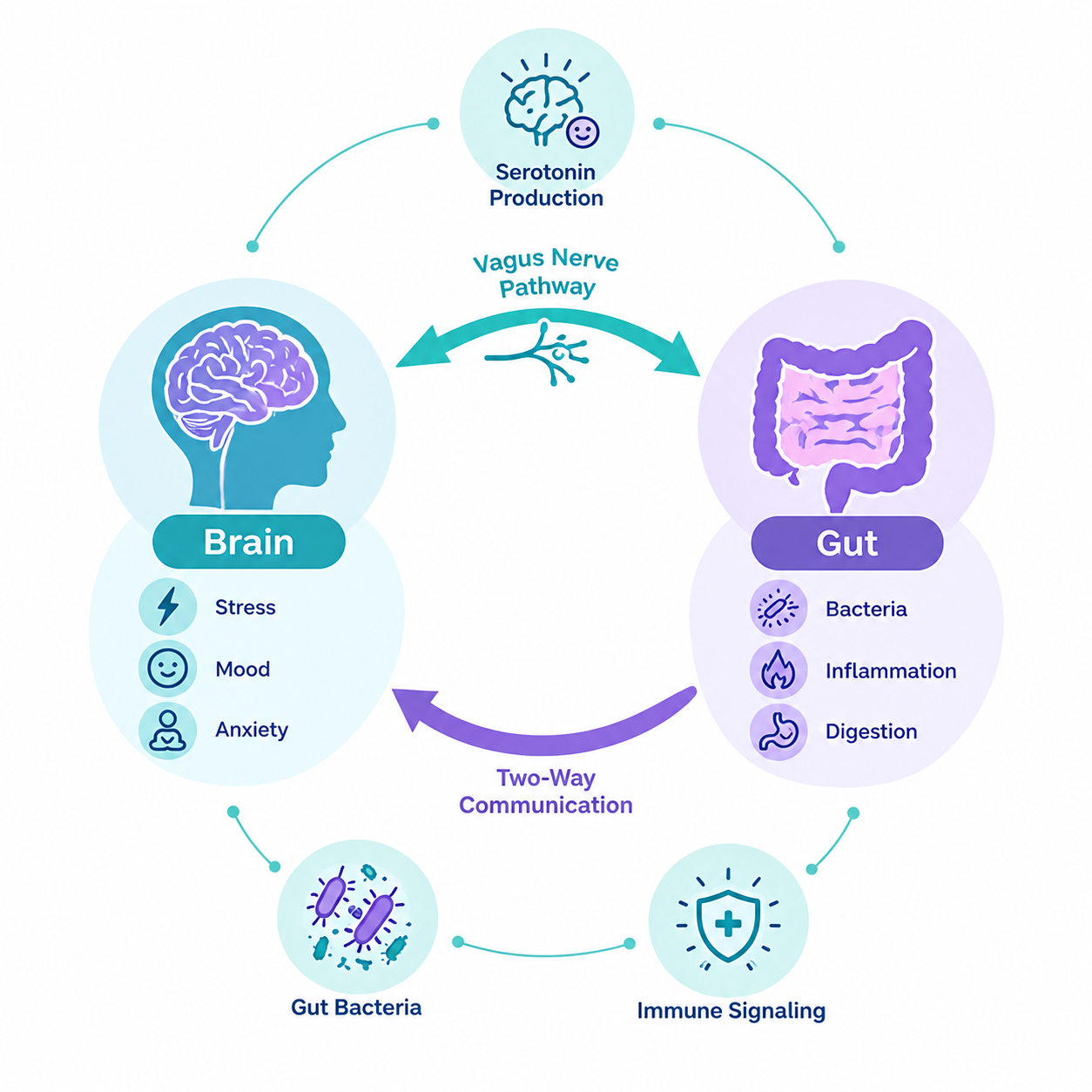
The gut-brain axis is the communication network linking your digestive system and your central nervous system. It runs through several pathways at once: nerve signals, hormones, immune system messengers, and chemicals produced by the trillions of bacteria living in your gut.
A key part of this system is the enteric nervous system, often nicknamed the “second brain.” It’s a network of somewhere between 100 and 600 million neurons lining your gastrointestinal tract, more than exist in your spinal cord.
It can operate somewhat independently of your brain, managing digestion on its own, but it’s also in constant contact with your central nervous system, feeding information back and forth continuously.
This independence is worth pausing on, because it explains something that surprises a lot of people: your gut can trigger a physical stress response, or a wave of calm, without your brain consciously deciding anything.
It’s also why gut function can feel so directly tied to emotional state even when nothing about your thinking has changed. The enteric nervous system isn’t a passive relay, it’s actively generating signals of its own, and those signals shape how you feel just as much as thoughts originating in your head do.
The Vagus Nerve and Gut Health
If there’s one anatomical structure that best represents the gut-brain connection, it’s the vagus nerve.
This nerve runs from your brainstem down through your neck and chest into your abdomen, connecting directly to your digestive organs along the way.
It’s the primary communication highway of the parasympathetic nervous system, the “rest and digest” side of your nervous system, and it carries an enormous volume of information in both directions.
Interestingly, most of that traffic runs from gut to brain, not the other way around. That means your digestive system is constantly reporting back on its state, and the brain responds accordingly, adjusting mood, appetite, and stress response based on what it’s hearing.
This is part of why practices like deep breathing and meditation, which stimulate the vagus nerve, have measurable effects on both digestive symptoms and anxiety levels. It’s not a coincidence, it’s the mechanism actually working as designed.
Gut Microbiome and Mental Health
Your gut is home to trillions of microorganisms collectively known as the gut microbiome, and this community does far more than just help digest food.
These bacteria produce neurotransmitters, the same chemical messengers your brain uses to regulate mood, and the numbers involved are surprising.
Approximately 90 percent of the body’s serotonin, a neurotransmitter closely tied to mood and emotional regulation, is actually produced in the gut rather than the brain.
Harvard Health explains that gut bacteria can also stimulate immune cells in the gut wall, which then send signals through the nervous system to the brain, and research over the past decade has increasingly connected gut bacteria composition to emotional regulation and cognitive function.
A diverse, well-balanced microbiome tends to correlate with better mental health outcomes, while dysbiosis, an imbalance in gut bacteria, has been associated with higher rates of anxiety and depression.
What makes this particularly compelling from a clinical standpoint is that the relationship appears measurable, not just theoretical.
Certain gut bacteria produce short-chain fatty acids as they ferment dietary fibre, and these compounds have been shown to influence brain function through several pathways, including effects on inflammation and on the blood-brain barrier itself.
This is one of the clearer mechanistic links between what you eat, what lives in your gut, and how your brain ultimately functions, and it’s a big part of why dietary fibre keeps coming up as a recommendation across seemingly unrelated areas of health.
How Stress Affects Gut Health
The gut-brain relationship doesn’t just run from gut to brain, it works the other way just as strongly. Chronic stress measurably changes digestion, and not in a subtle way. Stress hormones like cortisol can speed up or slow down gut motility depending on the person, which is why some people get diarrhea under stress while others experience constipation.
Beyond motility, stress increases stomach acid production, which can worsen indigestion and reflux, and it disrupts the balance of gut bacteria itself, reducing microbial diversity and increasing susceptibility to inflammation.
This is why periods of high stress so often line up with flare-ups in digestive symptoms, even when nothing about diet or routine has changed. The gut isn’t reacting to food alone, it’s reacting to what’s happening in your nervous system too.
This is also why digestive symptoms that flare specifically during exam periods, work deadlines, or major life transitions aren’t “all in your head” in the dismissive sense that phrase usually implies.
The physiological mechanism is real and well documented, stress hormones genuinely alter gut function, which means the symptoms are a legitimate physical response rather than something to be talked out of or ignored.
Can Gut Problems Cause Anxiety?
Yes, and this is one of the more clinically interesting parts of the gut-brain relationship. Inflammation originating in the gut doesn’t stay contained there.
Inflammatory signals can travel to the brain and influence regions involved in mood and anxiety regulation, which means a gut that’s chronically inflamed, whether from diet, dysbiosis, or an underlying digestive condition, can genuinely contribute to anxiety symptoms rather than just accompanying them.
There’s also a more direct mechanical piece to this. Conditions involving increased intestinal permeability, sometimes referred to informally as “leaky gut,” allow bacterial byproducts to enter the bloodstream more easily than they should, triggering immune responses that can, in turn, affect brain function and mood.
The research here is still developing, but the general pattern, gut inflammation contributing to anxiety rather than simply resulting from it, is well supported.
Gut Health and Depression
A similar pattern shows up with depression. Harvard Health notes that intestinal distress can be either the cause or the result of anxiety, stress, or depression, precisely because the gut and brain are so tightly linked.
Chronic low-grade inflammation, often originating in the gut, has been consistently associated with depressive symptoms in research, and addressing gut inflammation directly is increasingly viewed as a legitimate piece of a broader approach to managing mood disorders, not a replacement for conventional treatment, but a meaningful complement to it.
This doesn’t mean every case of depression has a digestive root cause. It does mean that if you’re managing depression and also dealing with ongoing digestive symptoms, treating the two as separate, unrelated issues may be missing part of the picture.
IBS and Mental Health
Irritable bowel syndrome is probably the clearest real-world example of the gut-brain connection in action. IBS is now understood, at least in part, as a disorder of gut-brain interaction, meaning the communication breakdown between gut and brain is considered central to the condition rather than incidental to it.
People with IBS have notably higher rates of anxiety and depression compared to the general population, and the relationship runs both directions.
Psychological stress reliably triggers or worsens IBS flare-ups, and living with unpredictable, often embarrassing digestive symptoms understandably contributes to anxiety in its own right.
This is exactly why effective IBS management so often includes stress reduction and, in some cases, therapy alongside dietary and medical treatment, rather than diet changes alone.
Treatment approaches that specifically target this gut-brain loop, including certain forms of cognitive behavioural therapy adapted for IBS and gut-directed hypnotherapy, have shown genuinely encouraging results in clinical research.
This isn’t an alternative to medical management of IBS, it’s a recognition that a condition rooted partly in disrupted gut-brain communication may respond well to treatments that work on that communication directly, alongside the dietary and pharmacological approaches more commonly discussed.
Signs of an Unhealthy Gut That Might Be Affecting Your Mood
Some signals are worth paying attention to if you suspect your gut health might be playing into how you’re feeling mentally. None of these are diagnostic on their own, but they’re the kinds of patterns worth tracking rather than dismissing as unrelated coincidences:
- Persistent bloating, gas, or irregular bowel habits alongside low mood or anxiety
- Brain fog or difficulty concentrating that seems to track with digestive flare-ups
- Mood swings that correlate with what and when you’ve eaten
- Fatigue that doesn’t improve with rest, especially alongside digestive symptoms
- Skin issues alongside gut symptoms, since inflammation often shows up in both places at once
None of these signs alone confirms a gut-driven mental health issue, but a consistent pattern across several of them is worth raising with a doctor rather than treating each symptom in isolation.
Keeping a simple log of symptoms alongside mood and food intake for a couple of weeks can be genuinely useful here, both for spotting patterns yourself and for giving a doctor something concrete to work from rather than a vague sense that “something feels off.”
How to Improve Gut Health for Mental Clarity
Diet is one of the most direct levers available for supporting the gut-brain axis. A diet rich in fibre, whole foods, and diverse plant sources feeds a wider range of beneficial gut bacteria, which in turn supports more stable neurotransmitter production. Structured approaches like a low-FODMAP diet can help identify specific triggers for people with more sensitive digestive systems, though this is best done with professional guidance rather than through unsupervised elimination.
Fermented foods, yoghurt, kefir, sauerkraut, and similar options introduce beneficial bacteria directly, while reducing ultra-processed food and excess sugar helps prevent the kind of dysbiosis that’s been linked to mood disturbances.
None of this needs to be extreme or restrictive to be effective, consistent, moderate changes tend to outperform short bursts of strict dieting for long-term gut and mood benefits alike.
Probiotics for Mental Health
Probiotics have generated a lot of interest for their potential mood benefits, and the research, while still developing, is genuinely promising in specific contexts.
Certain probiotic strains have shown measurable benefits for IBS symptoms in clinical studies, and there’s growing interest in so-called “psychobiotics,” probiotic strains specifically studied for their effects on mood and anxiety.
That said, it’s worth keeping expectations realistic. Probiotics aren’t a standalone treatment for anxiety or depression, and the specific strain, dose, and individual response all matter considerably.
Not every product on a supplement shelf has been studied for mental health effects specifically, and marketing claims often run well ahead of the actual evidence for a given product.
They’re best considered a supportive tool within a broader approach, alongside diet, lifestyle changes, and, where needed, professional mental health treatment, rather than a substitute for any of them.
Exercise, Sleep, and the Gut-Brain Connection
Two lifestyle factors deserve particular attention here, since both influence the gut-brain axis directly rather than indirectly. Regular exercise has been shown to increase the diversity of gut bacteria and reduce systemic inflammation, while also releasing endorphins that support mood independently.
The combined effect on the gut-brain axis is genuinely additive, not just two separate benefits happening to occur together.
Sleep plays an equally significant role. Poor or disrupted sleep negatively affects gut bacteria composition, and the relationship runs both ways, since gut discomfort can also disrupt sleep quality in turn.
Prioritising consistent, adequate sleep isn’t just about feeling rested, it’s a meaningful lever for both digestive balance and mental clarity.
When to See a Gastroenterologist for Gut and Mental Health Issues
If you’re dealing with persistent digestive symptoms alongside ongoing anxiety, low mood, or mental fog, it’s worth having both evaluated rather than assuming they’re unrelated.
This is particularly true if symptoms have lasted more than a few weeks, if they’re affecting your daily life, or if you’ve already tried basic dietary and lifestyle changes without meaningful improvement.
A gastroenterologist can properly evaluate whether an underlying digestive condition, such as IBS, dysbiosis, or chronic inflammation, is playing a role, and can work alongside a mental health professional where needed rather than treating the two systems as unconnected.
Ready to Take Control of Your Gut-Brain Health?
If digestive symptoms and your mental wellbeing seem to be tangled together, you don’t have to untangle them alone or guess your way through diet changes.
Dr. Preetha Thomas, gastroenterologist in Pretoria, can properly evaluate what’s actually happening in your gut and help build a plan that addresses the physical side of the equation.
Book a consultation to get a clear, informed starting point rather than continuing to manage things through trial and error.
Frequently Asked Questions
Can improving gut health really help with anxiety or depression?
For many people, yes, particularly when gut inflammation or dysbiosis is contributing to symptoms. It’s rarely a complete standalone treatment, but it’s a genuinely useful complement to conventional mental health care, not just a wellness trend.
What foods are worst for gut-brain health?
Highly processed foods, excess sugar, and diets very low in fibre tend to reduce microbial diversity and promote inflammation, both of which are linked to worse mood outcomes over time.
How long does it take to see mental health improvements from gut health changes?
This varies considerably by individual, but many people notice initial digestive improvements within a few weeks of consistent dietary and lifestyle changes, with mood-related benefits often following gradually rather than immediately.
Should I take probiotics for anxiety?
Probiotics may help as part of a broader approach, particularly certain studied strains, but they shouldn’t replace professional mental health treatment. It’s worth discussing specific strains and realistic expectations with a healthcare provider first.
Is IBS a mental health condition?
No, IBS is a genuine gastrointestinal disorder, but it’s now understood as a disorder of gut-brain interaction, meaning psychological factors and gut function are closely intertwined in how it presents and how it’s best managed.
Disclaimer: This article is intended for general informational and educational purposes only. It does not constitute medical advice and should not be used to diagnose, treat, or manage any health condition, including anxiety, depression, or digestive disorders. If you are experiencing a mental health crisis, please seek immediate support from a qualified professional or crisis service. Please consult Dr. Preetha Thomas or another qualified specialist regarding your specific symptoms and treatment options.