


Heartburn after a big meal feels like the kind of thing you just deal with. Pop an antacid, move on with your day, forget about it by tomorrow. For a lot of people, that’s exactly how it goes, and there’s nothing wrong with that pattern when reflux is occasional.
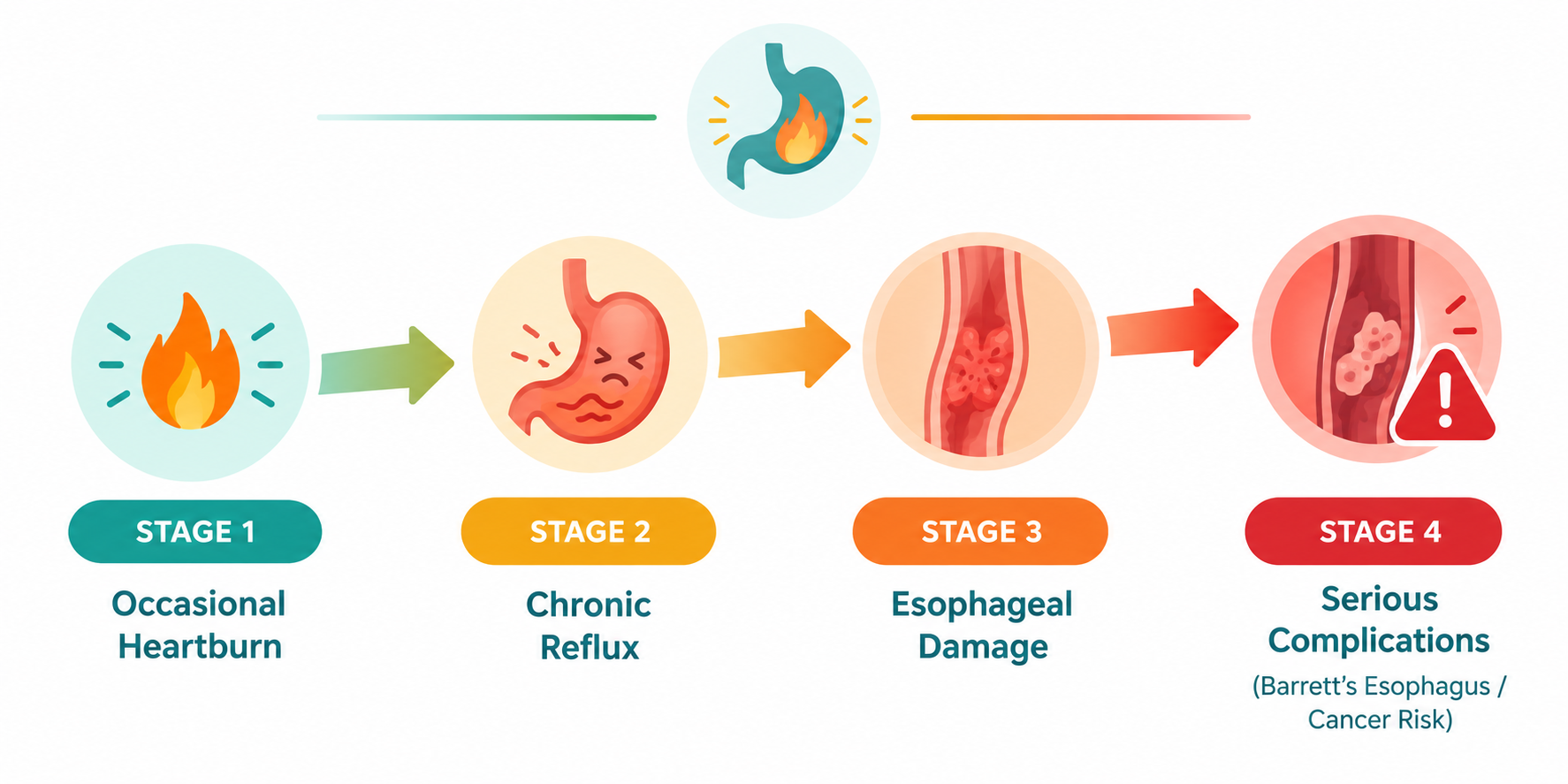
The problem is when it stops being occasional and nobody notices the shift. Reflux that’s become a regular fixture rather than an occasional nuisance, the kind of pattern that eventually gets diagnosed as GERD rather than simple heartburn, isn’t just uncomfortable, left unaddressed, it can quietly cause damage that takes years to show up and is far harder to treat once it does. Here’s what’s actually at stake if chronic acid reflux gets ignored.
Why Acid Reflux Happens
Acid reflux occurs when the lower oesophageal sphincter, a ring of muscle that’s supposed to keep stomach contents where they belong, doesn’t close properly. When that happens, stomach acid moves backward into the oesophagus, an organ that isn’t built to withstand it the way your stomach lining is.
A number of things can cause this valve to malfunction: a hiatal hernia, where part of the stomach pushes up through the diaphragm, excess weight increasing abdominal pressure, eating large meals or lying down soon after eating, and lifestyle factors like smoking, alcohol, and certain trigger foods.
It’s also worth noting that reflux is becoming more common at younger ages than it used to be, largely tied to modern diet and stress patterns, so this isn’t a condition that only affects an older population.
Occasional reflux from an isolated cause isn’t usually something to worry about. The risks below apply specifically when reflux becomes frequent and persistent rather than a rare, identifiable event.
How Do I Know If My Acid Reflux Is Serious?
Frequency is the main marker doctors look at. Heartburn that happens more than twice a week, or that’s been present for several weeks without improvement, has generally crossed from occasional into something worth investigating. So has reflux that’s gradually worsening rather than staying stable, or reflux that no longer responds well to antacids that used to help.
It’s also worth being aware that not all serious reflux announces itself as classic heartburn. Silent reflux can cause many of the same underlying risks discussed below while producing symptoms that look nothing like heartburn at all, a chronic cough, a hoarse voice, or a lingering throat irritation. This is part of why “I don’t get heartburn much” isn’t the same as “my reflux isn’t serious.”
10 Risks of Untreated Acid Reflux
1. Chronic Pain and Discomfort
Ongoing reflux doesn’t just cause the occasional burning sensation, for a lot of people it becomes a near-constant presence: chest discomfort, a sore throat, a lingering bitter taste.
That kind of persistent discomfort takes a real toll, making it harder to enjoy meals, sleep properly, or simply get through the day without being distracted by it. Left unaddressed, this ongoing discomfort is also what tends to open the door to the more serious complications below.
2. Esophageal Damage and Esophagitis
Repeated acid exposure irritates and inflames the lining of the oesophagus, a condition called esophagitis. Left untreated, this ongoing irritation can progress to erosions, ulcers, and scarring that narrows the oesophagus, making swallowing genuinely difficult.
Cleveland Clinic notes that this kind of scarring, known as an esophageal stricture, is one of the more common structural complications of long-term, poorly managed reflux.
3. Barrett’s Esophagus and Cancer Risk
This is the complication that tends to worry people most, and it deserves a direct, honest answer rather than either dismissal or alarm.
In a subset of people with long-term, poorly controlled reflux, roughly 5 to 10 percent according to clinical estimates, the cells lining the oesophagus change in response to repeated acid exposure, a condition known as Barrett’s oesophagus.
Cleveland Clinic explains that Barrett’s oesophagus is considered precancerous and does carry an increased risk of oesophageal cancer over time, though the overall risk for any individual with reflux remains relatively low.
This isn’t meant to cause panic, most people with chronic reflux never develop Barrett’s oesophagus, and most people with Barrett’s oesophagus never develop cancer.
But it is exactly why chronic, long-standing reflux is treated as a medical condition worth investigating rather than a lifestyle inconvenience to simply manage around.
4. Respiratory Problems: Chronic Cough and Asthma
Stomach acid doesn’t always stay contained to the oesophagus. In some cases it travels further upward, small amounts can be inhaled into the airways, triggering irritation, chronic coughing, or wheezing. For people who already have asthma, reflux can make symptoms noticeably worse, and it’s a commonly overlooked contributor to a persistent cough that doesn’t respond to typical cough remedies.
Addressing the underlying reflux often improves these respiratory symptoms in a way that treating the cough alone never quite manages to.
5. Disrupted Sleep
Reflux has a habit of getting worse the moment you lie down, since gravity is no longer helping keep stomach acid where it belongs.
Nighttime digestion is already a common trouble spot for a lot of people, and reflux compounds it directly, causing burning, coughing, or waking up with a sour taste in the mouth.
Chronic sleep disruption from reflux doesn’t just leave you tired, it affects concentration, mood, and overall health, and poor sleep can, in turn, make reflux symptoms worse, creating a cycle that’s genuinely hard to break without addressing the reflux itself.
6. Dental Damage and Enamel Erosion
Stomach acid that reaches the mouth doesn’t just cause an unpleasant taste, it actively erodes tooth enamel over time.
This shows up as increased sensitivity, a higher risk of cavities, and in more advanced cases, visible enamel wear that a dentist may notice before a patient even realises reflux is the cause.
A persistent bitter or sour taste in the mouth is often one of the earliest, most overlooked warning signs that reflux is reaching further than typical heartburn suggests.
7. Nutritional Deficiencies
This is a less obvious consequence, but a real one. Chronic irritation of the oesophagus and digestive tract can interfere with the body’s ability to absorb certain nutrients properly, including iron, calcium, vitamin B12, and magnesium.
In some cases, ongoing digestive irritation can also contribute to bile acid malabsorption, a separate but related issue that further compounds how well nutrients are absorbed.
Over time, this can contribute to anaemia, weakened bones, or neurological symptoms that seem entirely unrelated to digestion at first glance, which is part of why unexplained fatigue or nutrient deficiencies sometimes trace back to long-ignored reflux once other causes have been ruled out.
8. Mental Health Impact
Living with chronic physical discomfort takes a psychological toll that’s easy to underestimate until you’re the one experiencing it.
Persistent reflux has been associated with higher rates of anxiety and low mood, partly from the discomfort itself and partly from the unpredictability, never quite knowing when symptoms will flare, or dreading meals that used to be enjoyable.
This isn’t a minor side note, ongoing physical discomfort and disrupted sleep are legitimate contributors to mental strain, not something separate from the physical condition.
9. Reduced Productivity and Quality of Life
Between disrupted sleep, dietary restrictions, and the distraction of ongoing discomfort, chronic reflux has a way of quietly eating into daily functioning.
Concentration suffers when you’re uncomfortable or exhausted. Social occasions built around food become sources of anxiety rather than enjoyment.
None of this shows up on a lab test, but it’s a real cost that tends to go unacknowledged until symptoms are finally addressed and people realise how much they’d adapted around them.
10. Higher Long-Term Medical Costs
Ignoring reflux might feel like the cheaper option in the short term, no doctor’s visit, no prescription, no procedure. Over the long run, it often works out the opposite way.
Untreated reflux that progresses to esophagitis, strictures, or Barrett’s oesophagus typically requires more intensive, more expensive treatment than reflux caught and managed early, sometimes including procedures or ongoing surveillance that could have been avoided with earlier intervention.
Addressing reflux proactively tends to be both the healthier and, over time, the more cost-effective path.
When Acid Reflux Becomes Dangerous
Taken individually, several of these risks might sound manageable. Taken together, they illustrate why chronic reflux isn’t something to quietly work around indefinitely.
The common thread across nearly all of these complications is time and repeated exposure, the longer reflux goes unaddressed, the more opportunity it has to cause damage that’s considerably harder to reverse than it would have been to prevent.
Reflux that’s stable, mild, and well controlled with occasional antacids is a very different situation from reflux that’s frequent, worsening, or accompanied by any of the warning symptoms above, and it’s the second category that genuinely warrants medical attention rather than continued self-management.
When to See a Doctor for Acid Reflux
It’s time for a proper evaluation if you’re experiencing any of the following: heartburn more than twice a week, symptoms that persist despite regular antacid use, difficulty or pain when swallowing, unexplained weight loss, a chronic cough or hoarseness without an obvious cause, or reflux that’s noticeably worsened over recent months.
Severe chest pain, particularly if it’s new, accompanied by shortness of breath, or radiating to the arm or jaw, warrants emergency care rather than a scheduled appointment, since chest pain can occasionally signal a cardiac issue rather than reflux.
For everything short of that emergency scenario, a gastroenterologist can properly assess what’s going on, often through a combination of history, an upper endoscopy to directly examine the oesophagus, and, where needed, further testing to confirm the cause and rule out complications like Barrett’s oesophagus.
Ready to Take Control of Your Acid Reflux Before It Gets Worse?
The risks above develop gradually, which is exactly why they’re so easy to ignore until they’re harder to treat. Dr. Preetha Thomas, gastroenterologist in Pretoria, can properly evaluate your symptoms and help you get ahead of complications rather than managing around them indefinitely. Book a consultation to find out what’s actually driving your reflux and get a treatment plan that addresses it directly.
Frequently Asked Questions
Can acid reflux go away on its own if I ignore it?
Occasional, mild reflux tied to a specific trigger sometimes resolves once that trigger is removed. Chronic reflux that’s been present for weeks or months generally doesn’t resolve on its own and tends to persist or worsen without some form of treatment or lifestyle change.
How long does it take for acid reflux to cause esophageal damage?
This varies significantly by individual, but esophagitis and related damage are generally associated with reflux that’s gone unmanaged for months to years rather than days or weeks, which is part of why early evaluation matters more than it might seem to at first.
Is occasional heartburn the same as dangerous acid reflux?
No. Occasional heartburn tied to specific meals or situations is common and not usually a concern. The risks discussed here apply specifically to chronic, frequent, or worsening reflux, not the occasional episode after a spicy dinner.
Can lifestyle changes alone fix acid reflux complications?
Lifestyle changes, weight management, meal timing, avoiding trigger foods, help significantly with symptom control and can reduce the risk of complications developing further.
However, existing damage such as esophagitis or Barrett’s oesophagus typically requires medical management and monitoring rather than lifestyle changes alone.
Is acid reflux surgery ever necessary?
For most people, reflux is well managed with medication and lifestyle changes. Surgery is generally reserved for cases where medication isn’t providing adequate control, or where structural issues like a significant hiatal hernia are directly contributing to the problem.
Disclaimer: This article is intended for general informational and educational purposes only. It does not constitute medical advice and should not be used to diagnose, treat, or manage any health condition. If you are experiencing severe or new chest pain, seek emergency medical care immediately. Please consult Dr. Preetha Thomas or another qualified gastroenterologist regarding your specific symptoms and treatment options.