


Most of us have had a stomach ache. It arrives after a heavy meal or a stressful day, and it’s gone by morning. Chronic abdominal pain is different.
It hangs around for weeks or months, or it keeps coming back, and over time it starts to shape your life. You plan meals around it, cancel plans because of it, and wonder whether it’s something serious or just something you’re supposed to put up with.
Recurring or persistent stomach discomfort shouldn’t simply be tolerated. It’s your body telling you something, and the most useful thing you can do is work out what.
The good news is that most people with chronic abdominal pain can be diagnosed and helped, and the right mix of treatment and everyday changes can make a real difference to your digestive health.
This guide walks you through the causes, symptoms, diagnosis, and management options, in plain language.
What Is Chronic Abdominal Pain?
Chronic abdominal pain is pain in the belly that lasts for a long time, or that keeps returning over a long period.
Doctors don’t all use exactly the same cut-off, but pain that has lasted for several months, or that comes and goes repeatedly over that time, is generally treated as chronic. It may be constant, crampy, burning, dull, or sharp, and it can sit in one place or move around.
The key difference from an ordinary stomach ache is persistence. Occasional stomach pain linked to something you ate, a bout of gastroenteritis, or a stressful day usually settles on its own. Persistent abdominal pain doesn’t follow that pattern.
It lingers, returns, or slowly changes, and it often becomes harder to explain with each passing week.
It can also take a toll that goes beyond the pain itself. Long-lasting abdominal discomfort can disrupt sleep, make eating stressful, affect work and relationships, and wear down your mood. If it’s affecting your daily activities, that alone is a good reason to get it looked at.
What Are the Common Causes of Chronic Abdominal Pain?
There are many possible causes, ranging from conditions that are uncomfortable but harmless to others that need treatment.
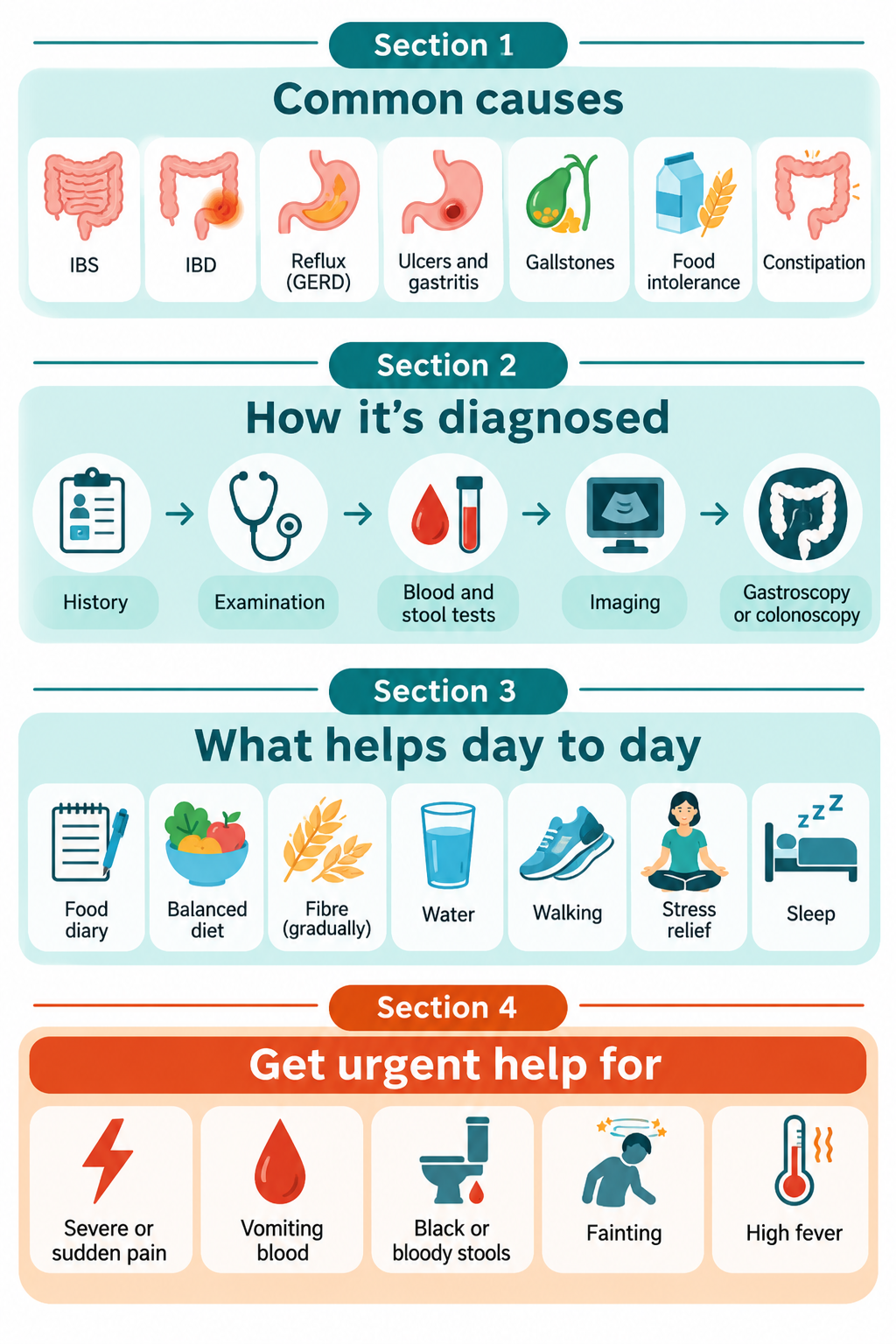
Here are the digestive causes doctors consider most often. Which one applies to you depends on where the pain is, what it feels like, and what else is going on.
Irritable Bowel Syndrome (IBS)
IBS is one of the most common causes of recurrent abdominal pain. It causes cramping and discomfort along with changes in bowel habits, such as diarrhoea, constipation, or both, without visible damage to the bowel.
It’s now understood as a disorder of how the gut and brain communicate. If you’d like the full picture, our guide on what IBS is, what causes it, and how it’s treated goes into more depth. IBS-related abdominal pain often eases after a bowel movement and tends to flare with stress or certain foods.
Inflammatory Bowel Disease (IBD)
IBD, which includes Crohn’s disease and ulcerative colitis, involves genuine inflammation of the digestive tract.
Pain is often accompanied by persistent diarrhoea, blood in the stool, weight loss, tiredness, or symptoms that wake you at night. Unlike IBS, it can cause lasting damage if it isn’t treated. Our article on gut inflammation and modern lifestyles explains how ongoing inflammation develops and why it matters.
Gastroesophageal Reflux Disease (GERD)
Reflux is usually thought of as heartburn, but it can also cause upper abdominal pain, a sour taste, regurgitation, and discomfort after meals.
When it happens often, it’s known as GERD. If you’re not sure whether your symptoms count, our guide to the difference between GERD and ordinary acid reflux can help.
Peptic Ulcers and Stomach Inflammation
A peptic ulcer is a sore in the lining of the stomach or the first part of the small intestine. Gastritis, or stomach inflammation, is a similar problem affecting the stomach lining.
Both can cause a burning or gnawing pain in the upper abdomen, sometimes related to meals or waking you at night. Common causes include a bacterial infection called Helicobacter pylori and regular use of anti-inflammatory painkillers.
Gallstones and Gallbladder Problems
Gallstones can cause episodes of pain in the upper right or middle abdomen, often after a fatty meal, sometimes spreading to the back or shoulder.
The pain tends to come in attacks rather than being constant, and it can be severe. Ongoing or worsening pain with fever or yellowing of the skin needs prompt medical attention.
Food Intolerances and Digestive Sensitivities
Some people experience pain, bloating, and diarrhoea because they can’t properly digest certain foods. Lactose intolerance is a common example, and others react to certain sugars or to gluten.
These are different from allergies, and a proper assessment matters, because cutting out foods without guidance can hide a condition such as coeliac disease.
Chronic Constipation and Digestive Problems
Long-term constipation can cause crampy lower abdominal pain, bloating, and a feeling of incomplete emptying. It may be caused by diet, low fluid intake, medicines, or an underlying condition, and it’s worth investigating if it’s persistent or has changed recently.
What Are the Common Symptoms of Persistent Abdominal Pain?
Pain is rarely the only symptom, and the other symptoms often point towards the cause. Common patterns include the following.
Bloating and Excessive Gas
A swollen, tight abdomen, with excess gas, is common in IBS, food intolerances, constipation, and several other conditions.
Abdominal Cramping and Discomfort
Cramps that come in waves, often relieved or triggered by a bowel movement, are typical of bowel-related causes. Discomfort that’s more constant or localised may suggest something else.
Changes in Bowel Movements
Diarrhoea, constipation, or alternating between them are important clues. A recent, persistent change in your usual pattern is always worth reporting.
Nausea and Loss of Appetite
Feeling sick or going off food can accompany ulcers, gallbladder problems, gastroparesis, and other conditions. Ongoing loss of appetite, especially with weight loss, needs to be checked.
Burning Sensation or Stomach Pain After Eating
A burning pain in the upper abdomen, or pain that comes on after meals, suggests acid-related conditions or problems such as gastritis or ulcers. It’s worth mentioning to your doctor if it happens regularly.
How Is Chronic Abdominal Pain Diagnosed?
Finding the cause usually involves several steps, and many people are surprised by how much the first one reveals.
Reviewing Your Medical History and Symptoms
According to the American College of Gastroenterology, the patient’s history provides the most helpful information, including the character of the pain (sharp, dull, cramping, burning), its location, and its relationship to eating or bowel movements.
Your doctor will also ask about your diet, medicines, stress, family history, and any other symptoms.
A symptom diary kept for a couple of weeks, noting pain, food, bowel movements, and stress, can make this conversation far more useful.
Physical Examination
Your doctor will examine your abdomen, checking for tenderness, swelling, or lumps, and may carry out a general examination too.
Blood and Stool Tests
Blood tests can check for anaemia, inflammation, infection, and conditions such as coeliac disease. Stool tests can look for infection, hidden blood, or markers of bowel inflammation, and tests for H. pylori are commonly used when ulcers or gastritis are suspected.
Imaging Tests for Abdominal Pain
Ultrasound, CT, or MRI scans can show gallstones, structural problems, and signs of inflammation. The test chosen depends on where the pain is and what your doctor suspects.
Gastroscopy and Colonoscopy
When symptoms point to the upper or lower digestive tract, endoscopy lets the doctor look inside directly. A gastroscopy examines the oesophagus, stomach, and first part of the small intestine, and can detect ulcers, inflammation, and reflux damage.
A colonoscopy examines the large bowel and can help find inflammatory bowel disease, polyps, and other causes of bowel symptoms. Samples can be taken during either procedure when needed.
A normal result isn’t a wasted test. It helps rule out serious causes, and that’s often what makes it possible to settle on a diagnosis such as IBS with confidence.
How to Manage Chronic Abdominal Pain and Improve Digestive Health
Once serious causes have been ruled out, a lot can be done day to day. These steps support almost any digestive condition, though your own plan should be shaped by your diagnosis.
Identify Foods That Trigger Abdominal Pain
Triggers vary from person to person. A food and symptom diary is the most reliable way to find yours, because it shows patterns you won’t spot from memory.
Common culprits include fatty or fried foods, very spicy meals, caffeine, alcohol, and fizzy drinks. Avoid cutting out whole food groups on your own, since that can leave your diet unbalanced.
Follow a Balanced Diet for Better Digestive Health
A varied diet built around vegetables, fruit, whole grains, lean protein, and healthy fats supports your gut and helps keep bowel habits regular. Highly processed and sugary foods tend to do the opposite, so keep them to a minimum.
Increase Fibre Intake Gradually
Fibre helps with constipation and supports a healthy gut, but adding it too fast can cause gas, bloating, and cramping. Increase it a little at a time, and drink more water alongside it. If you have IBS, the type of fibre matters, and soluble fibre from oats, for example, is usually better tolerated than wheat bran.
Stay Hydrated Throughout the Day
Water helps stool move through the bowel more comfortably and supports digestion in general. Sip steadily through the day rather than waiting until you’re thirsty.
Eat Smaller and More Frequent Meals When Helpful
Large meals can trigger cramping and reflux in some people. Smaller meals eaten at regular times are often easier on a sensitive gut, though this is worth adapting to your own pattern.
Maintain Regular Physical Activity
Movement stimulates the gut and helps with constipation, bloating, and stress. You don’t need intense workouts. A daily walk is a great place to start.
Manage Stress to Reduce Digestive Discomfort
Stress doesn’t cause every case of chronic abdominal pain, but it often makes it worse. The gut and brain are in constant communication, and tension can amplify pain signals. Breathing exercises, relaxation, therapy, time outdoors, and regular exercise can all help. Our guide on how stress affects your digestion explains the link and offers practical ways to reduce it.
Improve Sleep and Daily Eating Habits
Poor sleep and irregular routines can aggravate gut symptoms. Aim for regular sleep and meal times, eat slowly, and avoid eating a heavy meal right before bed.
Which Foods May Help Reduce Abdominal Pain and Support Digestion?
No single food cures abdominal pain, and tolerance varies. But some foods are commonly well tolerated and supportive for digestion.
Fibre-Rich Foods for Healthy Bowel Movements
Oats, fruit, vegetables, legumes, and whole grains support regular bowel movements. Introduce them gradually, and pay attention to how you respond.
Easily Digestible Foods for Sensitive Stomachs
During a flare, gentler foods such as rice, bananas, plain toast, potatoes, eggs, and well-cooked vegetables are often easier to manage. These are for short-term comfort, though, and shouldn’t become a permanent restricted diet.
Fruits and Vegetables That Support Gut Health
A variety of plant foods feeds a diverse gut microbiome. Cooked or peeled options are often gentler during sensitive periods, and many people tolerate carrots, spinach, courgette, blueberries, and oranges well.
Probiotic Foods and Their Role in Digestive Health
Yoghurt, kefir, and other fermented foods contain live bacteria that may support gut balance. The evidence is mixed and depends on the strain and the person, so treat them as a possible help instead of a guaranteed fix.
Foods and Drinks That May Trigger Stomach Pain
Common triggers include fried and fatty foods, spicy meals, caffeine, alcohol, fizzy drinks, and sugar-free sweeteners such as sorbitol. A food and symptom diary will show which of these apply to you.
What Treatment Options Are Available for Chronic Abdominal Pain?
Treatment depends entirely on the cause, which is why diagnosis comes first.
Medication Based on the Underlying Cause
Different conditions need different medicines. Examples include medicines to reduce stomach acid for reflux and ulcers, antibiotics to clear H. pylori, antispasmodics for cramping, laxatives for constipation, and anti-inflammatory treatments for IBD. Please don’t self-medicate over the long term, and note that regular use of anti-inflammatory painkillers can itself irritate the stomach lining.
Treatment for IBS and Other Digestive Disorders
IBS is usually managed with a combination of diet, stress management, and sometimes medication. Other disorders have their own specific treatments, which a gastroenterologist can guide.
Managing Acid Reflux and Stomach Inflammation
Lifestyle changes, such as smaller meals and avoiding late-night eating, together with acid-reducing medication, often control reflux and gastritis. Treating the cause, such as H. pylori, matters too.
Dietary Changes and Professional Nutritional Guidance
A dietitian can help you identify triggers safely, and can guide structured approaches such as a low FODMAP diet, which should be done with support rather than alone.
Medical Procedures for Diagnosing and Treating Digestive Conditions
Endoscopic procedures can both diagnose and treat certain problems, for example by taking samples, treating bleeding, or stretching a narrowing. Your specialist will recommend them only where they’re likely to help.
When Should You See a Gastroenterologist for Chronic Abdominal Pain?
If your pain is mild and stable, it’s reasonable to see your doctor when it’s convenient. But the American College of Gastroenterology notes that red flags, such as fever, blood in the stool, persistent vomiting, jaundice, or abdominal swelling, should prompt a discussion with your doctor sooner. See a gastroenterologist if you have:
- Abdominal pain that keeps returning or doesn’t improve
- Unexplained weight loss
- Blood in the stool, or black stools
- Persistent vomiting
- Ongoing changes in bowel habits
- Difficulty swallowing or loss of appetite
- Severe or worsening abdominal pain
Seek urgent medical care straight away for sudden severe abdominal pain, vomiting blood, fainting, a swollen and tender abdomen, high fever, or pain together with chest pain, shortness of breath, or dizziness. Mayo Clinic lists these among the situations in which you should seek emergency care.
Dr. Preetha Thomas, a specialist physician and medical gastroenterologist in Pretoria, assesses and treats digestive conditions including chronic abdominal pain. A professional evaluation matters because the same symptoms can come from very different causes, and the right treatment depends on finding the right one.
Book a Consultation with Dr. Preetha Thomas
If abdominal pain keeps coming back, or you’re tired of guessing what’s behind it, a proper assessment is the best next step. Book a consultation with Dr. Preetha Thomas to talk through your symptoms, arrange the right tests, and build a plan that fits your life.
Frequently Asked Questions About Chronic Abdominal Pain
What Is the Most Common Cause of Chronic Abdominal Pain?
It varies with age and circumstances, but functional gut disorders such as irritable bowel syndrome are among the most common causes of recurrent abdominal pain. Because several conditions can look similar, a proper assessment is needed to find out what applies to you.
How Can I Relieve Chronic Abdominal Pain Naturally?
Several everyday measures help many people: identifying trigger foods, eating regular balanced meals, increasing fibre gradually, staying hydrated, exercising, managing stress, and sleeping well. These support treatment rather than replacing it, and persistent pain still needs medical evaluation.
Can Stress Cause Persistent Abdominal Pain?
Stress can trigger or worsen abdominal pain because of the close link between the gut and the brain, but it’s rarely the whole explanation. Other causes should be ruled out before pain is put down to stress.
Which Foods Should I Avoid If I Have Frequent Stomach Pain?
Common triggers include fatty or fried foods, very spicy meals, caffeine, alcohol, fizzy drinks, and artificial sweeteners, but triggers differ between people. A food and symptom diary will show which ones affect you, and a dietitian can help you avoid unnecessary restriction.
When Should I See a Gastroenterologist for Abdominal Pain?
See one if pain keeps returning or isn’t improving, or if you have unexplained weight loss, blood in the stool, persistent vomiting, changes in bowel habits, or difficulty swallowing. Severe or sudden pain, or vomiting blood, needs urgent care.
Taking Your First Steps Towards Better Digestive Health
Chronic abdominal pain is common, disruptive, and, in most cases, treatable once the cause is found. The most important step is working out what’s behind it, which often means a careful history, a few tests, and sometimes a look inside with endoscopy. From there, healthy eating, good hydration, regular exercise, and stress management all play a part in supporting your digestive health.
If symptoms persist, or any warning sign appears, don’t wait it out. A professional evaluation can bring clarity, and clarity is usually the start of feeling better. To take that step, get in touch with Dr. Preetha Thomas in Pretoria for advice tailored to you.
Disclaimer: This article is intended for general informational and educational purposes only. It does not constitute medical advice and should not be used to diagnose, treat, or manage any health condition. Sudden severe abdominal pain, vomiting blood, fainting, black or bloody stools, a swollen and tender abdomen, high fever, or pain with chest pain or shortness of breath need urgent medical care. Please consult Dr. Preetha Thomas or another qualified healthcare professional regarding your specific symptoms and treatment.