

If you’ve been dealing with heartburn that just won’t quit, a weird squeezing feeling behind your breastbone, or that uncomfortable sensation of food getting “stuck” after meals, you might be living with a hiatal hernia without even knowing it. It’s one of those conditions that’s far more common than people realise, and yet most patients only find out they have one after months, sometimes years, of putting up with symptoms they assumed were “just bad reflux” or “just stress.”
As a gastroenterologist, I see this pattern constantly. Someone comes in describing chest discomfort after eating, or a burning sensation that gets worse when they lie down, and they’re surprised to learn the cause isn’t their heart or their nerves. It’s a small part of the stomach pushing up through the diaphragm into the chest cavity. That’s a hiatal hernia in a nutshell, and while many cases are mild and manageable, some are not. Knowing the difference can save you from a lot of unnecessary discomfort, and in rarer cases, from a genuine medical emergency.
What Exactly Is a Hiatal Hernia?
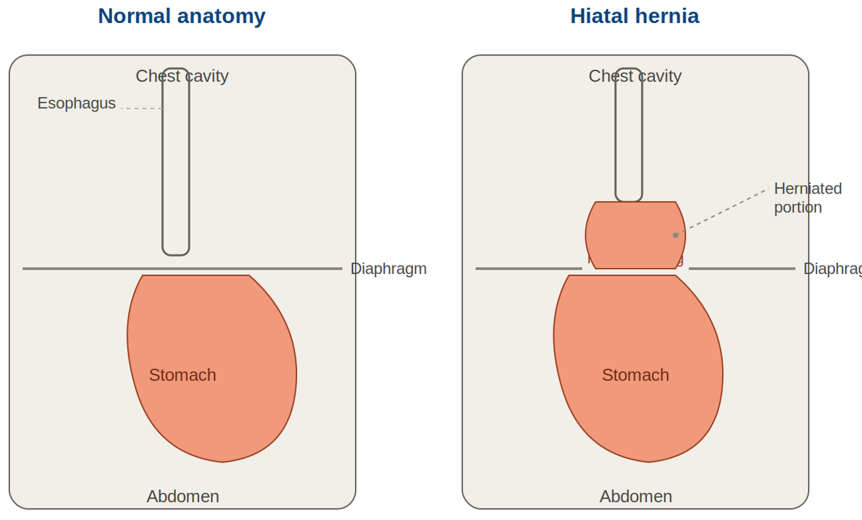
Your diaphragm is the muscle that separates your chest from your abdomen, and it has a small opening called the hiatus that your oesophagus passes through on its way to your stomach. A hiatal hernia happens when part of your stomach pushes up through that opening into your chest.
There are two main types worth knowing about:
- Sliding hiatal hernia – the most common type, where the stomach and the section of oesophagus that joins it slide up into the chest and back down again. This is usually the milder version.
- Paraesophageal hiatal hernia – less common but more concerning, where part of the stomach pushes up alongside the oesophagus and stays there. This type carries a higher risk of complications.
Plenty of people walk around with small sliding hernias and never notice a thing. Others develop symptoms that range from mildly annoying to genuinely disruptive. The size of the hernia doesn’t always match the severity of symptoms either, which is part of what makes this condition tricky to self-diagnose.
Common Signs of a Hiatal Hernia
Most people first notice something is off because of one or more of these everyday symptoms:
- Frequent heartburn, especially after meals or when lying down
- A sour or bitter taste in the back of your throat
- Regurgitation of food or liquid
- Difficulty swallowing, or a sensation that food is stuck
- Bloating and burping shortly after eating
- Chest discomfort that can feel tight or achy
- Shortness of breath after a large meal
On their own, none of these are alarming. They’re frustrating, sure, but they tend to be the kind of symptoms people manage with antacids and lifestyle tweaks for years before ever mentioning them to a doctor. And honestly, for a lot of patients, that approach works fine for a while.
When Symptoms Cross the Line Into “Serious”
This is the part that matters most. There’s a meaningful difference between a hiatal hernia that’s a daily nuisance and one that’s becoming dangerous. Here’s what tells the two apart.
Sudden, Severe Chest or Abdominal Pain
If pain comes on suddenly and is sharp rather than the usual dull burning, this is not something to wait out. Severe, sudden pain can signal that part of the stomach has become trapped or twisted in the diaphragm opening, a condition called strangulation. This cuts off blood supply to that section of stomach tissue and needs emergency treatment.
Vomiting That Won’t Stop, Especially With Blood
Occasional reflux is normal with a hiatal hernia. Persistent vomiting, particularly if it contains blood or looks like coffee grounds, is not. This can indicate bleeding in the digestive tract or a blockage, and it needs urgent attention rather than a wait-and-see approach.
Inability to Pass Gas or Have a Bowel Movement Alongside Pain
When this combination shows up with abdominal pain and bloating, it can point to an obstruction. This is one of the clearer signs that a hernia has progressed beyond the “manage it at home” stage.
Difficulty Breathing or Chest Tightness That Mimics a Heart Attack
A larger paraesophageal hernia can press on the lungs or heart enough to cause real breathlessness, especially after eating or when lying flat. If you ever experience chest tightness alongside sweating, dizziness, or pain radiating to your arm or jaw, treat it as a possible cardiac event first and get emergency care. Sorting out whether it’s your heart or your hernia is a job for a doctor, not for guesswork at home.
Unexplained Weight Loss or Persistent Difficulty Swallowing
If swallowing becomes consistently difficult, not just an occasional “food went down wrong” moment, or if you’re losing weight without trying, this needs investigation. It could be a sign the hernia is affecting your oesophagus more significantly, or, less commonly, pointing to something else entirely that needs to be ruled out.
Anaemia or Unexplained Fatigue
Slow, chronic bleeding from irritation at the hernia site can cause iron-deficiency anaemia over time. If you’re feeling persistently tired, short of breath with minimal exertion, or your bloodwork comes back with low iron and no obvious cause, it’s worth asking your doctor whether your hiatal hernia could be the source.
Hiatal Hernia vs. Heart Attack: How to Tell the Difference
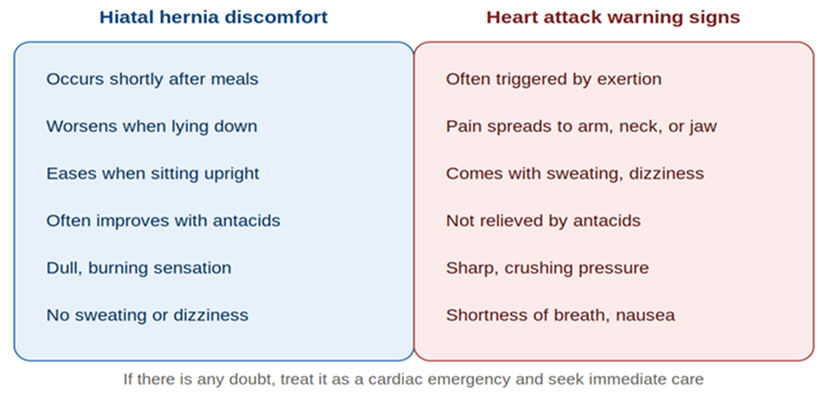
One of the most common reasons people end up in an emergency room with a hiatal hernia flare-up is that the chest discomfort genuinely feels heart-related. This isn’t an exaggeration on the patient’s part, it’s a real overlap in how the symptoms present, and doctors take it seriously precisely because the two can look so similar on the surface.
Hiatal hernia discomfort tends to be closely linked to eating. It often shows up shortly after a meal, worsens when you lie down, and may ease somewhat when you sit upright or take an antacid. Heart-related pain, on the other hand, is more likely to come with exertion, sweating, nausea, dizziness, or pain spreading to the arm, neck, or jaw, and it typically doesn’t respond to antacids at all.
The honest answer here is that you should never try to diagnose this distinction yourself in the moment. If there’s any doubt, especially the first time you experience this kind of chest pain, treat it as a cardiac emergency and get checked immediately. Once heart issues have been ruled out, your doctor can then focus on confirming whether a hiatal hernia is behind the recurring discomfort.
Who’s More Likely to Develop a Hiatal Hernia?
Hiatal hernias don’t appear at random. A handful of factors make them more likely, and recognising whether you fall into one of these categories can help you take symptoms more seriously rather than dismissing them.
- Age over 50 – the diaphragm muscle naturally weakens over time, making the hiatus opening more prone to widening
- Excess body weight – added abdominal pressure pushes upward against the diaphragm
- Pregnancy – similar mechanism, with increased abdominal pressure during later stages
- Chronic coughing – conditions like smoking-related cough or untreated asthma create repeated strain
- Heavy lifting or straining – particularly when done frequently or improperly
- Family history – some people are simply born with a naturally wider or weaker hiatus opening
- Previous abdominal injury or surgery – scar tissue and structural changes can make the area more vulnerable
None of these guarantee you’ll develop a hiatal hernia, and plenty of people with several risk factors never do. But if you fall into more than one of these categories and you’re noticing the symptoms described earlier, it’s a stronger reason to get checked rather than wait it out.
Why Some Hiatal Hernias Stay Mild and Others Don’t
A few factors influence how a hiatal hernia behaves over time. Larger hernias, particularly paraesophageal ones, are more prone to complications because there’s more stomach tissue at risk of getting trapped or twisted. Age plays a role too, since the diaphragm and surrounding tissue naturally lose some elasticity over the years, which can allow a hernia to enlarge gradually.
Chronic straining also matters, whether that’s from persistent coughing, heavy lifting, or long-term constipation, since the repeated pressure on the abdomen can worsen an existing hernia. And in some cases, hernias simply progress slowly and quietly, with symptoms creeping up so gradually that patients don’t realise how much worse things have gotten until they look back and compare to a year or two earlier.
This gradual progression is exactly why regular check-ins matter, even when things feel “manageable.” What feels like a stable, low-grade annoyance today can shift without much warning.
How Hiatal Hernias Are Diagnosed
If you’re describing any of the symptoms above, a gastroenterologist will typically start with a detailed history and may recommend one or more of the following:
- Upper endoscopy (gastroscopy) – a thin camera is used to look directly at your oesophagus and stomach, which also helps rule out other causes of your symptoms
- Barium swallow X-ray – you swallow a contrast liquid that outlines your oesophagus and stomach on X-ray, making the hernia visible
- Oesophageal manometry – measures the muscle contractions in your oesophagus, useful if swallowing difficulty is a major complaint
- pH monitoring – tracks acid reflux over 24 hours to understand how much it’s affecting your day-to-day life
None of these tests are something to dread. They’re quick, well-tolerated, and give a clear picture of what’s actually happening. If you’d like to know more about what to expect, read our gastroscopy preparation guide.
Managing a Mild Hiatal Hernia
For hernias that aren’t causing alarming symptoms, treatment is usually about controlling reflux and reducing pressure on the area. This generally includes:
- Eating smaller, more frequent meals instead of large ones
- Avoiding lying down for two to three hours after eating
- Cutting back on foods that trigger reflux, often spicy food, citrus, caffeine, and fatty meals
- Maintaining a healthy weight, since excess abdominal pressure worsens symptoms
- Raising the head of your bed if night-time reflux is an issue
- Medication such as proton pump inhibitors or H2 blockers to reduce stomach acid
Most people respond well to these changes, and a lot of patients find their day-to-day symptoms become a non-issue once a proper plan is in place.
When Surgery Becomes the Right Call
Surgery isn’t the first option for most patients, but it becomes necessary when symptoms don’t respond to medication and lifestyle changes, when the hernia is large or paraesophageal, or when there’s a risk of strangulation. See our full list of procedures for more on what’s available. The most common repair is laparoscopic, pulling the stomach back into place and tightening the diaphragm opening, often combined with reinforcing the valve between the oesophagus and stomach.
This is a decision made together with your gastroenterologist after weighing how much your quality of life is affected and what the imaging and test results show.
Frequently Asked Questions
Can a hiatal hernia heal on its own?
Small sliding hernias don’t typically “heal” in the sense of disappearing completely, but symptoms can often be managed well enough through diet and lifestyle changes that they stop being a daily issue. The hernia itself usually remains, just quietly, without causing trouble.
Can stress make hiatal hernia symptoms worse?
Yes. Stress doesn’t cause the hernia itself, but it can increase stomach acid production and muscle tension, both of which can make reflux symptoms feel more intense. Managing stress alongside the physical treatment plan often makes a noticeable difference.
Is it safe to exercise with a hiatal hernia?
Light to moderate exercise is generally fine and often helps with weight management, which in turn eases symptoms. Heavy lifting or intense core exercises that significantly increase abdominal pressure are worth discussing with your doctor first, since they can aggravate a hernia in some cases.
Does a hiatal hernia always need surgery?
No. Most people manage their symptoms successfully with medication and lifestyle adjustments alone. Surgery is reserved for cases that don’t respond to these measures, or where there’s a meaningful risk of complications like strangulation.
The Bottom Line
A hiatal hernia sitting quietly and causing the occasional bout of heartburn is a very different situation from one causing sudden pain, persistent vomiting, breathing trouble, or signs of bleeding. The everyday symptoms are worth addressing for your comfort and quality of life, but the warning signs above are worth addressing immediately, full stop.
If you’ve been brushing off symptoms as “just reflux” for a while now, or if anything on this list sounds familiar, it’s worth getting properly assessed rather than continuing to guess.
Not sure if your symptoms need attention?
Dr. Preetha Thomas is a specialist gastroenterologist based at Mediclinic Kloof, Pretoria. Whether you’re dealing with persistent heartburn, difficulty swallowing, or symptoms you’ve been putting off investigating, a consultation will give you clear answers and a plan tailored to you.
Book a consultation with Dr. Thomas — Suite 113, Mediclinic Kloof Hospital, Pretoria