

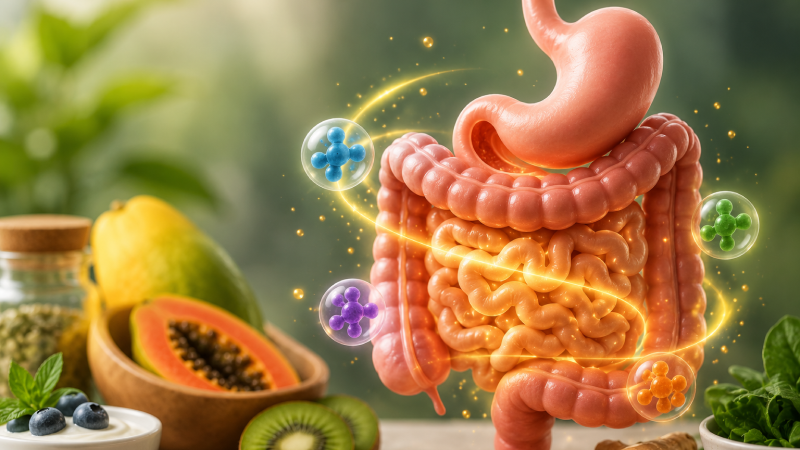
If you’ve ever finished a meal and felt heavy, gassy, or just off for the rest of the afternoon, there’s a decent chance your body struggled somewhere along the way to break that food down properly. That’s usually where digestive enzymes come into the picture. They’re not glamorous, nobody talks about them at dinner parties, but they’re doing a huge amount of quiet work every time you eat.
This article walks through what digestive enzymes actually do, the real benefits behind them, and how to tell if your gut could use some support.
What Are Digestive Enzymes?
Digestive enzymes are proteins your body produces to break food down into pieces small enough to absorb. Without them, you could eat the healthiest meal in the world and still miss out on most of its nutrition, because your intestines can only absorb nutrients once they’ve been broken into their basic building blocks.
Most of this work happens in three places: the stomach, the pancreas, and the small intestine. Saliva actually kicks things off too, which is why chewing slowly does more than people give it credit for.
There are three main categories worth knowing:
- Amylase breaks down carbohydrates and starches
- Protease breaks down proteins into amino acids
- Lipase breaks down fats into fatty acids
A shortage in any one of these can throw off digestion in a specific, noticeable way. Someone low on lipase, for instance, often notices greasy or loose stools after fatty meals. Someone short on protease may deal with bloating specifically after protein-heavy dinners.
How Digestive Enzymes Actually Work in the Body
Here’s the basic sequence. Food enters the stomach, where acid and pepsin start breaking down proteins. It moves into the small intestine, where the pancreas releases a mix of enzymes, amylase, lipase, and protease among them, to continue the breakdown. Once food particles are small enough, the intestinal lining absorbs the nutrients into the bloodstream.
When this process runs smoothly, you don’t think about it at all. That’s the whole point. Problems show up when enzyme production drops, whether from age, certain digestive conditions, chronic stress, or in some cases pancreatic issues. Food sits in the gut longer than it should, undigested particles ferment, and that’s often what causes the bloating and gas people complain about. Our guide on how enzymes support digestion and keep your gut healthy goes deeper into the mechanics if you want the full picture.
Top Benefits of Digestive Enzymes
Better Nutrient Absorption
This is the big one. Enzymes are the reason vitamins, minerals, and macronutrients actually make it into your bloodstream instead of passing straight through you. Poor enzyme function is linked to deficiencies in iron, B12, and fat-soluble vitamins like A, D, E, and K, even in people eating a decent diet.
Less Bloating and Gas
Undigested food doesn’t just disappear. Gut bacteria ferment it, and that fermentation produces gas. People who add enzyme support, either through food or supplementation, often notice less bloating within the first few uses, particularly after heavier or richer meals. If bloating has become a near-daily thing for you rather than an occasional annoyance, it might be worth reading about whether persistent bloating is normal or a sign of something more serious.
Easier Digestion of Protein and Fat
Protease and lipase specifically target the two macronutrients people tend to struggle with most as they age or under stress. A steak that used to sit fine in your stomach at 25 might feel like a brick at 45, and enzyme output naturally declining is part of the reason why.
Support for IBS and General Indigestion
Enzyme supplementation isn’t a cure for IBS, and anyone implying that is overselling it. That said, some people with IBS report meaningful symptom relief when they pair enzyme support with dietary changes, especially around trigger foods.
According to the National Institute of Diabetes and Digestive and Kidney Diseases, IBS involves repeated abdominal pain and changes in bowel habits without visible damage to the digestive tract, which is part of why it’s easy to mistake for a simple enzyme shortfall.
Patients often assume bloating after meals is just “how their stomach is,” when in fact an underlying enzyme or motility issue is driving it, and it’s worth raising with a gastroenterologist rather than self-diagnosing, particularly if symptoms are frequent or severe.
Weight Management Support
The connection here is indirect but real. When digestion works efficiently, nutrients get absorbed properly, blood sugar stays steadier, and cravings driven by nutrient gaps tend to settle down. Enzymes aren’t a weight loss shortcut, but a gut that’s working well makes healthy eating easier to sustain.
More Consistent Energy Levels
That sluggish, foggy feeling after a big meal is often tied to digestive strain, not just the food coma people joke about. When your body isn’t working overtime to break down poorly digested food, more energy is available for everything else.
A More Balanced Gut Microbiome
Undigested food particles that reach the colon can feed the wrong kind of bacteria, throwing off the balance between beneficial and less helpful strains. Efficient digestion earlier in the process means less raw material for that imbalance to build on.
Possible Relief from Reflux Symptoms
Some people notice fewer reflux symptoms when digestion moves more efficiently, since food isn’t lingering in the stomach as long. This isn’t universal, and reflux has plenty of other triggers, but it’s a benefit worth mentioning.
Signs You May Need More Digestive Enzyme Support
A few patterns tend to show up together: bloating shortly after eating, undigested food visible in stool, persistent fatigue after meals, unexplained weight changes, or greasy and foul-smelling stools. None of these on their own is a red flag, but if several show up regularly, it’s a reasonable prompt to look closer.
Age plays a role too. Enzyme production naturally declines over time, which is one reason digestion often changes noticeably after 50. Certain conditions, including chronic pancreatitis, celiac disease, and cystic fibrosis, can also reduce enzyme output more significantly and usually need proper medical evaluation rather than an over-the-counter fix. MedlinePlus, a service of the U.S. National Library of Medicine, has more background on how pancreatic conditions specifically affect enzyme production.
Natural Food Sources of Digestive Enzymes
Food is genuinely the first place to look before reaching for a supplement bottle. A few standouts:
- Pineapple contains bromelain, which helps break down protein
- Papaya contains papain, another protein-digesting enzyme
- Mango and kiwi both offer smaller amounts of digestive enzymes alongside fiber
- Honey, particularly raw and unprocessed, contains trace amounts of amylase
- Fermented foods like sauerkraut, kimchi, and kefir support enzyme activity indirectly by feeding beneficial gut bacteria
Eating a slice of pineapple after a heavy protein meal isn’t a folk remedy exactly, there’s real enzymatic activity behind it. For a broader look at eating patterns that support digestion long term, our piece on foods that actually support a healthier gut is a useful next read.
Digestive Enzyme Supplements: What to Know
Supplements make sense for some people and are unnecessary for others. Broad-spectrum formulas cover amylase, protease, and lipase together and work well for general digestive support. Targeted formulas, like lactase for dairy sensitivity, make more sense when you know exactly which enzyme you’re short on.
Timing matters. Most enzyme supplements work best taken right before or with a meal, not hours before or after. And it’s worth saying plainly: enzyme supplements aren’t risk-free for everyone. People with certain pancreatic conditions, or those on specific medications, should talk to a doctor before starting one rather than guessing based on a product label.
Digestive Enzymes vs. Probiotics
These two get mixed up constantly, and it’s an easy mistake to make since both live under the “gut health” umbrella. Digestive enzymes break food down into absorbable nutrients. Probiotics, as the NIH Office of Dietary Supplements explains, are live microorganisms that support the balance of your gut microbiome when taken in sufficient amounts.
One handles breakdown, the other handles balance. Some people benefit from both together, but they’re solving different problems. If you want the fuller comparison, we’ve laid it out in our probiotics and prebiotics gut health guide.
When to See a Doctor
Occasional bloating or an uncomfortable meal here and there usually isn’t cause for concern. But persistent symptoms, unexplained weight loss, blood in stool, or digestive issues that interfere with daily life deserve a proper evaluation rather than trial and error with supplements.
Dr. Preetha Thomas, a gastroenterologist, says these are exactly the cases where an underlying condition driving the enzyme shortfall needs to be identified first, since it matters more than the symptom itself.
Frequently Asked Questions
Do digestive enzymes really work?
For people with a genuine enzyme deficiency or a diagnosed condition affecting enzyme production, yes, the evidence is solid. For people without a deficiency, benefits tend to be more modest, though many still report less bloating and easier digestion after heavier meals.
Can digestive enzymes help with bloating?
Often, yes, particularly bloating tied to specific foods like dairy, fatty meals, or large protein portions. Chronic bloating with no clear food trigger is worth investigating further rather than treating with enzymes alone.
Are digestive enzymes safe to take daily?
Generally, yes, for most healthy adults using a standard broad-spectrum formula. That said, anyone with a pancreatic condition or on regular medication should check with their doctor first, since interactions and dosing needs vary.
What foods naturally contain digestive enzymes?
Pineapple, papaya, mango, kiwi, raw honey, and fermented foods all contain naturally occurring enzymes or support enzyme activity in the gut.
Final Thought
Digestion isn’t something most people think about until it stops working smoothly. Paying attention to how your body handles different meals, and supporting it with the right foods or, when needed, the right supplement, can make a bigger difference than people expect. If symptoms keep showing up despite the basics, that’s the point to bring in a professional rather than keep guessing.