

If diet and exercise haven’t moved the needle the way you’d hoped, and your doctor has started using words like “bariatric” or “endoscopic weight loss,” you’re probably facing a decision that feels bigger than it should.
Two paths tend to come up in that conversation: an intragastric balloon, or one of several types of bariatric surgery. They’re not the same thing, they’re not interchangeable, and which one makes sense depends heavily on where you’re starting from.
This guide walks through both options honestly, including where they overlap, where they don’t, and what actually determines which one a doctor is likely to recommend.
What Is an Intragastric Balloon?
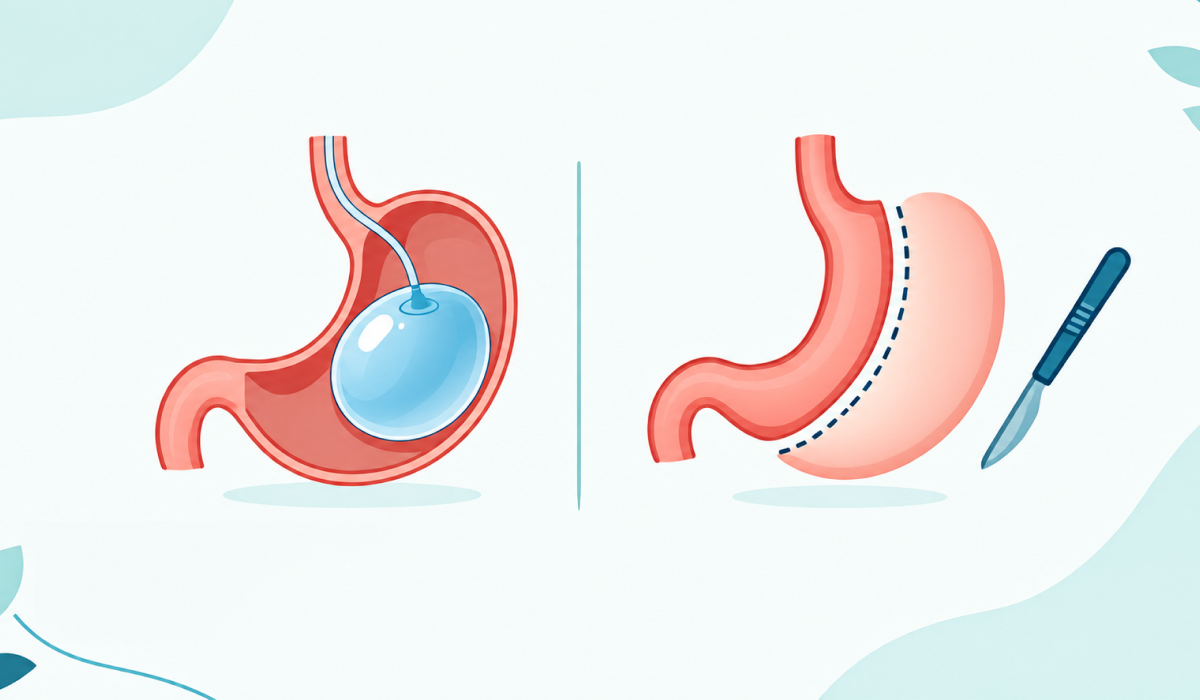
An intragastric balloon is a soft, deflated silicone balloon that a gastroenterologist places into your stomach using an endoscope, then fills with saline once it’s in position.
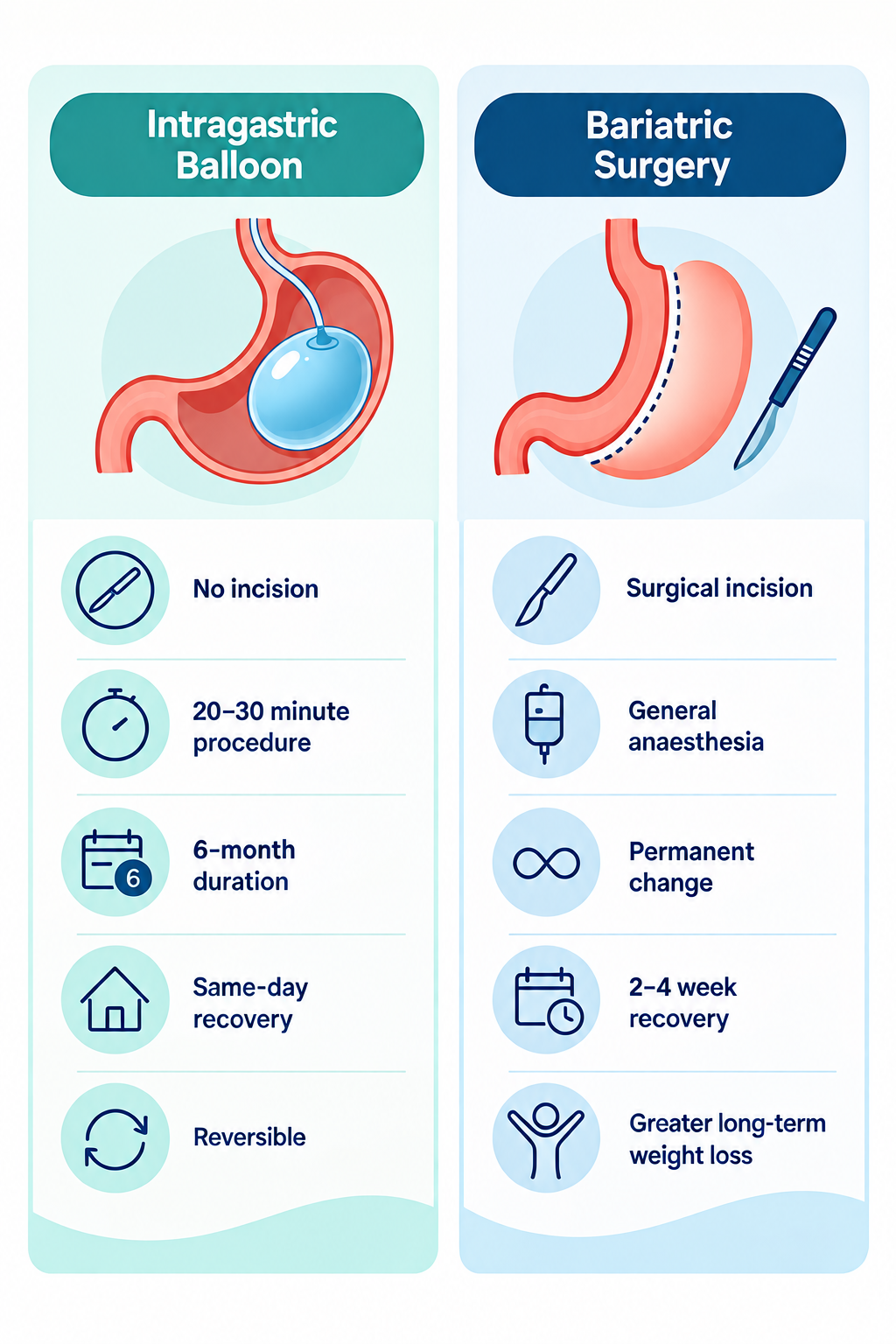
No incisions, no general anaesthesia, and the procedure itself typically takes well under an hour. Once inflated, the balloon takes up space in your stomach, which means you feel full on smaller portions than before.
It’s meant to be temporary. Most balloon systems stay in place for around six months, after which they’re removed the same way they went in, endoscopically. During that window, the balloon isn’t doing the work alone.
It’s paired with a structured eating and lifestyle plan, and the real long-term results tend to come from the habits built during those months, not the balloon itself.
Not all balloon systems are identical. Some are single balloons filled with saline, while newer adjustable systems allow the volume to be increased or decreased after placement, based on how well a patient is tolerating it.
This matters clinically because early intolerance, nausea or discomfort that doesn’t settle, is one of the more common reasons a balloon gets removed ahead of schedule. An adjustable system gives a gastroenterologist room to fine-tune the fit rather than removing it outright.
Life During the Six Months With a Balloon
Most balloon programs follow a phased approach to eating. In the first few days, patients are typically limited to clear liquids while the stomach adjusts to the balloon’s presence.
This progresses to pureed foods over roughly a week, then soft foods, and eventually a structured solid-food diet built around portion control and protein intake.
This isn’t incidental to the program, it’s arguably the most important part of it, since the eating pattern learned during these months is what tends to determine whether results are maintained after the balloon comes out.
What Is Bariatric Surgery?
Bariatric surgery covers several different surgical procedures that permanently change the size or path of your digestive system to support weight loss. Unlike the balloon, this involves actual surgery, general anaesthesia, and permanent anatomical changes.
As Mayo Clinic explains, the two most common approaches in use today are sleeve gastrectomy and gastric bypass, though other procedures exist for specific situations.
Because the changes are permanent, bariatric surgery is generally reserved for people with a higher BMI or significant obesity-related health conditions, where the health risks of remaining at that weight outweigh the risks of major surgery.
Gastric Balloon vs. Gastric Sleeve
A sleeve gastrectomy removes roughly 75 to 80 percent of the stomach, leaving a narrow tube-shaped stomach behind. It’s permanent, it’s done laparoscopically under general anaesthesia, and recovery typically involves a hospital stay of a day or two, followed by several weeks of restricted activity.
The balloon doesn’t remove anything. It occupies space temporarily, and it comes out again. Weight loss from a sleeve tends to be more substantial and more durable long term, largely because the anatomical change is permanent.
The balloon’s advantage is that it carries a far lower risk profile and doesn’t involve cutting into the stomach at all, which matters for patients who aren’t good surgical candidates or aren’t ready to commit to a permanent procedure.
Gastric Balloon vs. Gastric Bypass
Gastric bypass, sometimes called Roux-en-Y gastric bypass, creates a small pouch at the top of the stomach and reroutes part of the small intestine to connect directly to it.
This limits how much you can eat and changes how your body absorbs certain nutrients, and it also affects hunger-related hormones in ways that support sustained weight loss.
It’s the more invasive of the two surgical options discussed here, with a longer recovery and a higher, though still relatively low, complication rate compared to sleeve gastrectomy.
Compared to the balloon, bypass produces significantly greater and more durable weight loss for patients with severe obesity, but it also carries lifelong nutritional considerations, including the need for vitamin and mineral supplementation, that a balloon simply doesn’t involve.
Who Qualifies for a Gastric Balloon?
Eligibility for a balloon is generally more flexible than surgical eligibility. In many programs, adults with a BMI of 30 and above can be considered, following a health screening to confirm there’s no medical reason the balloon wouldn’t be appropriate, such as certain digestive conditions or prior stomach surgery.
Bariatric surgery, by comparison, usually requires a BMI over 40, or over 35 with a related health condition such as type 2 diabetes, sleep apnea, or fatty liver disease, along with a documented history of trying and not sustaining weight loss through non-surgical means.
The balloon fills a gap for people who don’t meet those surgical thresholds, or who do but aren’t ready for a permanent procedure.
Both pathways typically involve more than a single conversation with a doctor. A proper screening usually draws on a small team, a gastroenterologist or surgeon, often a dietitian, and sometimes a psychologist, to confirm that the chosen option matches not just your BMI but your overall health picture and your readiness to follow through on the lifestyle changes either option requires. Skipping this step, or choosing a provider who does, is a reasonable warning sign regardless of which procedure you’re considering.
Non-Surgical Weight Loss Options: Where the Balloon Fits
The intragastric balloon sits within a broader category sometimes called endoscopic bariatric therapy, which covers procedures performed via endoscope rather than open or laparoscopic surgery. What makes the balloon distinct within this category is that it’s fully reversible and doesn’t alter your anatomy at all.
Compared to lifestyle programs and medication alone, it adds a physical mechanism that supports portion control. Compared to surgery, it trades some effectiveness for a dramatically lower risk profile and no permanent changes.
For patients who’ve tried diet and exercise extensively without lasting results, but who either don’t want or don’t yet qualify for surgery, this middle ground is often where the conversation lands.
Using the Balloon as a Bridge to Bariatric Surgery
One use case doesn’t get discussed enough: the balloon and surgery aren’t always either-or. For patients with a very high BMI, surgery can carry meaningfully higher risk, both from anaesthesia and from operating on a larger abdominal cavity.
In these cases, a gastroenterologist may recommend placing a balloon first, specifically to reduce weight and surgical risk before a bariatric procedure takes place.
This bridge approach has research behind it. Studies looking at super-obese patients (BMI above 60) have found that pre-surgical weight loss from a balloon can meaningfully improve the safety of the surgery that follows, without necessarily reducing the surgery’s own effectiveness once performed.
If your BMI is high enough that surgery feels daunting or high risk, this combined approach is worth raising directly with your specialist.
How Much Weight Can You Lose With a Gastric Balloon?
Results vary by individual, but many patients lose somewhere in the range of 10 to 15 percent of their total body weight during the six months a balloon is in place, provided it’s paired with the lifestyle program that should accompany it.
That’s meaningfully less than the 25 to 35 percent total body weight loss commonly seen with bypass or sleeve surgery over a longer timeframe, but it comes without the surgical risk or permanence.
It’s worth being clear about one thing: results with the balloon depend heavily on what happens after it’s removed. Since the balloon itself doesn’t create permanent change, maintaining the habits built during those six months is what determines whether the weight stays off.
Intragastric Balloon Recovery Time vs. Surgical Recovery
This is one of the starkest differences between the two paths. Balloon placement is done under sedation, not general anaesthesia, and most patients go home the same day. Some nausea and cramping in the first few days as your stomach adjusts is common, but most people return to normal activity within a week.
Surgical recovery is longer by a wide margin. Sleeve gastrectomy typically involves a one to two day hospital stay and two to four weeks before returning to normal activity, with strenuous activity restricted longer.
Gastric bypass recovery runs similarly, sometimes slightly longer given the more complex nature of the procedure. If time off work or caregiving responsibilities are a major factor in your decision, this difference alone can be decisive.
Gastric Balloon Risks and Side Effects
No weight loss procedure is without risk, and it’s worth understanding both sides honestly.
Balloon risks are generally mild and include nausea, cramping, and acid reflux in the first several days, which usually settle as the stomach adjusts. Less commonly, the balloon can deflate prematurely or, rarely, cause an obstruction requiring early removal.
As Cleveland Clinic notes, serious complications are uncommon, and the procedure carries a notably lower risk profile than surgical alternatives.
Surgical risks include the standard risks of general anaesthesia, along with procedure-specific concerns such as leaks at the surgical site, blood clots, and, for bypass specifically, longer-term nutritional deficiencies that require lifelong monitoring and supplementation.
These risks are well studied and generally low at accredited centres, but they’re categorically different from what the balloon involves, simply because surgery is being performed.
Your gastroenterologist or surgeon will walk through your individual risk profile before either procedure, since factors like existing health conditions and prior abdominal surgery affect both options differently.
Age, existing digestive conditions such as hiatal hernia or significant acid reflux, and whether you’ve had prior stomach surgery can all shift which option is safer for you specifically, which is exactly why this decision isn’t one to make from general information alone.
It’s also worth understanding that risk isn’t static across the six months a balloon is in place. The first one to two weeks tend to carry the highest likelihood of side effects, as the stomach adapts to the balloon’s presence.
Most patients find that nausea and discomfort ease significantly after this initial adjustment period, with the remaining months typically far more comfortable.
Intragastric Balloon Cost vs. Bariatric Surgery Cost
As a general rule, intragastric balloon placement costs meaningfully less than bariatric surgery, largely because it doesn’t require an operating theatre, general anaesthesia, or an inpatient hospital stay.
Bariatric surgery costs vary considerably depending on the specific procedure, the facility, and whether medical aid or insurance contributes, since coverage criteria differ between providers and often depend on documented BMI and comorbidity history.
Because pricing varies so much by individual circumstance and provider, it’s best discussed directly with your specialist’s office rather than estimated in general terms here.
How Long Does a Gastric Balloon Stay In?
Most intragastric balloon systems remain in place for approximately six months, though this varies slightly depending on the specific balloon type used.
After six months, the balloon is removed endoscopically in a procedure similar to its placement. Leaving a balloon in longer than recommended isn’t advised, since the material is designed for a defined period of use.
Which Option Is Right for You?
There isn’t a universal answer, and that’s genuinely the point of this comparison. The balloon tends to make sense if you’re earlier in your weight loss journey, don’t yet meet surgical criteria, or want a lower-risk, reversible option before committing to something permanent
. Bariatric surgery tends to make sense if you have a higher BMI, obesity-related health conditions that need more substantial and durable intervention, or you’ve already tried less invasive options without lasting success.
For some patients, as discussed above, the honest answer is both, in sequence rather than as competing choices. The decision ultimately comes down to your BMI, your health history, how much risk and recovery time you’re able to take on, and what your specialist believes will actually get you sustainable results.
Ready to Discuss Your Weight Loss Options With Dr. Preetha Thomas?
If you’re weighing an intragastric balloon against bariatric surgery and want a clear, honest recommendation based on your own health profile, Dr. Preetha Thomas offers intragastric balloon insertions as part of a broader range of diagnostic and weight-management procedures at the practice. Book a consultation in Pretoria to talk through which path fits your situation, rather than guessing based on general information alone.
Frequently Asked Questions
Is a gastric balloon as effective as surgery?
Not quite. Balloons typically produce more modest weight loss than surgery, usually in the range of 10 to 15 percent of body weight compared to 25 percent or more with bypass or sleeve surgery, but with substantially lower risk and no permanent changes to your anatomy.
Can I get a gastric balloon if I don’t qualify for surgery?
Often, yes. Balloon eligibility criteria are generally less strict than surgical criteria, which is part of why it fills a gap for patients who aren’t candidates for surgery yet.
What happens when the balloon is removed?
The balloon is deflated and removed endoscopically, in a procedure similar in length and approach to how it was placed. Most patients go home the same day.
Will I regain weight after the balloon comes out?
It’s possible if the lifestyle habits built during the six months aren’t maintained afterward. The balloon supports weight loss, but sustaining it depends on what happens after removal.
Is bariatric surgery reversible?
Generally, no. Most bariatric procedures involve permanent changes to the stomach or digestive tract, which is a key reason the balloon is often considered first for patients who are uncertain about committing to a permanent procedure.
Can the balloon be used more than once?
In some cases, yes, though this depends on individual response to the first placement and your specialist’s assessment. It’s not a default recommendation, and any repeat placement would be evaluated on its own merits rather than assumed.
Do I need to change my diet permanently after either option?
Yes, in both cases. Neither the balloon nor surgery works in isolation from lifestyle change. The balloon relies entirely on the habits built during its six months in place, and surgical patients follow structured, often lifelong, dietary guidelines to protect results and, in the case of bypass, to avoid nutritional deficiencies.
Disclaimer: This article is intended for general informational and educational purposes only. It does not constitute medical advice and should not be used to diagnose, treat, or manage any health condition. Every patient’s situation is different, and eligibility, risks, and outcomes discussed here may not apply to your specific case. Please consult Dr. Preetha Thomas or another qualified specialist before making any decisions about your weight loss options, including whether an intragastric balloon or bariatric surgery is appropriate for you.