


Most people have a fairly settled pattern when it comes to their bowels. Maybe it’s once a day, first thing in the morning. Maybe it’s every other day.
Whatever your normal looks like, your body usually sticks to it, so when that pattern shifts without an obvious reason, you notice.
Changes in bowel habits are one of the most common digestive complaints, and one of the most worrying, because it’s hard to know whether they matter.
Bowel habits cover how often you go, how long it takes, what your stool looks like, and how it feels. A change might mean going more or less often, harder or looser stools, a different colour, or a sense that you never quite finish.
Many changes are short-lived and have simple explanations, such as a new diet, stress, dehydration, or a holiday. But persistent or unexplained changes shouldn’t be ignored.
This guide explains what’s considered a change, the most common causes, the warning signs, and when to get help.
What Are Changes in Bowel Habits?
There isn’t one “correct” pattern. Doctors generally consider anything from three bowel movements a day to three a week to fall within the normal range. What matters most is what’s normal for you.
A change in bowel habits means a noticeable shift from your usual pattern in how often you go, what your stool is like, or how it feels to pass it.
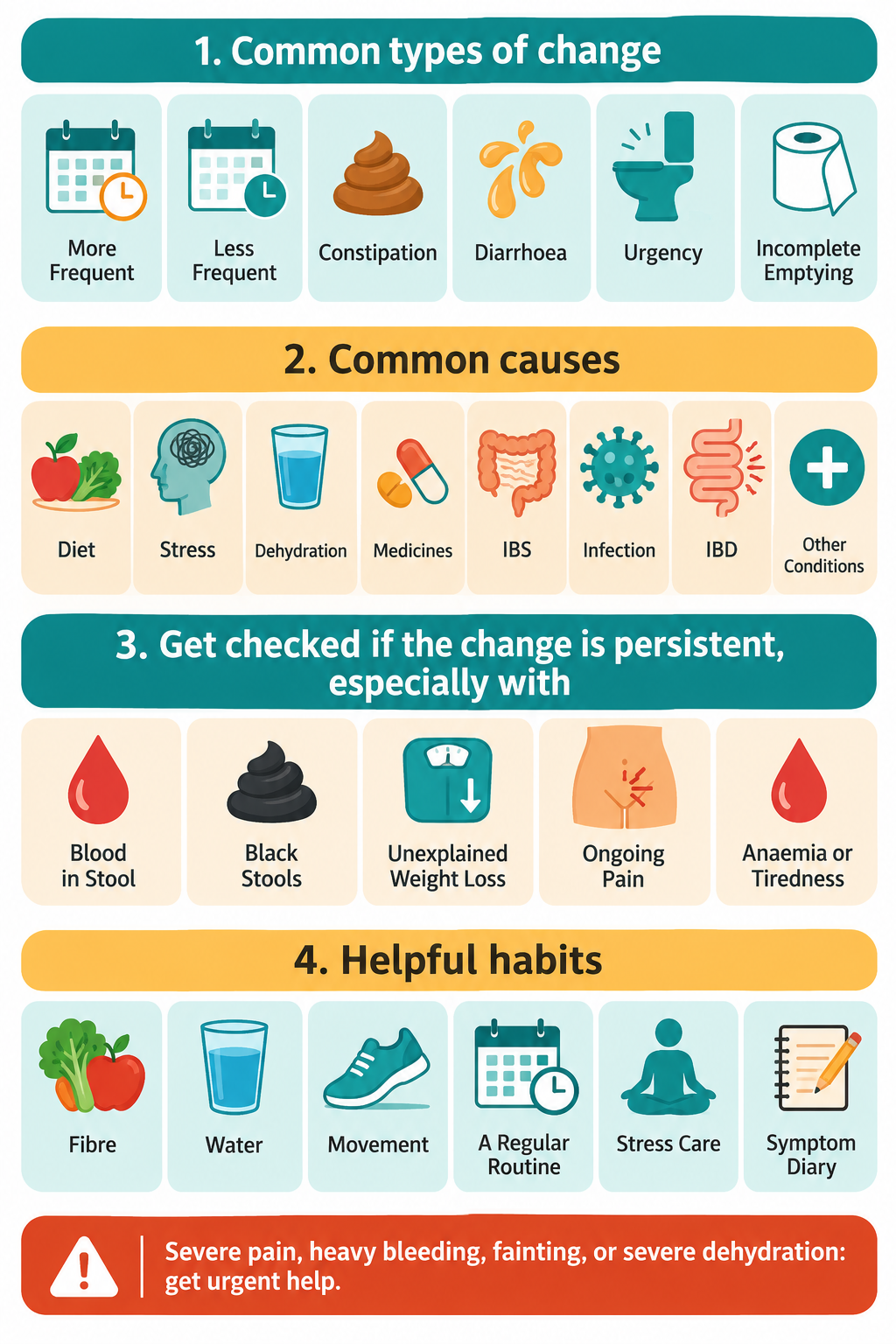
Common Types of Bowel Habit Changes
- More frequent bowel movements than usual
- Less frequent bowel movements
- Constipation or diarrhoea that lasts for more than a short spell
- Changes in stool consistency or shape, such as harder, looser, or narrower stools
- Sudden urgency, a feeling that you need to rush to the toilet
- Alternating between constipation and diarrhoea
- A feeling that your bowel hasn’t emptied completely
One of these on its own, for a day or two, is rarely a concern. A change that persists, keeps recurring, or arrives with other symptoms is a different matter.
What Causes an Unexplained Change in Bowel Habits?
There are many possible causes, and most are common and treatable. Here are the main ones.
1. Changes in Diet and Eating Habits
Diet is the most frequent culprit. A diet low in fibre is a classic cause of constipation, while a sudden jump in fibre can cause gas, cramping, and loose stools.
Eating more processed or fatty foods, skipping meals, or making sudden changes to what you eat, such as on holiday, can also throw your bowels off.
Food intolerances, such as to lactose or certain sugars, can cause diarrhoea, bloating, and cramping that seems to come from nowhere until you connect it to what you ate.
2. Stress and Anxiety
Your gut and brain are in constant communication, which is why stress so often shows up in the bathroom. Stress hormones can speed up the bowel in some people, causing diarrhoea and urgency, and slow it down in others, causing constipation.
A stressful week at work, an exam, or a difficult life event can change your pattern for a while. This is part of the wider picture of how stress affects your digestion, and it’s why bowels so often misbehave during difficult spells.
3. Dehydration and Lack of Physical Activity
Your bowel needs water to keep stool soft. If you’re not drinking enough, the colon absorbs more water from the stool, and it becomes harder and more difficult to pass.
Sitting for long periods also slows the gut, while movement helps stimulate it. A change in routine, such as a new desk job or a spell of illness, can easily tip you into constipation.
4. Medications and Supplements
Many common medicines affect the bowel. Antibiotics can disrupt gut bacteria and cause diarrhoea. Iron supplements often cause constipation, and some can darken the stool.
Certain pain medicines, particularly opioid painkillers, are well known for causing constipation. Some antacids can loosen or harden stool depending on their ingredients.
If you’ve recently started or changed a medicine, mention it to your doctor, and don’t stop it on your own.
5. Irritable Bowel Syndrome (IBS)
IBS is one of the most common causes of recurring changes in bowel habits. It typically causes abdominal pain or cramping, bloating, and a pattern of constipation, diarrhoea, or both, often alternating.
It doesn’t damage the bowel, but it can be disruptive, and it’s diagnosed by the pattern of symptoms after other causes have been ruled out. Understanding what IBS is and how it’s treated often makes the symptoms feel far less mysterious.
6. Intestinal Infections
Bacterial, viral, and parasitic infections can all cause diarrhoea, abdominal cramps, and looser stools. Most clear up within days.
Some infections can leave the gut sensitive for weeks afterwards, and occasionally trigger longer-term symptoms. If you’re unsure whether you have a bug or something else, it helps to know the difference between food poisoning and a stomach bug.
7. Inflammatory Bowel Disease (IBD)
IBD includes Crohn’s disease and ulcerative colitis, which involve genuine inflammation of the digestive tract.
They can cause persistent diarrhoea, abdominal pain, tiredness, weight loss, and sometimes blood in the stool. Unlike IBS, they can cause lasting damage if untreated.
Persistent gut inflammation is the common thread, and it’s one reason these conditions need proper medical care.
8. Other Digestive and Medical Conditions
Several other conditions can change bowel habits:
- Coeliac disease, an immune reaction to gluten that can cause diarrhoea, bloating, and fatigue
- Thyroid disorders, since an underactive thyroid tends to slow the gut and cause constipation, while an overactive one can cause looser, more frequent stools
- Diverticular disease, where small pouches form in the bowel wall and can cause pain and changes in bowel habit
- Colorectal polyps and colorectal cancer, which can cause a change in bowel habits, sometimes with blood in the stool. This is the reason persistent unexplained changes need to be checked
The point isn’t to alarm you. Most bowel changes aren’t caused by cancer. But a persistent one is exactly the kind of symptom that should be looked at properly rather than assumed to be harmless.
Symptoms That May Accompany Changes in Bowel Habits
Bowel changes rarely come alone, and the other symptoms are often the best clues to the cause. Look out for:
- Abdominal pain or cramps
- Persistent bloating
- Excessive gas
- Blood or mucus in the stool
- Unexplained weight loss
- Changes in stool colour or appearance, such as very pale, very dark, or black stools
- Unusual tiredness or fatigue
- Persistent diarrhoea or constipation
These help a doctor work out what’s going on. Cramping that eases after a bowel movement points towards IBS, for instance, while blood, weight loss, and tiredness raise the possibility of inflammation, bleeding, or anaemia. Pale stools with yellowing of the skin could suggest a liver or bile duct problem. A good description of what you’ve noticed, and when, makes a real difference to how quickly the cause is found.
When Should You Be Concerned About Changes in Bowel Habits?
Most short-lived changes settle on their own. It’s the persistent, unexplained, or accompanied-by-warning-signs ones that need attention.
Warning Signs You Should Not Ignore
- Persistent or recurring changes without an obvious explanation
- Blood in the stool, or black, tarry stools
- Unexplained weight loss
- Ongoing abdominal pain
- Persistent diarrhoea or constipation
- A feeling that the bowel doesn’t empty completely
- New and persistent changes, particularly in older adults
Macmillan Cancer Support lists a change in normal bowel habit that happens for no obvious reason and lasts longer than three weeks, blood in the stool, and unexplained weight loss among the symptoms of bowel cancer, while stressing that these can be caused by other conditions too. The practical message is not to wait indefinitely.
Seek urgent medical attention for severe abdominal pain, significant rectal bleeding, fainting, or signs of severe dehydration, such as very little urine, marked dizziness, or confusion.
How Are Changes in Bowel Habits Diagnosed?
A gastroenterologist works through the possibilities systematically, starting with the simplest and most informative steps.
1. Medical History and Symptom Assessment
Expect questions about how long the change has lasted, how often you go, what your stool looks like, any changes in diet or lifestyle, the medicines you take, and your family history of bowel cancer, inflammatory bowel disease, or coeliac disease. A symptom diary kept for a couple of weeks makes this much easier.
2. Blood Tests
Blood tests can check for anaemia, which might point to bleeding or poor absorption, look for signs of inflammation or infection, and assess other possible causes, such as thyroid problems or coeliac disease.
3. Stool Tests
Stool tests can detect infections, check for markers of bowel inflammation such as faecal calprotectin, and look for hidden blood when appropriate.
4. Colonoscopy
A colonoscopy lets the doctor look directly at the inside of the large bowel. It can identify inflammation, polyps, and other abnormalities, and tissue samples can be taken during the procedure when needed. It’s often recommended when changes persist, when there are warning signs, or when other tests haven’t explained the cause.
5. Other Investigations
Depending on your symptoms, imaging tests such as an ultrasound, CT, or MRI scan, or additional digestive investigations, may be suggested to look at other parts of the digestive system.
How Can You Manage and Improve Your Bowel Habits?
Once serious causes have been ruled out, or alongside proper assessment, everyday habits can help. These are practical and evidence-informed, though they aren’t a substitute for medical advice.
1. Eat a Balanced, Fibre-Rich Diet
Include fruit, vegetables, whole grains, and legumes. Increase fibre gradually, a little at a time, so your gut has a chance to adjust, and drink more fluid as you do.
2. Drink Enough Water
Adequate hydration keeps stool softer and easier to pass. How much you need varies with your size, activity, and climate, and some medical conditions require adjusting fluid intake, so follow your doctor’s advice if that applies to you.
3. Stay Physically Active
Regular walking and exercise stimulate the bowel. Avoid long stretches of sitting, and get up and move regularly.
4. Maintain a Regular Toilet Routine
Don’t ignore the urge to go, since holding on repeatedly can make constipation worse. Allow enough time, avoid straining, and try going at a similar time each day, such as after breakfast.
5. Manage Stress
Relaxation techniques, breathing exercises, time outdoors, and a healthy sleep routine all help your gut as well as your mind.
6. Keep a Food and Symptom Diary
Record how often you go, what your stool looks like, what you eat and drink, and how you’re feeling. Patterns that are hard to spot from memory often show up clearly on paper, and the diary gives your doctor something concrete to work with.
Important: Lifestyle changes may help, but persistent unexplained bowel changes need medical assessment rather than relying on home remedies alone.
When Should You See a Gastroenterologist?
It’s worth seeing a gastroenterologist if:
- Bowel changes persist or keep coming back
- Symptoms interfere with your everyday activities
- You notice blood in the stool
- You have unexplained weight loss
- You have persistent abdominal discomfort
- Changes haven’t improved after reasonable dietary and lifestyle adjustments
Age matters as well. New, persistent changes become more significant as we get older, and digestive health after 50 brings its own changes and its own screening considerations.
Dr. Preetha Thomas is a specialist physician and medical gastroenterologist in Pretoria. A consultation with her can help identify the cause of your bowel changes, arrange the right tests, and guide appropriate treatment, so you’re not left guessing.
Frequently Asked Questions
1. What is the most common cause of changes in bowel habits?
There’s no single answer, but diet, hydration, stress, and medicines are among the most common everyday causes, and digestive conditions such as IBS are also frequent. Because many causes look similar, persistent changes need a proper assessment.
2. Can stress cause sudden changes in bowel movements?
Yes. Stress affects the gut-brain axis, the communication network between your brain and your digestive system. It can speed up the bowel and cause diarrhoea or urgency, or slow it down and cause constipation. If changes continue after the stress passes, they should still be checked.
3. When should I worry about a change in bowel habits?
Be concerned if the change is persistent, keeps coming back, or comes with warning signs such as blood in the stool, black stools, unexplained weight loss, ongoing abdominal pain, or new changes in an older adult. Severe pain, heavy bleeding, or fainting need urgent care.
4. Can changes in bowel habits be a sign of colorectal cancer?
They can be, though most are caused by something else. A persistent, unexplained change, especially alongside blood in the stool, weight loss, or anaemia, should be assessed rather than assumed to be harmless.
nidirect notes that a change to going less often, with harder stools, is not usually caused by a serious condition, while a persistent change to going more often with looser stools is one of the symptoms worth reporting.
5. How long should a change in bowel habits last before seeing a doctor?
There’s no single limit that applies to everyone. Many guidelines suggest seeking advice if a change has lasted around three weeks with no obvious explanation. Seek help sooner if symptoms are severe or any warning signs appear.
6. Can changing my diet improve irregular bowel movements?
Often it can, depending on the cause. More fibre, enough fluid, and balanced meals help many people with constipation, while identifying food triggers can help with diarrhoea and bloating. If changes persist despite sensible adjustments, a medical assessment is the next step.
Conclusion
Unexplained changes in bowel habits have many causes, from diet, stress, dehydration, and medicines to infections, IBS, inflammatory bowel disease, and, less commonly, more serious conditions. Occasional changes aren’t always a sign of serious illness, and most turn out to be treatable. But persistent changes, and any warning signs, shouldn’t be ignored or put off.
If your bowels have changed and you don’t know why, don’t wait it out. A proper assessment is the quickest way to answers, and answers are usually the start of feeling better. To take that step, book a consultation with Dr. Preetha Thomas, gastroenterologist in Pretoria, and get your symptoms checked.