


That burning feeling behind your breastbone after a big meal. A sour taste creeping up your throat when you lie down. A night spent propped up on pillows, wondering whether it was the curry or the late-night snack.
Heartburn is one of the most common digestive complaints there is, and for plenty of people it’s more than an occasional nuisance. It shapes what they eat, how well they sleep, and how comfortable they feel from one day to the next.
The encouraging news is that a handful of practical changes make a real difference. These tips for heartburn are simple, evidence-informed, and easy to build into daily life.
We’ll cover seven of them in detail, look at foods that tend to help, explain when over-the-counter and prescription treatments make sense, and flag the symptoms that need a proper medical look.
What Is Heartburn and Why Does It Happen?
Heartburn is the burning discomfort you feel in your chest, usually behind the breastbone, when stomach contents flow back up into the oesophagus. The oesophagus is the tube that carries food from your mouth to your stomach.
Unlike the stomach, it isn’t built to withstand acid, so even a small amount washing upward can cause a burning sensation. This backward flow is called acid reflux, and heartburn is the symptom it produces.
Normally, a ring of muscle at the bottom of the oesophagus, called the lower oesophageal sphincter, acts like a one-way valve.
It opens to let food in and closes to keep it there. Heartburn happens when that valve relaxes at the wrong time, or when pressure in the abdomen pushes stomach contents upward.
Common Symptoms of Heartburn
- A burning sensation behind the breastbone
- A sour or bitter taste in the mouth
- Regurgitation of stomach contents into the throat or mouth
- Discomfort after meals
- Symptoms that become worse when lying down or bending over
Common Causes and Risk Factors
A number of everyday factors can trigger or worsen heartburn:
- Large or fatty meals
- Eating close to bedtime
- Excess body weight
- Smoking
- Certain foods and drinks
- A hiatus hernia, where part of the stomach pushes up through the diaphragm
- Some medications
Most people can spot at least one or two of these in their own lives, which is good news, because many of them are things you can change.
7 Effective Tips for Heartburn Relief
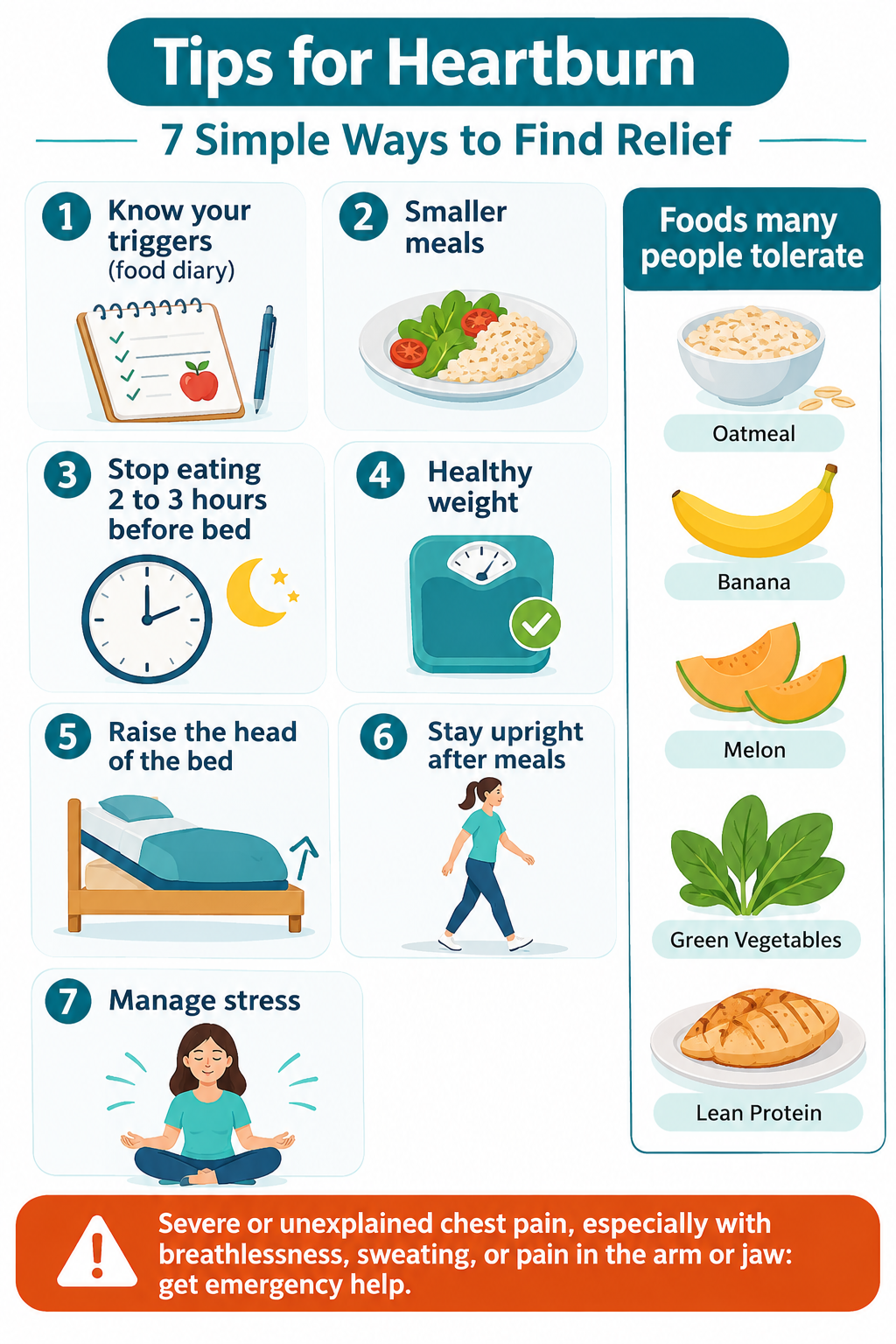
These seven steps are the foundation of managing heartburn. You don’t need to do all of them at once. Pick the ones that fit your own pattern and build from there.
1. Identify and Limit Your Heartburn Trigger Foods
Certain foods are well-known heartburn triggers. Spicy dishes, fatty and fried foods, and acidic foods such as tomatoes and citrus often top the list. Coffee, chocolate, mint, and carbonated drinks are also common culprits.
Some of them, such as fatty foods and chocolate, may relax the oesophageal valve, while others simply irritate an already-sensitive lining.
But here’s the important part: not everyone needs to avoid the same foods. Someone who can’t touch coffee may happily eat curry, while the reverse is true for the person next to them.
The best way to find your own triggers is to keep a food and symptom diary for a couple of weeks, noting what you ate, when, and what happened afterwards. Patterns that are invisible day to day often show up clearly on paper, and you’ll avoid cutting out foods you don’t need to.
2. Eat Smaller Meals and Avoid Overeating
A very full stomach puts more pressure on the valve at the top, which makes reflux more likely. Smaller, more frequent meals keep that pressure down.
That doesn’t mean eating less overall. It means spreading your food across the day and avoiding the stuffed, uncomfortable feeling after a huge dinner.
Slow, mindful eating helps too. When you rush, you swallow more air and tend to eat past the point of being comfortably full. Put your fork down between bites, chew properly, and stop when you’re satisfied, not when your plate is empty.
3. Avoid Eating Too Close to Bedtime
Lying down soon after a meal makes it easy for stomach contents to travel upward, because gravity is no longer helping.
Studies have linked a short gap of under three hours between eating and lying down with more reflux symptoms. A sensible rule is to leave about two to three hours between your last meal and bedtime.
If you tend to eat late, try shifting to an earlier, lighter evening meal, and keep late-night snacks small and simple. If nights are your main problem, our article on why digestion often feels worse at night explains why and offers more ideas.
4. Maintain a Healthy Weight
Extra weight around the abdomen increases the pressure on your stomach, which pushes acid upward. For people who are carrying extra weight, even modest, gradual weight loss can noticeably reduce heartburn. MedlinePlus lists losing weight, if you’re overweight, among the lifestyle measures that can help treat reflux.
The key word is sustainable. Crash diets tend to backfire, and some restrictive diets worsen digestion. Focus on regular physical activity, balanced meals, sensible portions, and steady progress over time.
5. Adjust Your Sleeping Position
Night-time heartburn is especially unpleasant, because it interrupts sleep and can wake you with a burning throat or a cough. One of the most effective changes is raising the head of your bed.
The American College of Gastroenterology suggests elevating the head of the bed for night-time reflux symptoms, and the National Institute of Diabetes and Digestive and Kidney Diseases describes raising your head 6 to 8 inches during sleep as a lifestyle change that may reduce symptoms.
The best way to do this is with a firm foam wedge under the mattress, or with blocks or risers under the head of the bed, so your whole upper body is angled. Piling up extra pillows isn’t a reliable fix, because it bends you at the waist and can increase pressure on your stomach instead.
Some people also find that sleeping on their left side helps. It’s worth trying if you’re a side sleeper, though responses vary.
6. Stay Upright After Meals and Wear Comfortable Clothing
Give your food a chance to move on. Avoid lying down or slumping on the sofa straight after eating, and consider a gentle ten-minute walk after meals, which can help digestion.
Avoid heavy exercise right after eating, though, because vigorous activity on a full stomach can make symptoms worse.
Clothing matters more than people expect. Tight belts, waistbands, and shapewear press on the abdomen and can push stomach contents upward. Looser clothing, especially after meals, can make a surprising difference.
7. Manage Stress and Build Healthy Daily Habits
Stress doesn’t cause reflux on its own, but it can make symptoms feel worse and influence habits such as eating quickly, skipping meals, or reaching for coffee and cigarettes. Our guide on how stress affects your digestion explains the link between your gut and your mind.
Relaxation techniques, breathing exercises, regular exercise, and enough sleep all help. So does keeping consistent meal times, which gives your digestive system a predictable rhythm.
If you smoke, quitting is one of the most useful things you can do for your digestive health, since smoking weakens the valve that keeps acid down.
Which Foods May Help You Manage Heartburn?
There’s no single heartburn diet that suits everyone, and individual triggers and tolerance matter more than any list. That said, some foods are commonly easier on the stomach, and they’re worth trying:
- Oatmeal, which is filling, low in fat, and often well tolerated
- Bananas, which are gentle and low in acid
- Melons, such as cantaloupe and honeydew, which are less acidic than citrus
- Green vegetables, such as broccoli, green beans, and leafy greens
- Lean proteins, such as skinless chicken, turkey, and fish, grilled or baked rather than fried
- Whole grains, if tolerated, for fibre
Cooking methods matter as much as the foods themselves. Grilling, baking, steaming, and poaching are usually gentler than frying. For a fuller set of ideas, our GERD diet plan offers practical meal suggestions for people managing reflux.
What Treatments Are Available for Frequent Heartburn?
When lifestyle changes aren’t enough, or you need quicker relief, there are several treatment options. The right one depends on how often your symptoms occur and how severe they are.
Over-the-Counter Relief Options
- Antacids neutralise stomach acid and provide fast but short-lived relief for occasional heartburn.
- Alginates form a protective foam barrier on top of the stomach contents, which can help with reflux that comes after meals or at night.
- H2-receptor blockers reduce how much acid the stomach makes. They work more slowly than antacids but last longer.
A pharmacist can help you choose appropriate short-term relief, and it’s worth asking, particularly if you take other medicines. If you find you need these options several times a week, that’s a sign to speak to a doctor, rather than simply taking them for longer.
Prescription Treatment
Proton pump inhibitors (PPIs) are among the most effective medicines for reducing stomach acid, and doctors often prescribe them for frequent heartburn or reflux disease. NIDDK notes that PPIs are better at treating GERD symptoms than H2 blockers and can heal the oesophageal lining in most people.
The choice of treatment, and how long you should take it, depends on your symptoms and your medical assessment.
Taking acid-reducing medicine for long periods without medical guidance isn’t advisable, because it can mask a condition that needs attention, and long-term use should be reviewed from time to time.
If you rely on medicine to keep symptoms under control, make an appointment to talk it through.
When Is Heartburn a Sign of GERD?
Occasional heartburn, say once in a while after a rich meal, is normal and usually nothing to worry about. Heartburn that happens often, or acid reflux that keeps coming back, is different.
When reflux occurs repeatedly and causes bothersome symptoms or complications, doctors call it gastro-oesophageal reflux disease, or GERD.
Frequent symptoms can affect your quality of life, from disrupted sleep and restricted eating to constant discomfort, and over time repeated acid exposure can inflame or damage the lining of the oesophagus.
That’s why persistent symptoms deserve medical assessment rather than ongoing self-treatment. If you’re unsure where the line falls, our guide on the difference between GERD and ordinary acid reflux explains it clearly.
When Should You See a Gastroenterologist for Heartburn?
Many people manage heartburn well with lifestyle changes and occasional medicine. But some symptoms shouldn’t be ignored, and they’re worth discussing with a gastroenterologist:
- Heartburn that occurs frequently or on most days
- Difficulty or pain when swallowing
- Food that feels stuck in the throat or chest
- Persistent vomiting
- Unexplained weight loss
- Gastrointestinal bleeding, or black, tarry stools
- Symptoms that don’t improve with appropriate treatment
Safety note: New, severe, or unexplained chest pain, particularly with breathlessness, sweating, faintness, or pain spreading to the arm or jaw, needs emergency medical assessment. Don’t assume it’s heartburn.
How Can a Gastroenterologist Diagnose Persistent Heartburn?
Diagnosis usually begins with a conversation. Your doctor will ask about your symptoms, how often they occur, what triggers them, what you’ve tried, and your medical history. That alone often provides most of the answer.
If more information is needed, several tests may be used:
- Gastroscopy, where a thin camera is passed through the mouth to examine the oesophagus and stomach for inflammation, ulcers, or other changes
- Manometry, which measures how well the oesophageal muscle and valve are working
- Oesophageal pH monitoring, which measures how much acid is reaching the oesophagus over time. You can read more about both in our guide to manometry and pH studies
- Other tests, when clinically appropriate
It’s worth stressing that not everyone with heartburn needs these investigations. Many people are diagnosed and treated based on their symptoms alone. Tests are usually reserved for symptoms that are severe, persistent, or accompanied by warning signs.
Frequently Asked Questions About Heartburn
1. What are the best tips for heartburn relief?
The most useful steps are identifying and limiting your trigger foods, eating smaller meals, avoiding food for two to three hours before bed, maintaining a healthy weight, raising the head of your bed, staying upright after meals, and managing stress. Over-the-counter treatments can help in the short term.
2. What foods should I avoid if I have heartburn?
Common triggers include spicy and fatty foods, acidic foods such as tomatoes and citrus, coffee, chocolate, mint, carbonated drinks, and alcohol. Triggers vary from person to person, so a food and symptom diary will show which ones affect you.
3. How can I stop heartburn at night?
Finish your last meal two to three hours before bed, raise the head of your bed with a wedge or risers, avoid large evening meals and known triggers, and wear loose clothing. If night-time symptoms continue, speak to your doctor.
4. Does drinking water help with heartburn?
A few sips of water may help wash acid back down and ease mild symptoms briefly. It isn’t a treatment, and drinking large amounts with meals can increase stomach volume, so sip steadily.
5. How long does heartburn usually last?
Occasional heartburn after a meal often settles within minutes to a couple of hours. If heartburn lasts for long stretches, happens most days, or keeps returning, it’s worth having it assessed.
6. When should I see a gastroenterologist for heartburn?
See one if heartburn is frequent, if you have difficulty swallowing, persistent vomiting, unexplained weight loss, black stools, or if symptoms don’t improve with treatment. New or severe chest pain needs emergency care.
Take Steps Towards Better Digestive Health
Managing heartburn is rarely about one dramatic change. It’s about a handful of sensible habits working together: finding your trigger foods, eating smaller meals, leaving a gap before bed, keeping a healthy weight, raising the head of your bed, staying upright after meals, and managing stress.
Add the right treatment when you need it, and most people notice a real improvement.
Take the time to work out your personal triggers, and build habits you can keep up. And don’t ignore symptoms that persist or come with warning signs.
If heartburn keeps returning or you’re relying on medicine to get through the week, Dr. Preetha Thomas, a specialist physician and medical gastroenterologist in Pretoria, can help you find out why and build a plan that works. Book a consultation with Dr. Preetha Thomas to take the next step towards better digestive health.