

If you live with irritable bowel syndrome, you’ve probably had the experience of eating something perfectly ordinary and paying for it hours later. The bloating that makes your waistband feel two sizes too small.
The cramping that arrives out of nowhere. The sudden, urgent dash to the bathroom, or the opposite problem, days of feeling blocked up and uncomfortable.
Food is one of the most common triggers for IBS symptoms, and it’s also one of the few things you can actually do something about. The tricky part is that there’s no single IBS diet that works for everyone.
What settles one person’s gut can set off another’s. That’s why managing IBS with diet is less about following a rigid list of rules and more about learning what your own body tolerates.
This guide explains how food and IBS are connected, which foods may help relieve symptoms, which are common triggers, how the low FODMAP diet works, and how to build an eating pattern that’s balanced and personal to you.
What Is IBS and How Does Diet Affect Its Symptoms?
Irritable bowel syndrome is a long-term disorder of the gut that causes recurring abdominal pain along with changes in bowel habits. It doesn’t damage the digestive tract, but it can have a big effect on daily life.
If you’d like the full picture, our guide on what IBS is, what causes it, and how it’s treated covers it in depth. This article focuses on the role of food.
Common Symptoms of Irritable Bowel Syndrome
IBS looks different from person to person, but the most common symptoms include:
- Abdominal pain or cramping, often eased by a bowel movement
- Bloating and a swollen abdomen
- Excess gas
- Diarrhoea, constipation, or a mix of both
- A feeling that your bowel hasn’t fully emptied
- Mucus in the stool
The Connection Between Food and IBS Symptoms
Your gut is sensitive in IBS. The nerves in the bowel wall react more strongly than usual to normal events such as stretching from gas or the movement of food.
Certain foods make that more likely, either because they produce more gas as gut bacteria ferment them, because they draw extra water into the bowel, or because they speed up or slow down how fast things move through.
Food isn’t the only factor, since stress, sleep, hormones, and illness all play a part. But for many people, adjusting what and how they eat is the most practical place to start.
The National Institute of Diabetes and Digestive and Kidney Diseases notes that doctors may recommend eating more fibre, avoiding gluten, or following a low FODMAP diet, and that different changes help different people.
Why IBS Food Triggers Differ From Person to Person
This is the single most important thing to understand. Two people with IBS can eat the same meal and have completely different reactions. One person may find that onions cause misery while dairy is fine. Another may be the opposite.
The reasons include differences in gut bacteria, in how sensitive the gut is, in which subtype of IBS you have, and in how stress and hormones are affecting you at the time.
It also means that “foods to avoid with IBS” lists should be treated as a starting point for investigation, not a set of commandments. The goal isn’t to eliminate as many foods as possible. It’s to find the smallest number of changes that give you the most relief.
Which Foods May Help Relieve IBS Symptoms?
There’s no food that works for everyone, so none of the foods below should be labelled “safe” or “unsafe” across the board. Think of them as foods that many people with IBS tolerate well, and that are worth trying, one at a time, in sensible portions.
Cleveland Clinic makes the same point, noting that although there’s no single “IBS diet,” eating styles like the low FODMAP diet are often used to work out which foods trigger symptoms.
A few principles apply throughout. Introduce new foods gradually. Keep portions moderate, because even well-tolerated foods can cause trouble in large amounts. And pay attention to how your own body responds.
Soluble Fibre Foods, Such as Oats
Fibre is a bit of a double-edged sword in IBS. Soluble fibre, which dissolves in water and forms a gel, tends to be gentler and is often helpful for both constipation and loose stools.
Good sources include oats, chia seeds, ground flaxseed, and the flesh of some fruits and vegetables. Insoluble fibre, such as wheat bran, can aggravate bloating and cramping in some people.
The NIDDK recommends adding fibre a little at a time, by 2 to 3 grams a day, because too much at once can cause gas and trigger symptoms. If you’d like help working out how much fibre you need overall, a dietitian or doctor can set a sensible daily target for your situation.
Fruits and Vegetables You May Tolerate Well
Many people with IBS avoid fruit and vegetables because they’re afraid of the bloating, but cutting them out entirely isn’t the answer. The better approach is choosing the ones that tend to be gentler.
Cleveland Clinic lists vegetables such as carrots, celery, aubergine, green beans, spinach, squash, sweet potato, and courgette as examples that are lower in fermentable carbohydrates and often easier on the stomach.
Among fruits, many people do well with bananas (firm rather than very ripe), blueberries, strawberries, oranges, kiwi, and grapes, in moderate portions. Peeling, cooking, and eating vegetables well steamed rather than raw can also make them easier to handle.
Rice, Potatoes and Other Staple Foods
Plain, simple staples are often well tolerated and give you a reliable base for meals. These include white or brown rice, potatoes, oats, quinoa, and gluten-free or sourdough breads for those who find regular wheat bread a problem. They’re low in the fermentable carbohydrates that tend to cause gas, and they provide steady energy.
Lean Protein Sources
Protein foods such as chicken, turkey, fish, eggs, and firm tofu contain little or no fermentable carbohydrate, so they rarely cause gas on their own.
The way they’re cooked matters more than the food itself. Grilled, baked, steamed, or poached versions are usually gentler than fried or heavily spiced ones, which brings us to fat later in this article.
Lactose-Free Dairy Alternatives When Needed
Lactose, the sugar in milk, is a common culprit in IBS, though not for everyone. If you notice symptoms after milk, soft cheese, or ice cream, lactose-free milk and yoghurt are worth trying, since they contain the same nutrients without the lactose.
Hard, aged cheeses such as cheddar and parmesan are naturally very low in lactose, and many people tolerate them well. Plant-based milks such as almond or rice milk are alternatives too, though it’s worth checking labels for added sweeteners, inulin, or other ingredients that could cause trouble.
Some people also find probiotic foods or supplements helpful. The evidence varies by strain and person, so it’s worth reading our guide on probiotics, prebiotics, and gut health before choosing one.
Foods That May Trigger or Worsen IBS Symptoms
The foods below are common triggers, which is not the same as foods that every person with IBS must avoid. Treat this list as a set of suspects to investigate.
For a wider look at everyday foods that can irritate the gut, our article on 10 foods that may be wrecking your digestion is a useful companion.
High-FODMAP Foods
FODMAPs are fermentable carbohydrates that some people absorb poorly. They draw water into the bowel and are fermented by gut bacteria, which can cause gas, bloating, and changes in bowel habits.
Common high-FODMAP foods include onions, garlic, wheat and rye, apples, pears, mangoes, watermelon, honey, milk, soft cheeses, and beans and lentils. We explain this in more detail in the next section.
Fatty and Fried Foods
Fat stimulates the gut to contract, which can bring on cramping and urgency, especially in people with diarrhoea-predominant IBS.
Deep-fried food, fatty cuts of meat, pastries, creamy sauces, and takeaways are frequent offenders. Cutting back on large, rich meals can make a noticeable difference for some people.
Caffeine, Alcohol and Fizzy Drinks
Coffee and other caffeinated drinks stimulate the bowel and can worsen diarrhoea and cramping. Alcohol irritates the gut and can disturb sleep, which makes symptoms worse the next day.
Fizzy drinks introduce extra gas, which adds to bloating. You don’t necessarily need to cut these out completely, but reducing them is often worth a trial.
Certain Artificial Sweeteners
Sugar alcohols such as sorbitol, mannitol, xylitol, and maltitol, commonly found in sugar-free sweets, chewing gum, and “diabetic” products, are poorly absorbed and can cause gas, bloating, and diarrhoea, even in people without IBS. Check labels on products marketed as sugar-free.
Dairy or Other Foods That Trigger Individual Symptoms
Beyond these common groups, some people have their own personal triggers, such as spicy food, wheat, particular fruits, or large raw salads. Gluten is one example.
The NIDDK notes that some people with IBS have more symptoms after eating gluten even though they don’t have coeliac disease, but it’s important to be tested for coeliac disease before cutting gluten out, because removing it first can make the test unreliable.
How the Low FODMAP Diet May Help Manage IBS
Of all the dietary approaches for IBS, the low FODMAP diet is the one with the most research behind it. It’s helpful for many people, but it’s a tool for finding your triggers rather than a permanent way of eating.
What Are FODMAPs?
The name stands for fermentable oligosaccharides, disaccharides, monosaccharides, and polyols. In plain terms, they’re a group of short-chain carbohydrates and sugar alcohols found in many everyday foods that are hard for some people to digest.
Examples include fructose in some fruits, lactose in milk, fructans in wheat and onions, galacto-oligosaccharides in beans, and polyols in some fruits and sweeteners.
How a Low FODMAP Diet Works
The idea is simple. By temporarily cutting out foods that are high in FODMAPs, you give your gut a chance to settle. If your symptoms improve, that tells you FODMAPs are likely part of the problem. The next step is to work out which ones, and in what amounts.
The Elimination, Reintroduction and Personalisation Phases
The diet has three stages:
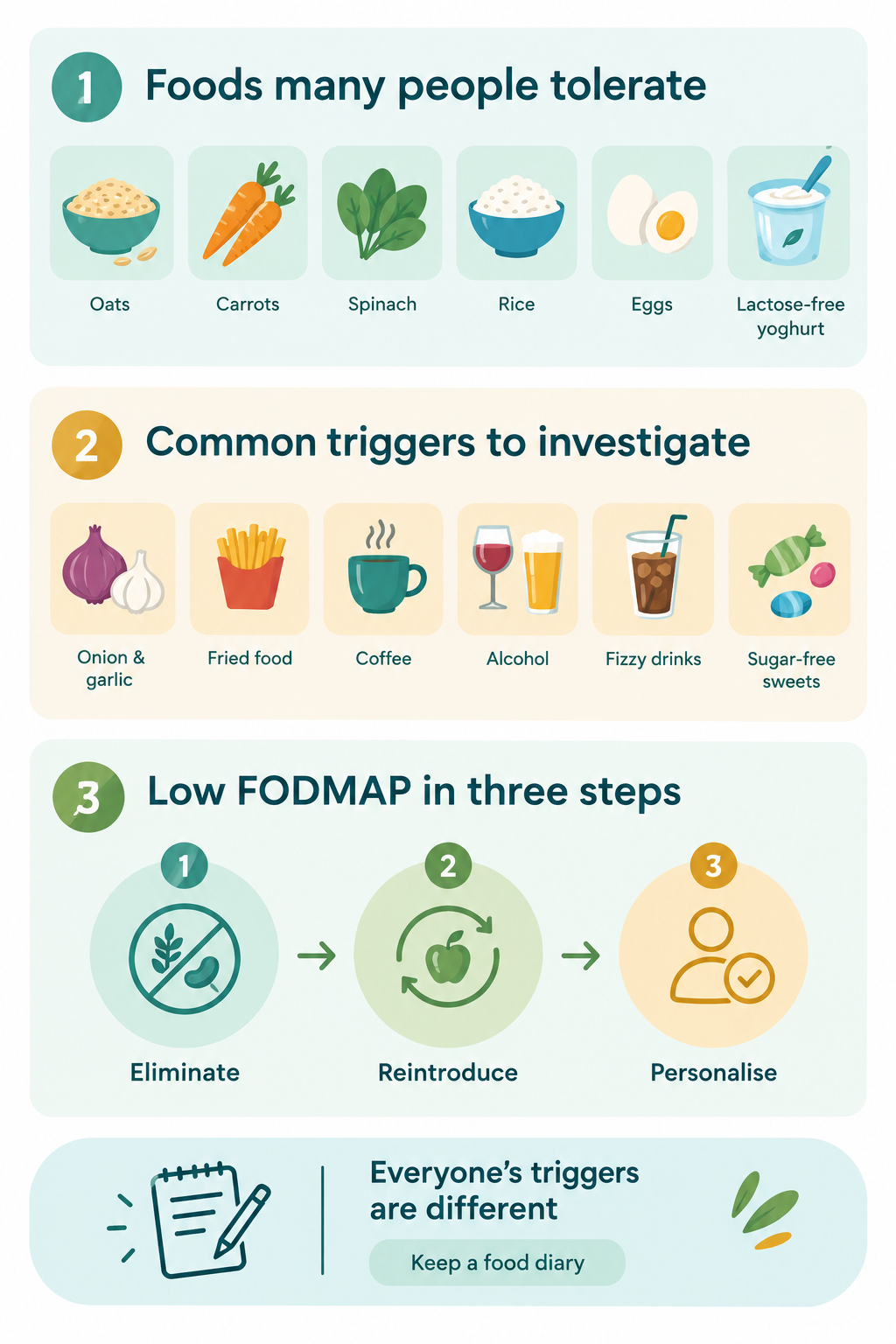
- Elimination: high-FODMAP foods are replaced with low-FODMAP alternatives for a short period, typically a few weeks. The NIDDK describes trying the diet for a few weeks to see whether it helps.
- Reintroduction: foods from each FODMAP group are brought back in one at a time, in controlled amounts, while you track your symptoms.
- Personalisation: based on what you’ve learned, you build a long-term diet that includes as many foods as you can tolerate, and limits only the ones that truly cause trouble.
Our step-by-step guide on how to follow a low FODMAP diet for IBS relief walks through each stage.
Why Professional Guidance Is Important
The elimination phase is restrictive, and it’s meant to be short-term. Staying on it for too long can reduce the variety of your diet, lower your fibre intake, and affect the balance of your gut bacteria. It’s also easy to get wrong, because many foods have hidden FODMAPs and portion size matters.
A dietitian or doctor can help you follow the diet safely, make sure it’s nutritionally balanced, and guide you through reintroduction. It’s also not suitable for everyone, such as people with a history of disordered eating.
Practical Eating Habits for Better IBS Symptom Management
What you eat matters, but so does how you eat. These everyday habits often make as much difference as any specific food.
Eat Regular Meals and Avoid Skipping Meals
The gut likes routine. Long gaps followed by a very large meal can trigger cramping and urgency, while regular, moderate meals tend to be easier on a sensitive gut. Aim to eat at fairly consistent times, and avoid rushing.
Increase Fibre Gradually When Appropriate
If you’re increasing your fibre, go slowly. A jump from a low-fibre diet to a high one overnight is a recipe for gas and bloating. Add one new fibre source at a time, give your gut a week or two to adjust, and then add another.
Stay Hydrated
Drinking enough water helps stool move more comfortably and supports fibre in doing its job, particularly if constipation is a problem. Water, herbal tea, and clear fluids are good choices. Peppermint tea is a favourite for many people with IBS, though if you have reflux it may not suit you.
Keep a Food and Symptom Diary
A diary is one of the most valuable tools you have. For two to three weeks, write down what you eat and drink, when, and any symptoms that follow, along with stress, sleep, and, for women, where you are in your cycle.
Patterns that are invisible day to day often show up clearly on paper, and the diary gives your doctor or dietitian real information to work with.
Manage Stress and Notice Its Effect on Digestion
Stress doesn’t cause IBS, but it can make symptoms much worse, and it can also make you more reactive to foods that are usually fine. Walking, good sleep, breathing exercises, and other relaxation practices all help. Our article on how stress affects your digestion explains why the gut and the mind are so closely linked.
Does Your Type of IBS Affect Your Diet?
Yes, it often does. Which subtype you have, and which symptom dominates, can change which dietary steps are likely to help.
Dietary Considerations for IBS With Constipation (IBS-C)
If constipation is your main problem, gradually increasing soluble fibre from oats, chia, ground flaxseed, and fruit can help, along with plenty of fluids and regular meals. Moving more during the day also helps. Some people find kiwi fruit useful. Insoluble fibre such as wheat bran can worsen bloating, so it’s worth being cautious with it.
Dietary Considerations for IBS With Diarrhoea (IBS-D)
With diarrhoea-predominant IBS, cutting back on fat, caffeine, alcohol, and sugar alcohols often helps most. Smaller, more frequent meals can reduce urgency, and soluble fibre may help firm up stool. A low FODMAP trial is often considered for this group.
Managing Mixed IBS (IBS-M)
When symptoms swing between constipation and diarrhoea, a flexible approach works best. Keeping meals regular, choosing moderate amounts of soluble fibre, and avoiding your known triggers helps keep things steady. A diary matters even more here, because the pattern can change from week to week.
Sample IBS-Friendly Meal Ideas
These are examples to inspire you, not a fixed plan. Adjust ingredients and portions to what your own gut tolerates, and remember that an IBS-friendly diet is whatever works for you.
Breakfast Ideas
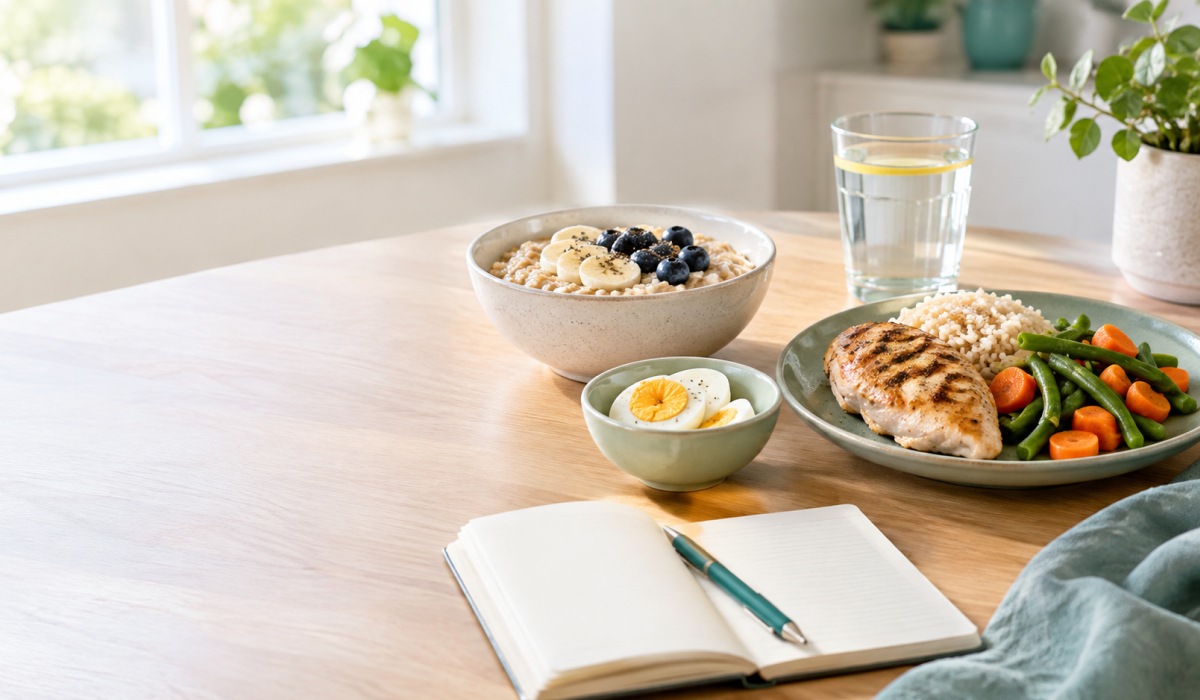
- Porridge made with oats and lactose-free milk, topped with sliced banana or blueberries and a spoonful of chia seeds
- Scrambled or poached eggs on sourdough or gluten-free toast, with spinach
- Lactose-free yoghurt with strawberries and a few walnuts
Lunch and Dinner Ideas
- Grilled chicken or fish with rice and steamed carrots and green beans
- Baked potato with tuna or egg and a simple side salad of cucumber and lettuce
- Stir-fried tofu or chicken with courgette, spinach, and rice noodles, flavoured with ginger and the green parts of spring onion instead of garlic and onion
- Vegetable soup made with carrots, potato, and courgette, using a garlic-free stock
Simple Snack Options
- A banana or a small handful of grapes
- Rice cakes with peanut butter
- A small handful of walnuts or macadamias
- Lactose-free yoghurt
- Hard-boiled eggs
When Should You See a Gastroenterologist for IBS Symptoms?
Dietary changes can make a real difference, but they aren’t always enough, and they shouldn’t be used to explain away symptoms that need a proper look. See a doctor if your symptoms are persistent, getting worse, or affecting your daily life, or if diet changes haven’t helped after a fair trial.
Some signs should never be attributed to IBS without being checked, including:
- Blood in the stool, or black stools
- Unexplained weight loss
- Symptoms that wake you at night
- Persistent vomiting
- Anaemia
- New symptoms starting after the age of 50
- A family history of bowel cancer, inflammatory bowel disease, or coeliac disease
Our guide on IBS symptoms and when to see a gastroenterologist explains the warning signs in more detail. If you’re looking for digestive care in Pretoria, a gastroenterologist can confirm your diagnosis, rule out other conditions, and work with you on a plan that goes beyond diet alone.
Book Your IBS Consultation with Dr. Preetha Thomas
Guessing your way through food lists and elimination diets can be exhausting, and it’s easy to cut out foods you don’t need to.
Dr. Preetha Thomas, Gastroenterologist in Pretoria, can assess your symptoms, rule out other causes, and help you build an eating plan that’s balanced and personal to you. Book an appointment with Dr. Preetha Thomas to take the guesswork out of managing your IBS.
Frequently Asked Questions About Managing IBS With Diet
What Is the Best Diet for IBS?
There isn’t one. The best diet is the one that keeps your symptoms under control while remaining varied and nutritionally balanced. For many people, that means regular meals, the right type and amount of fibre, and avoiding a few personal triggers. A low FODMAP trial can help identify those triggers, and a dietitian can tailor the plan.
Which Foods May Help Relieve IBS Symptoms?
Foods many people tolerate well include oats and other sources of soluble fibre, carrots, spinach, courgette, and green beans, bananas, blueberries, and oranges in sensible portions, rice and potatoes, eggs, fish, and chicken, and lactose-free dairy. Individual tolerance varies, so introduce new foods gradually.
What Foods Should You Avoid With IBS?
It depends on the person, but common triggers include high-FODMAP foods such as onions, garlic, wheat, and certain fruits, fatty and fried foods, caffeine, alcohol, fizzy drinks, and sugar alcohols. A food diary helps you work out which of these actually affect you.
Is the Low FODMAP Diet Suitable for Everyone?
No. It’s meant to be a short-term tool, used ideally with guidance from a dietitian or doctor. It isn’t suitable for everyone, including children without specialist advice and people with a history of disordered eating, and it shouldn’t be followed long-term without reintroducing foods.
How Long Does It Take for Dietary Changes to Help IBS?
It varies. Some people notice improvement within a couple of weeks, especially with a low FODMAP trial, while others need longer to find the right combination of changes. Give each change a fair trial of a few weeks, and keep a diary so you can see what’s working.
Conclusion: Finding a Diet That Works for Your IBS
Managing IBS with diet isn’t about perfection or a long list of forbidden foods. It’s about understanding your own triggers, eating regularly, choosing the right kinds of fibre, making changes gradually, and keeping your diet as varied as your gut will allow.
A food and symptom diary, patience, and, where needed, professional support will take you much further than guesswork.
If your symptoms persist, or if you’re unsure whether what you’re experiencing is IBS, speak to a doctor. A proper assessment can give you clarity, and clarity is often the first step towards feeling better.