

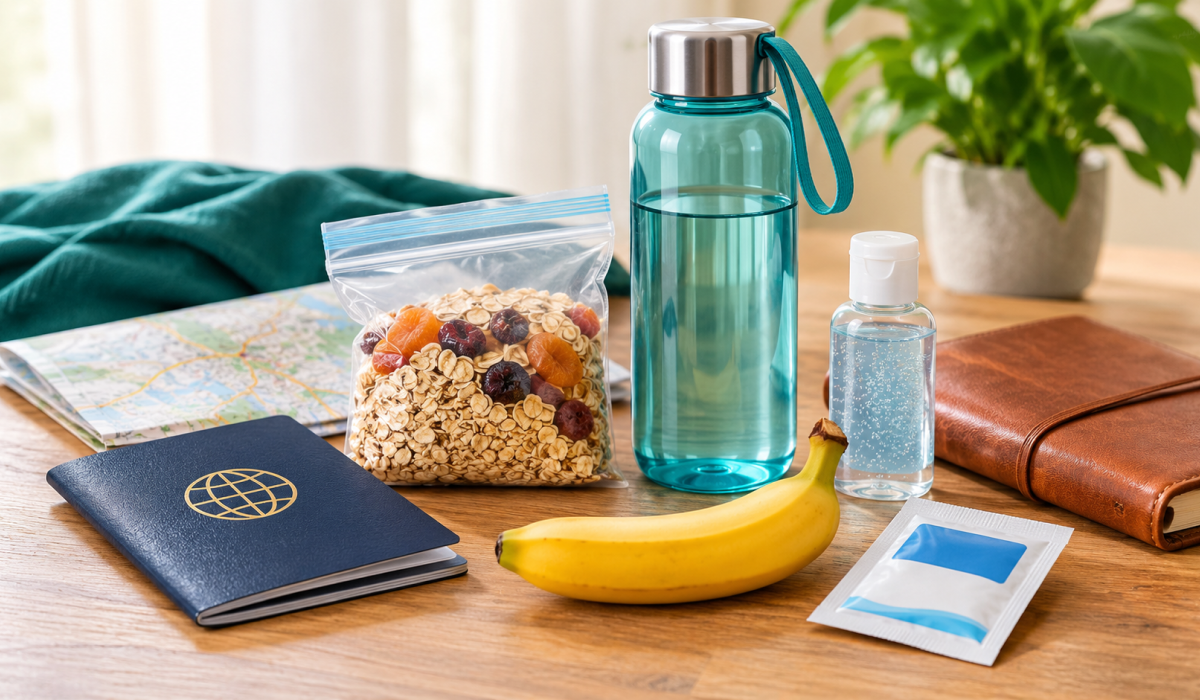
You’ve planned the flights, booked the accommodation, and packed far too many shoes. What you probably haven’t planned for is your stomach.
Yet for many people, the first sign that they’re away from home isn’t the view from the hotel window. It’s bloating, a blocked-up gut, or a sudden dash to the bathroom. If you want to know how to prevent digestive issues while traveling, the good news is that a handful of simple habits make a real difference.
Why Does Travel Affect Your Digestive Health?
Your gut thrives on routine. It likes meals at predictable times, a steady supply of water, regular movement, and decent sleep.
Travel disrupts all of it at once. You sit for hours on a plane or in a car. You drink less water because you’d rather avoid airport bathrooms. You eat unfamiliar food at odd hours, change time zones, sleep badly, and feel a low hum of stress about connections and luggage.
Put those together and it’s no surprise that bloating, constipation, diarrhoea, indigestion, and general stomach discomfort are such common travel companions. They’re not a sign that something is wrong with you. They’re a normal response to a disrupted routine and, sometimes, to bugs in unfamiliar food or water.
Some precautions can’t be guaranteed to prevent every problem, but they do lower your risk, and they make it easier to recover if something does go wrong. This guide covers the most common issues, ten practical tips, what to eat, and when to get medical help.
What Are the Most Common Digestive Issues While Traveling?
Before looking at prevention, it helps to know what you’re up against.
Traveller’s Diarrhoea
This is the classic. It usually comes from eating or drinking something contaminated with bacteria, viruses, or parasites, and it’s most common when travelling to places where food hygiene or water treatment differs from what your gut is used to.
Typical symptoms include loose or watery stools, abdominal cramps, nausea, and sometimes a mild fever. Harvard Health notes that it is usually not serious and goes away without treatment, but that dehydration is its biggest danger.
Traveller’s diarrhoea is often confused with a stomach bug or other kinds of food poisoning. If you’re unsure which you have, our guide on food poisoning vs. stomach bug explains how to tell them apart.
Constipation
Sitting for long stretches, drinking less, eating less fibre than usual, and putting off bathroom visits because you’re in transit all slow the gut down. Many people find they go from regular to blocked within a day or two of travelling.
Bloating and Gas
Unfamiliar foods, large meals, fizzy drinks, and eating quickly all add gas. Air travel doesn’t help either, because gas in the gut expands as cabin pressure drops, which can leave you feeling tight and uncomfortable.
Indigestion and Acid Reflux
Rich, fatty meals, late-night dinners, plenty of alcohol, and lying down soon after eating are a classic recipe for heartburn. If you’re already prone to reflux, holiday eating can make it noticeably worse. Our article on the difference between GERD and ordinary acid reflux explains when it’s more than an occasional nuisance.
How to Prevent Digestive Issues While Traveling: 10 Essential Tips
1. Stay Hydrated Throughout Your Journey
Water keeps stool soft, helps your digestive system move, and protects you against dehydration, which makes everything feel worse. Drink regularly through the day rather than waiting until you’re thirsty, and increase your intake in hot weather or when you’re more active. A refillable bottle is handy where the water is safe to drink. Where local water safety is uncertain, choose sealed bottled water, or water that has been boiled or properly treated.
Flights are particularly drying, so it’s sensible to sip water throughout and go easy on alcohol and excess caffeine, which both add to dehydration.
2. Choose Food Carefully and Practise Food Safety
Most traveller’s diarrhoea comes from contaminated food, so it’s worth being choosy. As a rule of thumb:
- Eat food that’s freshly cooked and served hot
- Be cautious with raw or undercooked meat, seafood, and eggs
- Be wary of salads and unpeeled produce that may have been washed in untreated water
- Be careful with food that has been sitting out, such as buffets and some street food
- Wash your hands, or use an alcohol-based sanitiser, before eating
Follow local food-safety guidance where it’s available, and trust your instincts. If something looks or smells wrong, or the stall looks unhygienic, skip it.
3. Be Careful With Drinking Water and Ice
Check whether tap water is safe to drink at your destination before you go. Where it isn’t, stick to sealed bottled water, or water that has been boiled or properly treated. Remember that water also shows up in places you might not think about: ice cubes, fruit washed in tap water, fruit juices diluted with water, and even the water you use to brush your teeth.
Harvard Health advises that carbonated drinks and bottled water are usually safe, but ice may not be, and that boiling water for at least three minutes is one way to purify it. On the other hand, bottled water isn’t always necessary. Where tap water is reliably safe, a refillable bottle is perfectly fine, and it’s better for the environment too.
4. Eat Balanced Meals and Avoid Overeating
Holidays tempt us to eat bigger, richer, and more often than usual. Your gut doesn’t love sudden extremes. Aim for a mix of vegetables, fruit, whole grains, and suitable protein, in moderate portions rather than very large meals. If you have a sensitive stomach, introduce unfamiliar foods gradually instead of trying everything on day one, and avoid drastic changes to your usual diet.
5. Include Fibre to Help Prevent Constipation
Fibre adds bulk and softness to stool, which helps keep things moving. Good travel-friendly sources include oats, fruit, vegetables, nuts, and whole grains. Pack some portable options such as oat bars or dried fruit if fresh options are limited.
Increase fibre gradually, and drink enough fluid alongside it, because fibre without water can make constipation worse. Tolerance varies, too. If you have irritable bowel syndrome or another digestive condition, some high-fibre foods may aggravate symptoms, so stick to what you know suits you.
6. Keep Moving During Long Flights and Road Trips
Movement stimulates the gut. On a plane, get up and walk the aisle when it’s safe and practical, and stretch in your seat between walks.
On a road trip, plan regular breaks to stretch your legs. Where you can, keep up some physical activity once you arrive, such as walking, swimming, or exploring on foot, since that helps with bowel regularity as well as general wellbeing.
7. Maintain a Regular Eating and Toilet Routine
Your gut likes predictability. Try to eat meals at reasonably consistent times, and give yourself time to eat properly rather than rushing. Skipping meals, especially breakfast, can throw digestion off, and our article on how skipping breakfast affects your digestive system explains why a morning meal matters.
Just as important, don’t ignore the urge to go. Repeatedly putting off a bowel movement because the facilities are inconvenient makes constipation more likely. When crossing time zones, try to shift your meals and bedtime gradually towards local time rather than abandoning routine altogether.
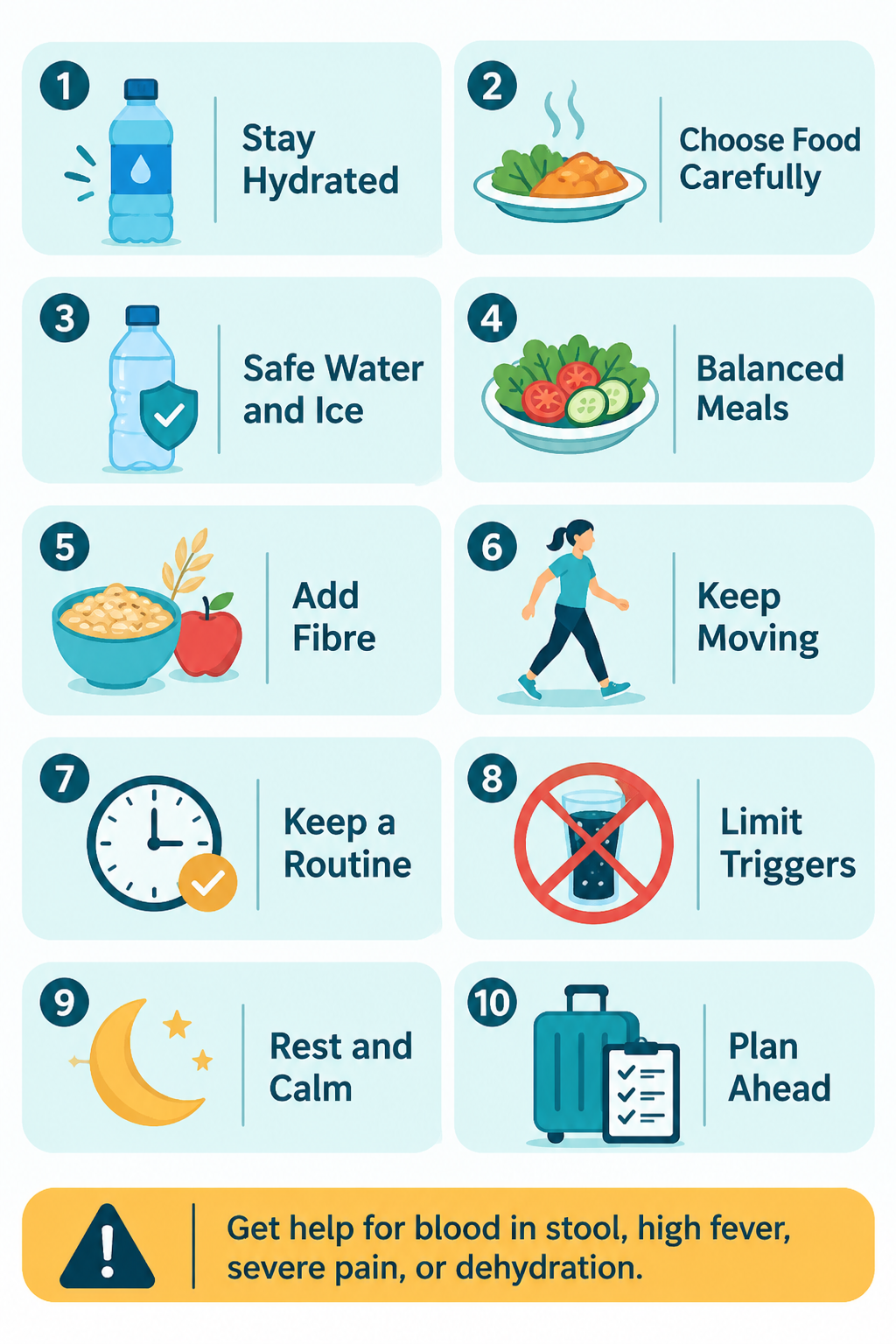
8. Limit Foods and Drinks That Trigger Symptoms
Everyone’s triggers are different, but common culprits include greasy meals, very spicy food, excess caffeine, alcohol, and fizzy drinks. Think about what usually bothers you at home and go easy on it while away, because the combination of travel stress and trigger foods can be rough.
If you’re prone to acid reflux, smaller meals and avoiding lying down soon after eating can help considerably. Try to finish dinner a few hours before bed, even when the holiday schedule tempts you to eat late.
9. Manage Stress and Get Enough Sleep
Your gut and brain are closely connected, which is why travel nerves so often show up as stomach problems. Rushing, delays, and worry about plans can all trigger or worsen symptoms, and so can broken sleep. We explain the link in detail in our guide to how stress affects your digestion.
Plan ahead to reduce rushing. Leave more time than you think you need, make room for rest and relaxation on your itinerary, and protect your sleep routine where you can. A calmer trip is usually kinder to your gut.
10. Prepare for Your Destination and Your Digestive Needs
A little research before you leave goes a long way. Look up local food and water safety, and consider seeing a healthcare professional for travel health advice before you go, particularly if you’re visiting a higher-risk area or have a medical condition.
Pack any prescribed medicines in your hand luggage, along with a copy of your prescription. If you have a digestive condition, plan for your dietary needs and find out how you’d access medical care if you needed it. Oral rehydration salts are a sensible addition to a travel kit.
One important caution: don’t take antibiotics or anti-diarrhoeal medicines preventively unless a qualified healthcare professional has advised you to. They aren’t a safety net for risky food choices, and they carry their own downsides.
What Should You Eat While Traveling for Better Digestion?
You don’t need to follow a restrictive diet to look after your gut on the road. A few sensible principles, built around the foods that usually agree with you, are enough. Here are some foods to eat while traveling for better digestion, and a few to limit.
Gut-Friendly Foods to Consider
- Oatmeal and other tolerated whole grains for fibre and steady energy
- Bananas and other fruit that can be peeled or washed safely
- Cooked vegetables, which are often easier on the gut than raw ones
- Rice, potatoes, and other familiar carbohydrates, which are gentle and reliable
- Eggs and thoroughly cooked lean proteins such as chicken or fish
- Plain yoghurt, if you tolerate dairy and it’s been stored safely
Foods and Drinks to Limit if They Trigger Symptoms
- Greasy or very rich meals
- Excess alcohol or caffeine
- Fizzy drinks, if they make you bloated
- Very spicy foods, if they worsen your symptoms
- Anything raw, undercooked, or stored unsafely
The point isn’t to avoid everything. It’s to be selective, particularly in the first few days, while your gut adjusts.
How to Prevent Constipation During Long Flights
Constipation is one of the most common complaints on long journeys, and it has a few overlapping causes: you’re sitting still, you’re probably drinking less, and your routine is out of sync. The practical fixes follow naturally.
Drink water regularly throughout the flight. Walk and stretch whenever you can. Choose fibre-rich foods that you tolerate, such as fruit, oats, or nuts, and avoid heavy, low-fibre meals. And allow yourself time for bathroom breaks, even if it feels awkward. Holding on makes things worse.
If constipation is persistent or severe, or comes with significant abdominal pain, vomiting, or an inability to pass wind, don’t wait. Get it assessed by a doctor, because that combination can point to a blockage.
How to Avoid Traveller’s Diarrhoea
The best defence is the simplest. Wash your hands well before eating, choose food that’s cooked and served hot, and drink only safe water. Avoid ice of uncertain origin, and be cautious with salads and unpeeled produce.
If you do get diarrhoea, replacing lost fluids and salts matters more than anything else. Mayo Clinic notes that dehydration is the most likely complication, and that an oral rehydration solution is the best way to replace lost fluids and electrolytes.
These come as sachets you mix with clean water, and most pharmacies stock them. While you’re recovering, avoid caffeine, alcohol, and dairy, which can worsen symptoms or increase fluid loss, and return to food gradually with bland options such as rice, bananas, toast, and potatoes.
For more on managing symptoms at home, our article on the best ways to manage food poisoning symptoms has practical advice.
Seek medical care if you notice blood in the stool, a high fever, severe abdominal pain, signs of dehydration such as very little urine, marked dizziness or weakness, or if diarrhoea lasts more than a few days. Harvard Health suggests getting medical attention if it hasn’t ended within five days.
When Should You See a Gastroenterologist?
Most travel-related tummy trouble passes within a few days. But some symptoms need professional assessment, especially if they’re persistent, recurrent, severe, or interfering with daily life. Seek advice if you have:
- Severe or worsening abdominal pain
- Blood in the stool, or black, tarry stools
- Persistent vomiting, or inability to keep fluids down
- Signs of dehydration, such as very little urine, marked dizziness, or unusual weakness
- Fever with significant diarrhoea
- Unexplained weight loss, or ongoing changes in bowel habits
Severe abdominal pain, significant bleeding, confusion, or severe dehydration need urgent medical care. Don’t wait for an appointment.
If digestive problems continue after your trip or frequently affect your daily life, consult a qualified healthcare professional. Dr. Preetha Thomas, a specialist physician and medical gastroenterologist in Pretoria, can assess ongoing digestive concerns and advise on appropriate next steps.
Book a Consultation with Dr. Preetha Thomas
Travel-related symptoms that don’t settle, or that keep coming back, deserve a proper explanation instead of more guesswork. Book an appointment with Dr. Preetha Thomas to get your symptoms assessed and a plan that fits your health and your travel plans.
Frequently Asked Questions About Digestive Health While Traveling
1. Why do I get digestive problems whenever I travel?
Because travel disrupts the things your gut relies on: regular meals, plenty of water, movement, sleep, and a calm routine. Add unfamiliar food, long periods of sitting, and the stress of getting from A to B, and your digestion often protests. Some people are more sensitive to these changes than others, particularly those with conditions such as IBS.
2. How can I keep my gut healthy while traveling?
Drink enough safe water, choose well-prepared food, eat balanced meals in moderate portions, keep moving, and protect your sleep. Try to hold on to some routine, such as consistent meal times, and avoid sudden dietary extremes.
3. What should I eat to avoid an upset stomach while traveling?
Familiar, safely prepared foods that suit your own tolerance. Hot, freshly cooked meals, cooked vegetables, rice, potatoes, eggs, bananas, and oats are usually good choices. Go easy on very rich, greasy, or spicy food, and be wary of anything raw or poorly stored.
4. How can I prevent constipation during a long flight?
Drink water regularly, walk and stretch when it’s safe, choose fibre-rich foods you tolerate, and don’t ignore the urge to use the bathroom. If constipation becomes severe or painful, seek medical advice.
5. How can I reduce the risk of traveller’s diarrhoea?
Wash your hands, choose food that’s cooked and served hot, drink only safe water, and avoid ice and unpeeled produce where water safety is uncertain. Research destination-specific precautions before you leave, and speak to a healthcare professional about travel health advice if you’re going somewhere higher risk.
6. Should I take probiotics before traveling?
The evidence is mixed, and probiotics aren’t guaranteed to prevent travel-related digestive problems. Some people find them helpful, but results depend on the strain and the individual. If you have an underlying medical condition, speak to your doctor before starting one. Our guide to probiotics, prebiotics, and gut health explains what to look for.
7. When should I seek medical help for digestive symptoms after traveling?
Seek help for persistent diarrhoea, blood in the stool, fever, signs of dehydration, severe abdominal pain, persistent vomiting, or symptoms that don’t improve after you return home. Severe pain, significant bleeding, confusion, or severe dehydration need urgent care.
Travel Smart: Keep Your Gut Healthy on Every Trip
Looking after your gut while traveling doesn’t need to be complicated. Stay hydrated, choose safe food and water, eat balanced meals in sensible portions, keep moving, protect your sleep, and hold on to a routine as best you can.
None of these steps is dramatic, but together they stack the odds in your favour.
Remember, too, that triggers vary from person to person. What upsets one traveller’s stomach might be perfectly fine for another, so pay attention to your own patterns. And if symptoms are persistent, severe, or you’re simply worried, don’t brush them aside.
If digestive problems keep following you home, Dr. Preetha Thomas, a gastroenterologist in Pretoria is available to help. A proper assessment is often the quickest way to a trip, and a gut, you can enjoy.